Join us

ContentUpdates and recent posts about Slurm..
Link
@anjali shared a link, 1 year, 4 months ago
Customer Marketing Manager, Last9

OpenMetrics vs OpenTelemetry: A Detailed Comparison

Discover the key differences between OpenMetrics and OpenTelemetry, from scope and use cases to adoption and flexibility, to make an informed choice.

otel
Link
@anjali shared a link, 1 year, 4 months ago
Customer Marketing Manager, Last9

5 Common Incident Severity Levels You Should Know

Learn about the 5 common incident severity levels and how they impact your response to system issues, ensuring faster resolutions.

incident
Link
@anjali shared a link, 1 year, 4 months ago
Customer Marketing Manager, Last9

What Are Syslog Levels and Why Should You Care?

Syslog levels help categorize log messages by severity, making it easier to monitor, troubleshoot, and prioritize system events.

logging
Link
@anjali shared a link, 1 year, 4 months ago
Customer Marketing Manager, Last9

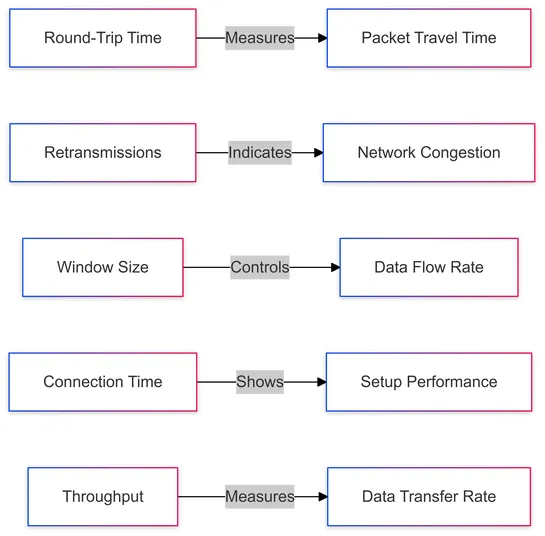
TCP Monitoring Made Simple: Keep Your Network in Check

Learn how TCP monitoring keeps your network fast, reliable, and free from issues like latency, packet loss, and connection hiccups.
tcp
Link
@anjali shared a link, 1 year, 4 months ago
Customer Marketing Manager, Last9

IoT Monitoring: Why It Matters and How to Do It Right?

Learn about IoT monitoring, its benefits, best practices, and use cases to optimize your systems and improve operational efficiency.

iot
Link
@anjali shared a link, 1 year, 4 months ago
Customer Marketing Manager, Last9

Error Logs: What They Are, Why They Matter, and How to Use Them

Error logs are vital for troubleshooting, improving performance, and ensuring security. Learn how to use them effectively for system health.

error
Story
@viktoriiagolovtseva shared a post, 1 year, 4 months ago

Organize Complex Projects with an Epic Template in Jira

In this article, we’ll explore what an epic is, why using an epic template can help organize complex projects, and how tools like Smart Templates for Jira can further improve your workflows by enabling reusable templates for entire epics.

Link
@anjali shared a link, 1 year, 4 months ago
Customer Marketing Manager, Last9

Datadog Pricing: All your Questions Answered

If you’re curious about Datadog pricing, we’ve got answers to your top questions, from plans to smart ways to save on costs.

datadog pricing
Link
@anjali shared a link, 1 year, 4 months ago
Customer Marketing Manager, Last9

git fetch vs pull: Key Differences Explained

Learn the key differences between git fetch and git pull, and understand when to use each command for better control over your workflow.

git fetch vs pull
Link
@anjali shared a link, 1 year, 4 months ago
Customer Marketing Manager, Last9

Your Go-To Git Commands CheatSheet

Master Git with this cheat sheet! Learn essential and advanced commands to simplify your workflow and fix mistakes.

git commands cheatsheet
Slurm Workload Manager is an open-source, fault-tolerant, and highly scalable cluster management and scheduling system widely used in high-performance computing (HPC). Designed to operate without kernel modifications, Slurm coordinates thousands of compute nodes by allocating resources, launching and monitoring jobs, and managing contention through its flexible scheduling queue.

At its core, Slurm uses a centralized controller (slurmctld) to track cluster state and assign work, while lightweight daemons (slurmd) on each node execute tasks and communicate hierarchically for fault tolerance. Optional components like slurmdbd and slurmrestd extend Slurm with accounting and REST APIs. A rich set of commands—such as srun, squeue, scancel, and sinfo—gives users and administrators full visibility and control.

Slurm’s modular plugin architecture supports nearly every aspect of cluster operation, including authentication, MPI integration, container runtimes, resource limits, energy accounting, topology-aware scheduling, preemption, and GPU management via Generic Resources (GRES). Nodes are organized into partitions, enabling sophisticated policies for job size, priority, fairness, oversubscription, reservation, and resource exclusivity.

Widely adopted across academia, research labs, and enterprise HPC environments, Slurm serves as the backbone for many of the world’s top supercomputers, offering a battle-tested, flexible, and highly configurable framework for large-scale distributed computing.