Join us

ContentUpdates and recent posts about Snap..
Link
@varbear shared a link, 6 months ago
FAUN.dev()

How the classic anime 'Ghost in the Shell' predicted the future of cybersecurity 30 years ago

“Ghost in the Shell” turned 30 this week. Still hits hard. Back in 1989, it dropped cyberpunk bombs that would take the real world decades to catch up with: government-grade AI hackers, behavior-based intrusion detection, malware tailored for humans, and remote code attribution that vanishes into th.. read more  

How the classic anime 'Ghost in the Shell' predicted the future of cybersecurity 30 years ago
Link
@varbear shared a link, 6 months ago
FAUN.dev()

Programming Languages in the Age of AI Agents

GitHub Copilot and friends tend to shine in languages with rich static types - think Rust or Scala. Why? The compiler does the heavy lifting. It flags mistakes fast, keeps structure tight, and gives the AI sharper signals to riff on. But drop that agent into a sprawling legacy repo, and cracks show... read more  

Programming Languages in the Age of AI Agents
Link
@varbear shared a link, 6 months ago
FAUN.dev()

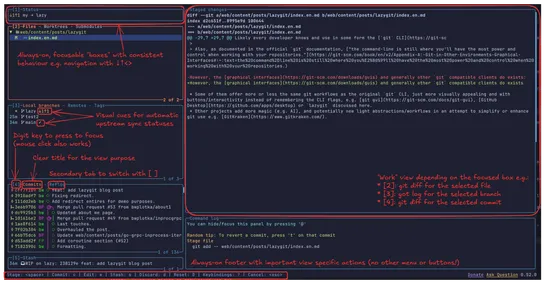
The (lazy) Git UI You Didn't Know You Need

Lazygit is a snappy terminal Git UI that’s picking up steam - and for good reason. It streamlines common tasks like staging, rebasing, and patching without dragging you through clunky menus. The interface sticks close to native Git commands but adds just enough structure to reduce context switches a.. read more  

The (lazy) Git UI You Didn't Know You Need
Link
@varbear shared a link, 6 months ago
FAUN.dev()

Your URL Is Your State

Modern frontend apps love to complicate state. But they keep forgetting the URL - shareable, dependency-free, and built for the job. This piece breaks down how a well-structured URL can capture UI state, track history, and make bookmarking effortless. NolocalStorage. No cookies. No bloated global st.. read more  

Link
@varbear shared a link, 6 months ago
FAUN.dev()

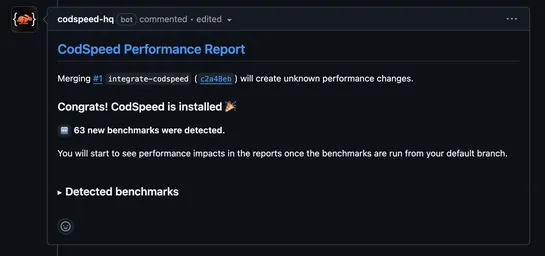
How to Benchmark Python Code?

pytest-benchmarknow plugs straight intoCodSpeedfor automatic performance runs in CI - flamegraphs, metrics, and history included. Just toss a decorator on your test and it turns into a benchmark. Want to measure a slice of code more precisely? Use fixtures to zoom in... read more  

How to Benchmark Python Code?
Link
@varbear shared a link, 6 months ago
FAUN.dev()

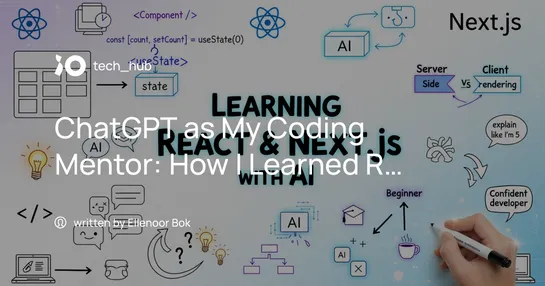
ChatGPT as My Coding Mentor: How I Learned React and Next.js as a Junior Developer

A junior dev leveled up their React and Next.js chops just by writing better prompts. Big wins came from getting specific - like stating their skill level, asking for analogies, and stacking questions to unpack how Next.js splits client and server. Trend to watch:Prompting is a core dev skill for an.. read more  

ChatGPT as My Coding Mentor: How I Learned React and Next.js as a Junior Developer
Link
@kaptain shared a link, 6 months ago
FAUN.dev()

How Kubernetes Became the New Linux

AWS just handed overKarpenterandKubernetes Resource Orchestrator (Kro)to Kubernetes SIGs. Big move. It's less about AWS-first, more about playing nice across the ecosystem. Kroauto-spins CRDs and microcontrollers for resource orchestration.Karpenterhandles just-in-time node provisioning - leaner, fa.. read more  

How Kubernetes Became the New Linux
Link
@kaptain shared a link, 6 months ago
FAUN.dev()

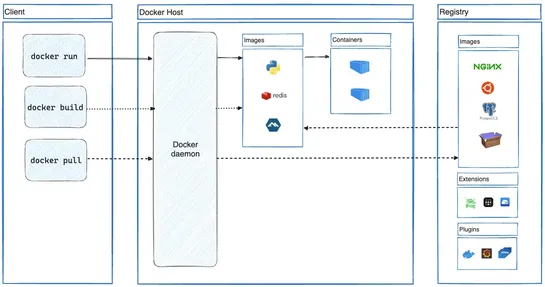
Docker Workbook - Your Guide to Containerization

This guide cuts through modern Docker workflows. It coversBuildKitfor faster, smarter builds. Shows howmulti-stage Dockerfilesmake images slimmer. Breaks down howENTRYPOINTandCMDactually work. Walks through usingsupervisordto wrangle multi-process containers. Then zooms out toDocker Compose, where l.. read more  

Docker Workbook - Your Guide to Containerization
Link
@kaptain shared a link, 6 months ago
FAUN.dev()

How I Cut Kubernetes Debugging Time by 80% With One Bash Script

The reality of Kubernetes troubleshooting: 80% of the time is spent locating the issue, while only 20% is used for the fix. Managing eight Kubernetes clusters highlighted this pattern. A tool was developed to provide a complete cluster health report in under a minute, streamlining the process and sa.. read more  

Link
@kaptain shared a link, 6 months ago
FAUN.dev()

The guide to kubectl I never had.

Glasskube dropped a thorough guide tokubectl- the commands, the flags (--dry-run, etc.), how to chain stuff together, and how to keep your config sane. Bonus: a solid roundup ofkubectl plugins. Think observability (like K9s), policy checks, audit trails, and Glasskube’s take on declarative package m.. read more  

The guide to kubectl I never had.
Snap is a software packaging and deployment system developed by Canonical for Linux distributions. A snap is a self-contained package that bundles an application together with its dependencies, making it runnable across any distribution that supports the snapd daemon. Snaps run under strict confinement using a combination of AppArmor, seccomp, and cgroups, with explicit interfaces controlling access to system resources, hardware, and user data.

Updates are delivered automatically and atomically through the Snap Store (snapcraft.io), with built-in rollback support if an update fails.

Snap supports multiple release channels (stable, candidate, beta, edge) and tracks for parallel version streams, making it suitable for both end-user applications and server software.

While Snap originated as Canonical's solution for Ubuntu, it works across most major distributions including Fedora, Arch, Debian, and openSUSE. It is the foundation for several Canonical initiatives including Ubuntu Core, IoT deployments, and inference snaps for local AI model distribution.