Join us

ContentUpdates and recent posts about Flask..
Link
@devopslinks shared a link, 1 week, 1 day ago
FAUN.dev()

Why your microVM sandbox solves a particular problem very well, but not the agent security problem.

Use MicroVMs to contain host-escape risk from coding agents. You still need capability controls: grant the agent access to specific files, scoped credentials, approved services, and permitted mutations after you place repos and credentials inside the VM... read more  

Link
@devopslinks shared a link, 1 week, 1 day ago
FAUN.dev()

IaC Isn't Dying. AI Makes it More Important

Teams that use AI to generate infrastructure code need IaC as the system of record that platform teams govern. Engineers can produce changes faster, so platform teams must absorb more work through review, policy, testing, integration, and rollout... read more  

IaC Isn't Dying. AI Makes it More Important
Link
@devopslinks shared a link, 1 week, 1 day ago
FAUN.dev()

Nginx as a Reverse Proxy

How Nginx works as a reverse proxy, from its worker architecture to rate limiting, HTTP/2, security headers, and tuning workers to match the server... read more  

Nginx as a Reverse Proxy
Link
@devopslinks shared a link, 1 week, 1 day ago
FAUN.dev()

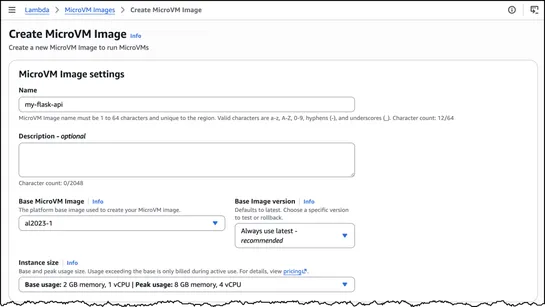
Run isolated sandboxes with full lifecycle control: AWS Lambda introduces MicroVMs

AWS gave developers a Lambda option for running user- or AI-generated code inside stateful Firecracker microVMs. The key use case: AI coding agents can execute untrusted snippets, install dependencies, keep a workspace warm, and destroy the environment after the task ends. Firecracker gives each tas.. read more  

Run isolated sandboxes with full lifecycle control: AWS Lambda introduces MicroVMs
Link
@devopslinks shared a link, 1 week, 1 day ago
FAUN.dev()

In praise of memcached

Choose memcached as the default cache because it keeps the cache boundary clear. It offers no persistence, so your app must rebuild cached values from the source of truth after a restart or eviction. It also pushes failure handling into client code, so engineers must decide how the app behaves durin.. read more  

Story
@laura_garcia shared a post, 1 week, 1 day ago
Software Developer, RELIANOID

Zero Trust in Hybrid Environments

🔐 Zero Trust isn’t just about identity — it’s about where identity is enforced. In hybrid and multi-cloud environments, security breaks when identity stops at login and doesn’t control traffic flow. Our latest article explores why the application delivery layer is becoming the new Zero Trust enfor..

Story
@laura_garcia shared a post, 1 week, 2 days ago
Software Developer, RELIANOID

How to Load Balance Navitaire

✈️ Airline platforms can't afford downtime. Discover how RELIANOID helps improve the availability, performance, and security of Navitaire environments with load balancing, high availability, SSL offloading, and advanced protection capabilities. Read the 3-minute guide. 👇 https://www.relianoid.com/re..

Link
@anjali5 shared a link, 1 week, 3 days ago

How to Fix Developer Productivity at 50+ Engineers

You ship a feature. It works. A week later, someone asks why it's not in staging yet, and you realize it's behind an infrastructure request that's still in review. The ticket isn't urgent enough to escalate. It's also not small enough to ignore. So it waits.

That's what a developer productivity problem feels like at 50 engineers.

developer
Flask is an open-source web framework written in Python and created by Armin Ronacher in 2010. It is known as a microframework, not because it is weak or incomplete, but because it provides only the essential building blocks for developing web applications. Its core focuses on handling HTTP requests, defining routes, and rendering templates, while leaving decisions about databases, authentication, form handling, and other components to the developer. This minimalistic design makes Flask lightweight, flexible, and easy to learn, but also powerful enough to support complex systems when extended with the right tools.

At the heart of Flask are two libraries: Werkzeug, which is a WSGI utility library that handles the low-level details of communication between web servers and applications, and Jinja2, a templating engine that allows developers to write dynamic HTML pages with embedded Python logic. By combining these two, Flask provides a clean and pythonic way to create web applications without imposing strict architectural patterns.

One of the defining characteristics of Flask is its explicitness. Unlike larger frameworks such as Django, Flask does not try to hide complexity behind layers of abstraction or dictate how a project should be structured. Instead, it gives developers complete control over how they organize their code and which tools they integrate. This explicit nature makes applications easier to reason about and gives teams the freedom to design solutions that match their exact needs. At the same time, Flask benefits from a vast ecosystem of extensions contributed by the community. These extensions cover areas such as database integration through SQLAlchemy, user session and authentication management, form validation with CSRF protection, and database migration handling. This modular approach means a developer can start with a very simple application and gradually add only the pieces they require, avoiding the overhead of unused components.

Flask is also widely appreciated for its simplicity and approachability. Many developers write their first web application in Flask because the learning curve is gentle, the documentation is clear, and the framework itself avoids unnecessary complexity. It is particularly well suited for building prototypes, REST APIs, microservices, or small to medium-sized web applications. At the same time, production-grade deployments are supported by running Flask applications on WSGI servers such as Gunicorn or uWSGI, since the development server included with Flask is intended only for testing and debugging.

The strengths of Flask lie in its minimalism, flexibility, and extensibility. It gives developers the freedom to assemble their application architecture, choose their own libraries, and maintain tight control over how things work under the hood. This is attractive to experienced engineers who dislike being boxed in by heavy frameworks. However, the same freedom can become a limitation. Flask does not include features like an ORM, admin interface, or built-in authentication system, which means teams working on very large applications must take on more responsibility for enforcing patterns and maintaining consistency. In situations where a project requires an opinionated, all-in-one solution, Django or another full-stack framework may be a better fit.

In practice, Flask has grown far beyond its initial positioning as a lightweight tool. It has been used by startups for rapid prototypes and by large companies for production systems. Its design philosophy—keep the core simple, make extensions easy, and let developers decide—continues to attract both beginners and professionals. This balance between simplicity and power has made Flask one of the most enduring and widely used Python web frameworks.