Join us

ContentUpdates and recent posts about Grafana Tempo..
Link
@faun shared a link, 11 months ago
FAUN.dev()

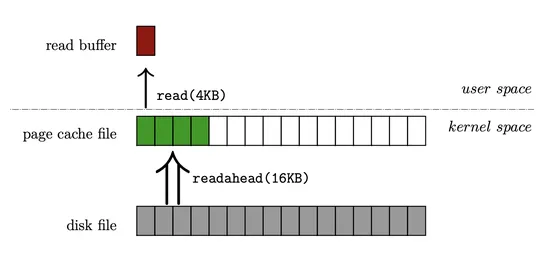
Parsing 1 Billion Rows in Bun/Typescript Under 10 Seconds

Buntries to swallow files over 4GB and promptly chokes. The culprit? ItsBuffercaps out at 4GB. The fix? Slice files into chunks under 4GB but keep the buffer lean, no more than 128KB, to keep things zippy. Pull out the big guns—workers. This move fires up all CPU cores, slashing processing time from.. read more  
Parsing 1 Billion Rows in Bun/Typescript Under 10 Seconds
Link
@faun shared a link, 11 months ago
FAUN.dev()

How Go 1.24's Swiss Tables saved us hundreds of gigabytes

Uncovered a memory regression inGo 1.24. Pored over memory patterns in countless pods like a detective with too much caffeine. Pinpointed sneaky allocation blunders... read more  

Link
@faun shared a link, 11 months ago
FAUN.dev()

Death by a thousand slops

By 2025,AI slopwill infect20%of curl's security submissions. Meanwhile, a mere5%reveal actual threats. Cutting the$90,000bounty might fend off the slopsters, but it'll scare away the real wizards, too... read more  

Death by a thousand slops
Link
@faun shared a link, 11 months ago
FAUN.dev()

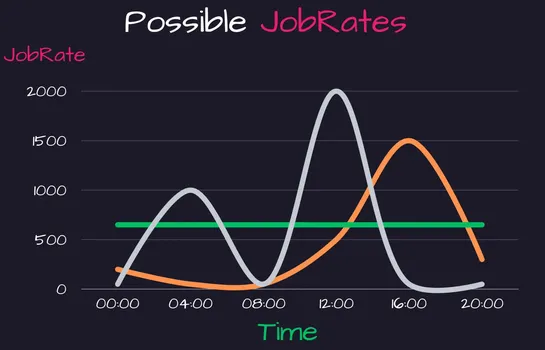
Scalability is not performance

Boostingscalabilityin distributed systems isn't just a mad dash for speed. It's about morphing resources to tackle shifting demand. Nail scalability, and you balance infrastructure costs with job handling efficiency, all while juggling resource utilization at a sweet spot around 0.5. Crave a drama-f.. read more  

Scalability is not performance
Link
@faun shared a link, 11 months ago
FAUN.dev()

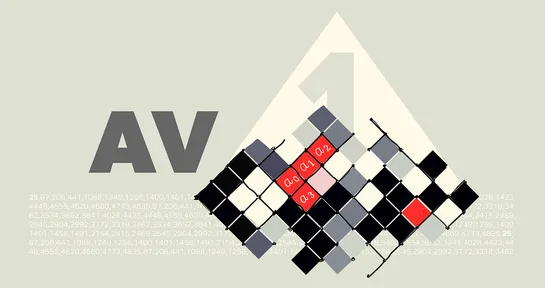
AV1 @ Scale: Film Grain Synthesis, The Awakening

AV1 Film Grain Synthesis (FGS)tricks the eye by imitating film grain after compression. Cuts bitrates like a ninja and keeps the artistry alive. Models grasp grain's pattern and punch, ensuring sharp visuals on bandwidth-challenged gadgets. Grainy magic, delivered neatly!.. read more  

AV1 @ Scale: Film Grain Synthesis, The Awakening
Link
@faun shared a link, 11 months ago
FAUN.dev()

OpenAI deputizes ChatGPT to serve as an agent

OpenAI's ChatGPTnow flexes its muscles as an agent. It juggles complex tasks, dives into spreadsheets, and pokes at APIs. But hey, watch your back—new levels of power mean fresh data security headaches. While it shrugs off most prompt injection attacks, the bot's got strict manners. It always asks b.. read more  

OpenAI deputizes ChatGPT to serve as an agent
Link
@faun shared a link, 11 months ago
FAUN.dev()

Rethinking CLI interfaces for AI

LLMs fumble with CLI tools because they lack context. Tweaking APIs and tools for LLM savvy could cut mistakes and boost context efficiency.Smarter interfaces might keep them from getting stuck in infinite loops or bungling directories, slashing tool calls and making automation crisp and tidy... read more  

Rethinking CLI interfaces for AI
Link
@faun shared a link, 11 months ago
FAUN.dev()

Netflix’s first show with generative AI is a sign of what’s to come in TV, film

Netflix has unleashed the power of gen AI inThe Eternaut. Visual effects? Now they're ten times faster. What used to need a blockbuster budget is now a sleek in-app magic trick. Swift. Pocket-friendly. Yet undeniably grand... read more  

Netflix’s first show with generative AI is a sign of what’s to come in TV, film
Link
@faun shared a link, 11 months ago
FAUN.dev()

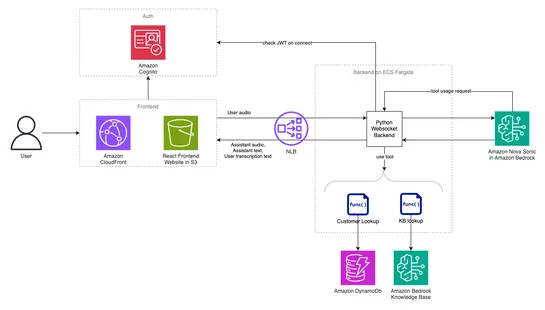
Deploy a full stack voice AI agent with Amazon Nova Sonic

Amazon Nova SoniconAmazon Bedrockditches piecemeal speech gadgets for a seamless whole. Real-time voice chat with a splash of dynamic customization at its core... read more  

Deploy a full stack voice AI agent with Amazon Nova Sonic
Link
@faun shared a link, 11 months ago
FAUN.dev()

Tzafon builds the next generation of agentic machine intelligence with Google Cloud infrastructure

Tzafondives headfirst intoGoogle Cloud'sAI-ready playground, juicing up multi-agent systems withNVIDIA GPUsand the nimbleness ofKubernetes... read more  

Tzafon builds the next generation of agentic machine intelligence with Google Cloud infrastructure
Grafana Tempo is a distributed tracing backend built for massive scale and low operational overhead. Unlike traditional tracing systems that depend on complex databases, Tempo uses object storage—such as S3, GCS, or Azure Blob Storage—to store trace data, making it highly cost-effective and resilient. Tempo is part of the Grafana observability stack and integrates natively with Grafana, Prometheus, and Loki, enabling unified visualization and correlation across metrics, logs, and traces.

Technically, Tempo supports ingestion from major tracing protocols including Jaeger, Zipkin, OpenCensus, and OpenTelemetry, ensuring easy interoperability. It features TraceQL, a domain-specific query language for traces inspired by PromQL and LogQL, allowing developers to perform targeted searches and complex trace-based analytics. The newer TraceQL Metrics capability even lets users derive metrics directly from trace data, bridging the gap between tracing and performance analysis.

Tempo’s Traces Drilldown UI further enhances usability by providing intuitive, queryless analysis of latency, errors, and performance bottlenecks. Combined with the tempo-cli and tempo-vulture tools, it delivers a full suite for trace collection, verification, and debugging.

Built in Go and following OpenTelemetry standards, Grafana Tempo is ideal for organizations seeking scalable, vendor-neutral distributed tracing to power observability at cloud scale.