Join us

ContentUpdates and recent posts about Unsloth..
Link
@devopslinks shared a link, 1 week, 1 day ago
FAUN.dev()

Why your microVM sandbox solves a particular problem very well, but not the agent security problem.

Use MicroVMs to contain host-escape risk from coding agents. You still need capability controls: grant the agent access to specific files, scoped credentials, approved services, and permitted mutations after you place repos and credentials inside the VM... read more  

Link
@devopslinks shared a link, 1 week, 1 day ago
FAUN.dev()

IaC Isn't Dying. AI Makes it More Important

Teams that use AI to generate infrastructure code need IaC as the system of record that platform teams govern. Engineers can produce changes faster, so platform teams must absorb more work through review, policy, testing, integration, and rollout... read more  

IaC Isn't Dying. AI Makes it More Important
Link
@devopslinks shared a link, 1 week, 1 day ago
FAUN.dev()

Nginx as a Reverse Proxy

How Nginx works as a reverse proxy, from its worker architecture to rate limiting, HTTP/2, security headers, and tuning workers to match the server... read more  

Nginx as a Reverse Proxy
Link
@devopslinks shared a link, 1 week, 1 day ago
FAUN.dev()

Run isolated sandboxes with full lifecycle control: AWS Lambda introduces MicroVMs

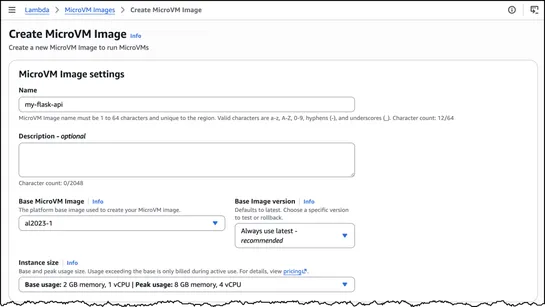
AWS gave developers a Lambda option for running user- or AI-generated code inside stateful Firecracker microVMs. The key use case: AI coding agents can execute untrusted snippets, install dependencies, keep a workspace warm, and destroy the environment after the task ends. Firecracker gives each tas.. read more  

Run isolated sandboxes with full lifecycle control: AWS Lambda introduces MicroVMs
Link
@devopslinks shared a link, 1 week, 1 day ago
FAUN.dev()

In praise of memcached

Choose memcached as the default cache because it keeps the cache boundary clear. It offers no persistence, so your app must rebuild cached values from the source of truth after a restart or eviction. It also pushes failure handling into client code, so engineers must decide how the app behaves durin.. read more  

Story
@laura_garcia shared a post, 1 week, 1 day ago
Software Developer, RELIANOID

Zero Trust in Hybrid Environments

🔐 Zero Trust isn’t just about identity — it’s about where identity is enforced. In hybrid and multi-cloud environments, security breaks when identity stops at login and doesn’t control traffic flow. Our latest article explores why the application delivery layer is becoming the new Zero Trust enfor..

Story
@laura_garcia shared a post, 1 week, 2 days ago
Software Developer, RELIANOID

How to Load Balance Navitaire

✈️ Airline platforms can't afford downtime. Discover how RELIANOID helps improve the availability, performance, and security of Navitaire environments with load balancing, high availability, SSL offloading, and advanced protection capabilities. Read the 3-minute guide. 👇 https://www.relianoid.com/re..

Link
@anjali5 shared a link, 1 week, 3 days ago

How to Fix Developer Productivity at 50+ Engineers

You ship a feature. It works. A week later, someone asks why it's not in staging yet, and you realize it's behind an infrastructure request that's still in review. The ticket isn't urgent enough to escalate. It's also not small enough to ignore. So it waits.

That's what a developer productivity problem feels like at 50 engineers.

developer
Unsloth is an open-source toolkit for training and fine-tuning large language models faster and with less memory than a standard Hugging Face stack. Its core library replaces PyTorch's default autograd with custom backpropagation kernels written in OpenAI's Triton language, which is where most of its speed and memory savings come from. It supports LoRA, QLoRA, full fine-tuning, reinforcement learning, pretraining, and 4-bit, 16-bit, and FP8 training, across more than 500 text, vision, audio, and embedding models.

The practical draw is hardware reach. QLoRA workflows in Unsloth let you fine-tune an 8B model on a single 12 GB consumer GPU, and the project headlines roughly 2x faster training with about 70 percent less VRAM versus baseline implementations, though the exact figures vary by model, GPU, and config. A 2026 update added faster mixture-of-experts training, with models like Qwen3-30B-A3B fine-tunable on about 17.5 GB of VRAM. It runs on NVIDIA (including Blackwell and DGX Spark), AMD, and Intel GPUs, with free Colab and Kaggle notebooks for trying it without local hardware.

It fits cleanly into the local-AI workflow. Unsloth integrates with Hugging Face transformers and TRL, and uses llama.cpp to save and run models, exporting to GGUF for Ollama or LM Studio as well as safetensors. As of 2026 it also ships Unsloth Studio, a local no-code GUI that covers the full lifecycle from dataset creation to training to running and comparing GGUF and safetensors models, with tool-calling, web search, and an OpenAI-compatible API, all running offline on Mac and Windows, with the core library under the Apache 2.0 license.