Join us

ContentUpdates from Levelop.dev...
Link
@varbear shared a link, 2 months, 2 weeks ago
FAUN.dev()

The Great Developer Divide: How AI Is Reshaping the Software Job Market Into Three Tiers

AI hiring has split dev work into three camps:Apex Tier,Hybrid Middle, and a shrinkingAutomatable Tail. Demand now favorsAI orchestration,prompt engineering, fastcode reading, and platform roles likeplatform engineer,fleet supervisor, andAI QA. System shift:Organizations must rework career ladders, .. read more  

The Great Developer Divide: How AI Is Reshaping the Software Job Market Into Three Tiers
Link
@varbear shared a link, 2 months, 2 weeks ago
FAUN.dev()

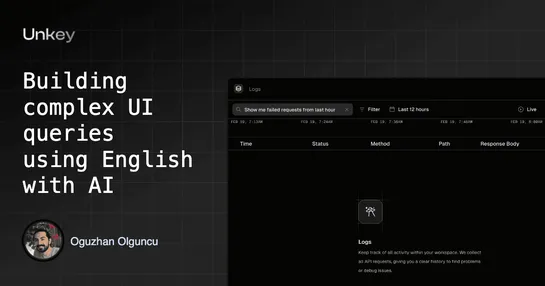
Zen: A Minimalist HTTP Library for Go

Unkey builtZen- a thin HTTP framework on Go'snet/http. It restores precise middleware ordering and lets middleware run after errors to capture the final response. Zen poolsSessionobjects to cut allocations. It emits RFC7807problem+jsonfor tagged domain errors. It runs OpenAPI validation before handl.. read more  

Zen: A Minimalist HTTP Library for Go
Link
@kaptain shared a link, 2 months, 2 weeks ago
FAUN.dev()

It's Not Kubernetes. It Never Was

The complexity in managing Kubernetes clusters is a reflection of the organizational decisions and lack of processes within the teams operating them. The move towards multi-cloud environments without sufficient planning or resources has exacerbated these issues. Platform engineering solutions offer .. read more  

It's Not Kubernetes. It Never Was
Link
@kaptain shared a link, 2 months, 2 weeks ago
FAUN.dev()

How Does Kubernetes Self-Healing Work? Understand Self-Healing By Breaking a Real Cluster

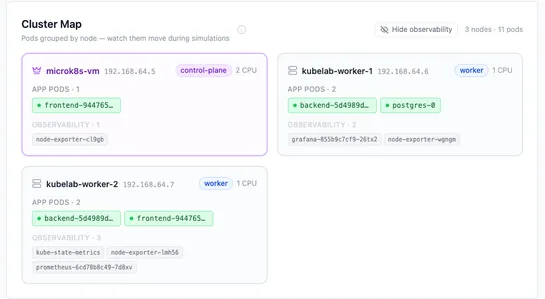
KubeLab boots a three-nodeKubernetescluster and runs seven failure simulations. It deploysNode.js,Postgres,Prometheus, andGrafana. Then it deletes pods, forcesOOMKill, throttles CPU, drains nodes, and scales aStatefulSetto zero. Each scenario surfaces fixes:readiness probes,PodDisruptionBudget, anti.. read more  

How Does Kubernetes Self-Healing Work? Understand Self-Healing By Breaking a Real Cluster
Link
@kaptain shared a link, 2 months, 2 weeks ago
FAUN.dev()

pg_plan_alternatives: Tracing PostgreSQL’s Query Plan Alternatives using eBPF

The tracer hooks PostgreSQL's optimizer via eBPF. It captures every alternative plan path with cost estimates and flags the chosen plan. A kernel-space eBPF program reads planner structs using DWARF-derived offsets. A user-space collector gathers the data and a visualizer renders plan graphs. eBPF p.. read more  

Link
@kaptain shared a link, 2 months, 2 weeks ago
FAUN.dev()

The great migration: Why every AI platform is converging on Kubernetes

The CNCF survey finds82%of container users runKubernetesin production.66%of GenAI hosts use it for inference. Kubernetes now stitches data processing, distributed training, LLM inference, and autonomous agents viaSpark,Kubeflow,Kueue,KServe, andArmada. GPU sharing and scheduling advanced withMIG, ti.. read more  

The great migration: Why every AI platform is converging on Kubernetes
Link
@kaptain shared a link, 2 months, 2 weeks ago
FAUN.dev()

How WebAssembly plugins simplify Kubernetes extensibility

Helm 4runsWebAssembly (Wasm)plugins to executeWASImodules insideOCIcontainers and VMs.Helmtemplates standardize module lifecycle. The Wasm plugin adds instruction-level sandboxing and Kubernetes segmentation.Helm 4preserves portability acrossx86/ARM. Compared withHelm 3plugins, it shows up to a 40% .. read more  

Link
@kala shared a link, 2 months, 2 weeks ago
FAUN.dev()

The L in "LLM" Stands for Lying

The author arguesLLMschurn out fast, generic answers by remixing low-quality source material. They seed brittle, repetitive code viavibe-coding. The remedy: requiresource attributionand auditable inference to separate originals from forgeries and to reshape model training and deployment. Requiringso.. read more  

The L in "LLM" Stands for Lying
Link
@kala shared a link, 2 months, 2 weeks ago
FAUN.dev()

AI as tradecraft: How threat actors operationalize AI

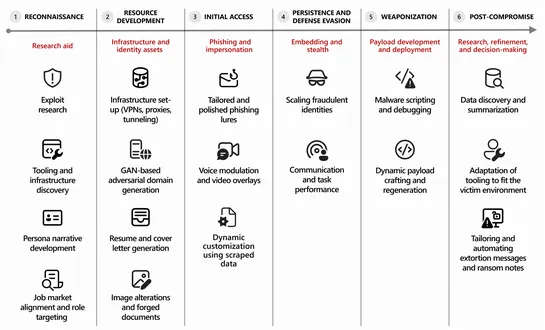
Microsoft observes threat actors operationalizeAIandLLMsacross the cyberattack lifecycle. They accelerate reconnaissance, phishing, malware development, and post‑compromise triage. Actors abusejailbreakingtechniques andGANs. They craft personas, generate look‑alike domains, embed runtime‑adaptive pa.. read more  

AI as tradecraft: How threat actors operationalize AI
Link
@kala shared a link, 2 months, 2 weeks ago
FAUN.dev()

Reasoning models struggle to control their chains of thought, and that’s good

OpenAI's paper unveilsCoT-Control: an open-source suite of 13,000+ tasks fromGPQA, MMLU-Pro, HLE, BFCLthat measuresCoTcontrollability. Evaluations on 13 models show compliance at 0.1%-15.4%. Compliance is tiny. Controllability improves with model size. It drops as reasoning chains lengthen and after.. read more  

Reasoning models struggle to control their chains of thought, and that’s good
Levelop is an interview preparation platform designed specifically for working software engineers (typically with 2–6 years of experience) who want to land jobs at top-tier tech companies.

Instead of just handing you endless lists of problems or passive videos to watch, Levelop uses an active, AI-guided approach to help you build the right mental models for tough technical interviews.

Here is how it works:

Two Specialized AI Mentors: * Orion (Coding AI): Instead of just telling you that your code is wrong, Orion steps in when your code fails, maps out where your knowledge gap is, and guides you to fix it yourself.

Aurora (System Design AI): Rather than making you watch a 40-minute video, Aurora has a live conversation with you to explain foundational system design concepts before you even start drawing on the canvas.

Sprint-Based Practice: You practice in structured loops called "sprints," which combine both Data Structures & Algorithms (DSA) and system design problems.

Actionable Feedback Loop: At the end of every sprint, you receive a detailed report. It scores your technical skills, gives you a behavioral profile, and ranks the exact weaknesses you need to focus on during your next sprint.

In short, it is a smart, interactive practice arena that focuses on actively fixing your specific weaknesses rather than just tracking how many hours you spend studying.