Join us

ContentUpdates from OpenAI...
Link
@varbear shared a link, 1 month, 3 weeks ago
FAUN.dev()

PostgreSQL MVCC, Byte by Byte

PostgreSQL's MVCC stores two 32-bit XIDs per tuple -xminandxmax. The transaction snapshot decides visibility per tuple. Updates append new tuples and mark the old withxmax.VACUUMreclaims versions only when no active snapshot can see them. Long-runningREPEATABLE READsnapshots pin versions and cause b.. read more  

PostgreSQL MVCC, Byte by Byte
Link
@kaptain shared a link, 1 month, 3 weeks ago
FAUN.dev()

From public static void main to Golden Kubestronaut: The Art of unlearning

The author left JVM monolith ops forKubernetes. They stacked certs:CKA,CKAD,CKS,KCNA,KCSA,CNCF Golden Kubestronaut. They treatPodsas the atomic deployable. They pick fights:IngressvsNodePort. They warn aboutConfigMapdrift. They spotlight runtime primitives:Horizontal Pod Autoscalerandservice meshfor.. read more  

From public static void main to Golden Kubestronaut: The Art of unlearning
Link
@kaptain shared a link, 1 month, 3 weeks ago
FAUN.dev()

Why MicroVMs: The Architecture Behind Sandboxes

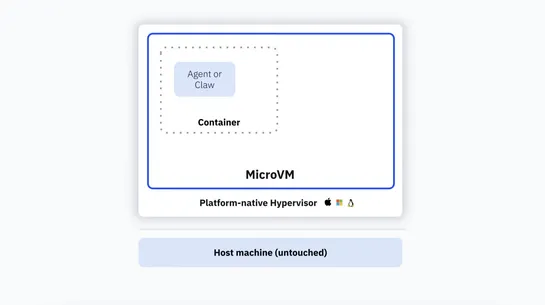
Docker Sandboxes puts each agent session in a dedicatedmicroVM. Each microVM runs a privateDocker daemoninside the VM boundary. That blocks access to the host. A new cross‑platformVMMruns on macOS, Windows, and Linux hypervisors. It slashes cold starts and runs fullDockerbuild, run, and compose work.. read more  

Why MicroVMs: The Architecture Behind Sandboxes
Link
@kaptain shared a link, 1 month, 3 weeks ago
FAUN.dev()

The AI-driven shift in vulnerability discovery: What maintainers and bug finders need to know

AI modelslet non-experts craft real and fake vulnerabilities at scale. They spit out low-quality noise and the occasional high-value report. Reports floodOSS maintainers. Triage, patching, release cadences, and downstreamupgrade/compliancepipelines buckle under the load. Guidance recommends publishi.. read more  

The AI-driven shift in vulnerability discovery: What maintainers and bug finders need to know
Link
@kaptain shared a link, 1 month, 3 weeks ago
FAUN.dev()

v1.36: User Namespaces in are finally GA

Kubernetesv1.36promotesUser Namespacesto GA on Linux. It brings rootless workload isolation. Kubelet leans on kernelID-mapped mounts. It sidesteps expensivechownby remappingUID/GIDat mount time and confines privileged processes. No more mass-chown screams... read more  

Link
@kaptain shared a link, 1 month, 3 weeks ago
FAUN.dev()

Building a fault-tolerant metrics storage system at Airbnb

Airbnb built a metrics system that ingests50M samples/s, stores2.5PBof logical time series, and hosts1.3B active series. They use tenant-per-service grouping andshuffle sharding. They enforce per-tenant guardrails and a consolidatedcontrol plane. They shard queries and compaction. They run zone-awar.. read more  

Building a fault-tolerant metrics storage system at Airbnb
Link
@kala shared a link, 1 month, 3 weeks ago
FAUN.dev()

Introducing Coregit

Coregit reimplements Git's object model inTypeScriptand runs onCloudflare Workersas a serverless edge Git API. Its commit endpoint accepts up to 1,000 file changes per request and replaces 105+ GitHub calls with one. Yes - one. It acknowledges writes inDurable Objects(~2ms), then flushes objects toR.. read more  

Link
@kala shared a link, 1 month, 3 weeks ago
FAUN.dev()

How LLMs Work — A Visual Deep Dive

A complete walkthrough of how large language models like ChatGPT are built, from raw internet text to a conversational assistant... read more  

How LLMs Work — A Visual Deep Dive
Link
@kala shared a link, 1 month, 3 weeks ago
FAUN.dev()

The PR you would have opened yourself

ASkillports models fromtransformerstomlx-lm. It bootstraps an env, discovers variants, downloads checkpoints, writes MLX implementations, and runs layered tests. It produces disclosed PRs with per-layer diffs, dtype checks, generation examples, numerical comparisons, and a reproducible, non-agentict.. read more  

The PR you would have opened yourself
Link
@kala shared a link, 1 month, 3 weeks ago
FAUN.dev()

Introducing Ternary Bonsai: Top Intelligence at 1.58 Bits

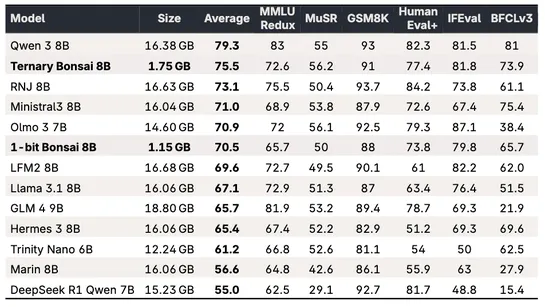
PrismML unveilsTernary Bonsai: a family of1.58-bitLMs in1.7B,4B, and8Bsizes. Models use ternary weights {-1,0,+1} with group-wise quantization. Weights are ternary (-1,0,+1). Each group of128weights shares anFP16scale. That cuts memory by ~9x versus 16-bit and boosts benchmark scores. The8Bhits 75.5.. read more  

Introducing Ternary Bonsai: Top Intelligence at 1.58 Bits
OpenAI is an independent artificial intelligence research organization that was founded in 2015 with the goal of promoting the development and safe use of advanced AI technologies. The organization's research focuses on a wide range of AI applications, including natural language processing, computer vision, and robotics. OpenAI's research is driven by a team of world-class researchers and engineers who work to develop cutting-edge AI technologies that are both powerful and safe.

One of the key goals of OpenAI is to promote responsible AI development. To this end, the organization works closely with policymakers, industry leaders, and other stakeholders to ensure that AI is developed in a way that is ethical and beneficial for society. OpenAI also provides resources and training to help people better understand AI and its potential impacts.

OpenAI's research has led to numerous breakthroughs in the field of AI, including the development of advanced language models like GPT-3, which can generate coherent and human-like text. The organization has also developed AI technologies that are used in a variety of applications, from self-driving cars to medical diagnostics.

Overall, OpenAI is at the forefront of AI research and development, and is working to ensure that AI is developed in a way that benefits everyone.