Join us

ContentUpdates from The Open Source Security Foundation (OpenSSF) is a...
Link
@faun shared a link, 6 months, 3 weeks ago
FAUN.dev()

Why "What Happened First?" Is One of the Hardest Questions in Large-Scale Systems

Logical clocks trackevent orderin distributed systems—no need for synced wall clocks. Each node keeps a counter. On every event: tick it. On every message: tack on your counter. When you receive one? Merge and bump. This flips the script. Instead of chasing global time, distributed systems lean int.. read more  
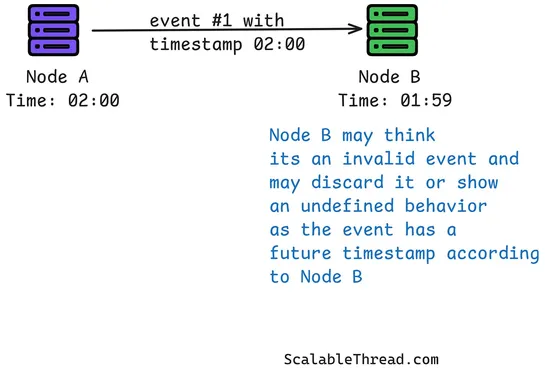
Why "What Happened First?" Is One of the Hardest Questions in Large-Scale Systems
Link
@faun shared a link, 6 months, 3 weeks ago
FAUN.dev()

Dynamic Kubernetes request right sizing with Kubecost

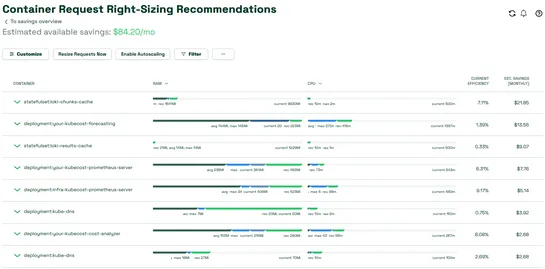
Kubecost’s Amazon EKS add-on now handlesautomated container request right-sizing. That means teams can tweak CPU and memory requests based on actual usage—once or on a recurring schedule. Optimization profiles are customizable, and resizing can be baked into cluster setup using Helm. Yes, that mean.. read more  

Dynamic Kubernetes request right sizing with Kubecost
Link
@faun shared a link, 6 months, 3 weeks ago
FAUN.dev()

Kubernetes VPA: Limitations, Best Practices, and the Future of Pod Rightsizing

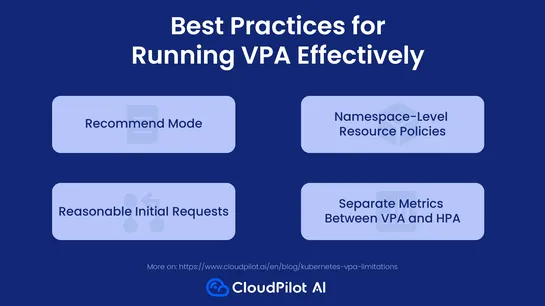
Kubernetes'Vertical Pod Autoscaler (VPA)tries to be helpful by tweaking CPU and memory requests on the fly. Problem is, it needs to bounce your pods to do it. And if you're also runningHorizontal Pod Autoscaler (HPA)on the same metrics? Now they're fighting over control. VPA sees a narrow slice of .. read more  

Kubernetes VPA: Limitations, Best Practices, and the Future of Pod Rightsizing
Link
@faun shared a link, 6 months, 3 weeks ago
FAUN.dev()

Lucidity turns spotlight onto Kubernetes storage costs

Lucidity has upgraded itsAutoScaler. It now handles persistent volumes on AWS-hosted Kubernetes, automatically scaling storage and reducing waste. The upgrade bringspod-level isolation,fault tolerance, andbulk Linux onboarding. Azure and GCP are next on the list... read more  

Lucidity turns spotlight onto Kubernetes storage costs
Link
@faun shared a link, 6 months, 3 weeks ago
FAUN.dev()

Amazon EKS Enables Ultra-Scale AI/ML Workloads with Support for 100K Nodes per Cluster

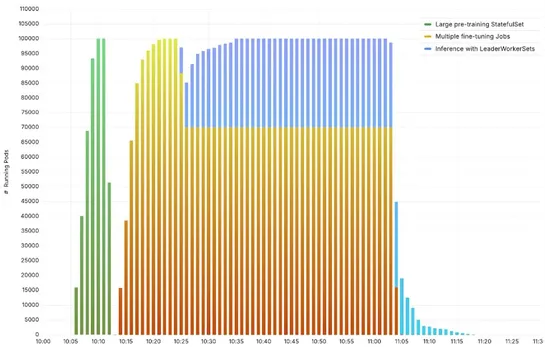
Amazon EKS just cranked its Kubernetes cluster limit to100,000 nodes—a 10x jump. The secret sauce? A reworkedetcdwith an internaljournalsystem andin-memorystorage. Toss in tightAPI server tuningand network tweaks, and the result is wild: 500 pods per second, 900K pods, 10M+ objects, no sweat—even un.. read more  

Amazon EKS Enables Ultra-Scale AI/ML Workloads with Support for 100K Nodes per Cluster
Link
@faun shared a link, 6 months, 3 weeks ago
FAUN.dev()

Kubernetes DNS Exploit Enables Git Credential Theft from ArgoCD

A new attack chain messes withKubernetes DNS resolutionandArgoCD’s certificate injectionto swipe GitHub credentials. With the right permissions, a user inside the cluster can reroute GitOps traffic to a fake internal service, sniff auth headers, and quietly walk off with tokens. What’s broken:GitOp.. read more  

Kubernetes DNS Exploit Enables Git Credential Theft from ArgoCD
Link
@faun shared a link, 6 months, 3 weeks ago
FAUN.dev()

Why I Ditched Docker for Podman (And You Should Too)

Older container technologies like Docker have been prone to security vulnerabilities, such as CVE-2019-5736 and CVE-2022-0847, which allowed for potential host system compromise. Podman changes the game by eliminating the need for a persistent background service like the Docker daemon, enhancing sec.. read more  

Link
@faun shared a link, 6 months, 3 weeks ago
FAUN.dev()

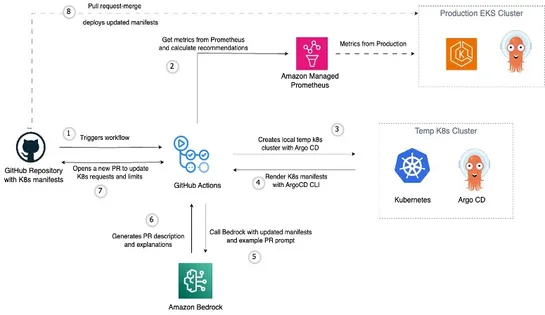
Kubernetes right-sizing with metrics-driven GitOps automation

AWS just dropped a GitOps-native pattern for tuning EKS resources—built to runoutsidethe cluster. It’s wired up withAmazon Managed Service for Prometheus,Argo CD, andBedrockto automate resource recommendations straight into Git. Here’s the play: it maps usage metrics to templated manifests, then sp.. read more  

Kubernetes right-sizing with metrics-driven GitOps automation
Link
@faun shared a link, 6 months, 3 weeks ago
FAUN.dev()

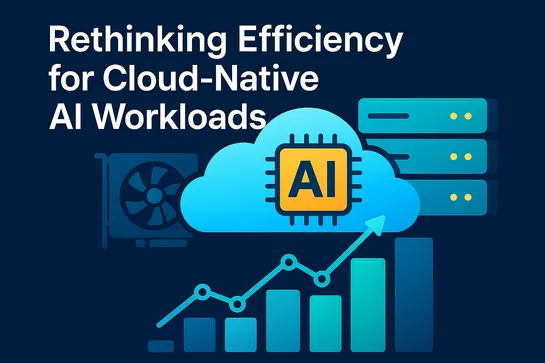
Rethinking Efficiency for Cloud-Native AI Workloads

AI isn’t just burning compute—it's torching old-school FinOps. Reserved Instances? Idle detection? Cute, but not built for GPU bottlenecks and model-heavy pipelines. What’s actually happening:Infra teams are ditching cost-first playbooks for something smarter—business-aligned orchestrationthat chas.. read more  

Rethinking Efficiency for Cloud-Native AI Workloads
Link
@faun shared a link, 6 months, 3 weeks ago
FAUN.dev()

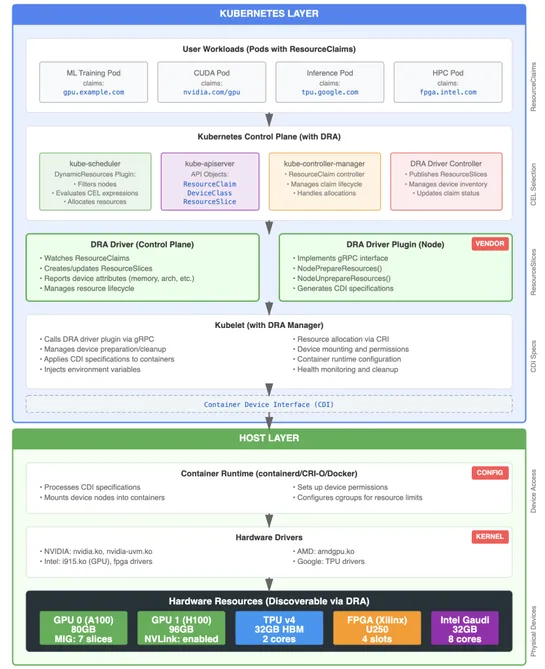
Kubernetes Primer: Dynamic Resource Allocation (DRA) for GPU Workloads

Kubernetes 1.34 brings serious heat for anyone juggling GPUs or accelerators. MeetDynamic Resource Allocation (DRA)—a new way to schedule hardware like you mean it. DRA addsResourceClaims,DeviceClasses, andResourceSlices, slicing device management away from pod specs. It replaces the old device plu.. read more  

Kubernetes Primer: Dynamic Resource Allocation (DRA) for GPU Workloads
The Open Source Security Foundation (OpenSSF) is an industry-backed foundation focused on strengthening the security of the global open source software ecosystem. It brings together major technology companies, cloud providers, open source communities, and security experts to address systemic security challenges that affect how software is built, distributed, and consumed.

OpenSSF was launched in 2021 and operates under the Linux Foundation, combining efforts from earlier initiatives such as the Core Infrastructure Initiative (CII) and industry-led supply chain security programs. Its mission is to make open source software more trustworthy, resilient, and secure by default, without placing unrealistic burdens on maintainers.

The foundation works across several key areas:

- Supply chain security: Developing frameworks, best practices, and tools to secure the software lifecycle from source to deployment. This includes stewardship of projects like sigstore and leadership on SLSA (Supply-chain Levels for Software Artifacts).

- Security tooling: Supporting and incubating open source tools that help developers detect, prevent, and remediate vulnerabilities at scale.

- Vulnerability management: Improving how vulnerabilities are discovered, disclosed, scored, and fixed across open source projects.

- Education and best practices: Publishing guidance, training, and maturity models such as the OpenSSF Best Practices Badge Program, which helps projects assess and improve their security posture.

- Metrics and research: Advancing data-driven approaches to understanding open source security risks and ecosystem health.

OpenSSF operates through working groups and special interest groups (SIGs) that focus on specific problem areas like securing builds, improving dependency management, or automating provenance generation. This structure allows practitioners to collaborate on concrete, actionable solutions rather than high-level policy alone.

By aligning maintainers, enterprises, and security teams, OpenSSF plays a central role in reducing large-scale risks such as dependency confusion, compromised build systems, and malicious package injection. Its work underpins many modern DevSecOps and cloud-native security practices and is increasingly referenced by governments and enterprises as a baseline for secure software development.