Join us

ContentUpdates from The Open Source Security Foundation (OpenSSF) is a...
Link
@faun shared a link, 5 months, 2 weeks ago
FAUN.dev()

Most Cloud-Native Roles are Software Engineers

Software Engineers still own the cloud-native job boards in 2025 - nearly47%of all Kubernetes-tagged listings. DevOps holds onto second. But Platform Engineers just leapfrogged SREs, which have slid 30% since 2023... read more  
Most Cloud-Native Roles are Software Engineers
Link
@faun shared a link, 5 months, 2 weeks ago
FAUN.dev()

Introducing Headlamp Plugin for Karpenter

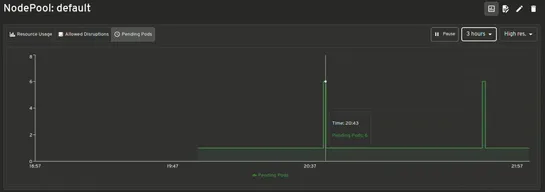
The newHeadlamp Karpenter Pluginwires real-time autoscaling insight straight into the Headlamp UI. It showsKarpenterresources, live metrics, scaling moves—no kubectl spelunking required. NodePoolsandNodeClaimsget mapped to core Kubernetes objects. You can tweak configs in the UI, get validation on t.. read more  

Introducing Headlamp Plugin for Karpenter
Link
@faun shared a link, 5 months, 2 weeks ago
FAUN.dev()

Kubernetes for agentic apps: A platform engineering perspective

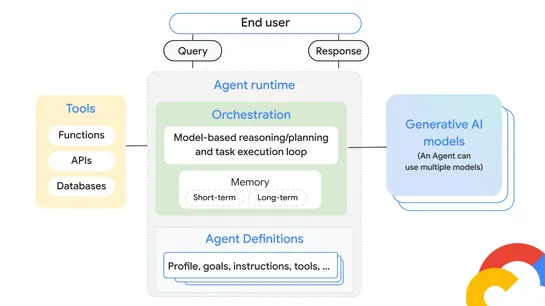
Agentic AI flips the old model. Instead of stateless, event-by-event workloads, we getstateful, self-steering systemsthat observe, reason, plan, and act - on loop. Kubernetes steps up as the OS for this next phase. Boosted by platform engineering, it brings the right mix:ephemeral compute, persisten.. read more  

Kubernetes for agentic apps: A platform engineering perspective
Link
@faun shared a link, 5 months, 2 weeks ago
FAUN.dev()

How I Built My Kubernetes Command Toolkit: A Journey from kubectl Chaos to Command Mastery

A dev-built Kubernetes CLI framework reshapeskubectlfor how teams actually work. Commands get grouped by role - dev, SRE, sec, admin - instead of by resource. It bakes in defaults forKyvernopolicies, encourages muscle-memory workflows, and wires up real-time troubleshooting to shrink downtime in pro.. read more  

How I Built My Kubernetes Command Toolkit: A Journey from kubectl Chaos to Command Mastery
Link
@faun shared a link, 5 months, 2 weeks ago
FAUN.dev()

Who’s Calling That API? A Detective Story from the Depths of EKS Networking

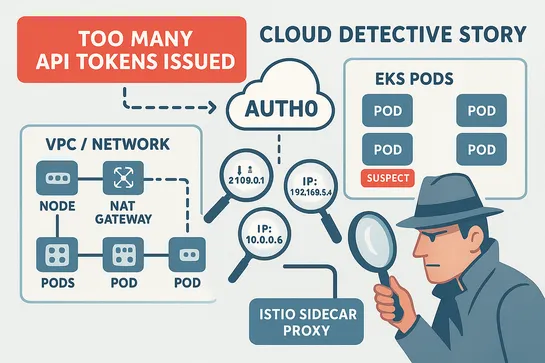
A production network got hammered by too many Auth0 token requests. The source? EKS workloads tucked behind a shared NAT Gateway. No easy trail. Engineers stitched it together usingVPC Flow Logs,pod-to-node maps, and some sharpIstio ServiceEntry logs. Even with Kubernetes CNI doing its NAT-obscuring.. read more  

Who’s Calling That API? A Detective Story from the Depths of EKS Networking
News FAUN.dev() Team
@varbear shared an update, 5 months, 2 weeks ago
FAUN.dev()

Reo.Dev Secures $4M to Boost AI Platform for Developer Companies

HubSpot Salesforce Reo.Dev

Reo.Dev has raised $4 million in seed funding, led by Heavybit, to enhance its AI-powered go-to-market platform for developer-first companies and expand its U.S. presence.

Reo.Dev Secures $4M to Boost AI Platform for Developer Companies
News FAUN.dev() Team
@kala shared an update, 5 months, 2 weeks ago
FAUN.dev()

Anthropic's Claude Sonnet 4.5 AI Model Shows Self-Awareness in Tests

Anthropic's AI model, Claude Sonnet 4.5, exhibits self-awareness by recognizing test scenarios, complicating safety evaluations and raising concerns about potential strategic behavior, similar to observations in OpenAI models.

Anthropic's Claude Sonnet 4.5 AI Model Shows Self-Awareness in Tests
News FAUN.dev() Team
@varbear shared an update, 5 months, 2 weeks ago
FAUN.dev()

Google Expands AI Vibe-Coding App Opal to 15 More Countries

Opal

Google expands its AI vibe-coding app Opal to 15 more countries, enhancing global access to no-code web app creation with improved debugging and performance.

Google Expands AI Vibe-Coding App Opal to 15 More Countries
News FAUN.dev() Team
@kaptain shared an update, 5 months, 2 weeks ago
FAUN.dev()

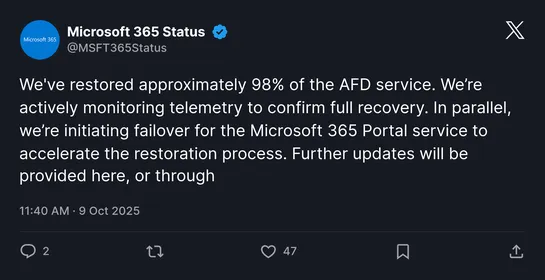
Azure Outage: Kubernetes Crash Hits Teams, Minecraft in EMEA Regions

Kubernetes

A Kubernetes crash caused a major Azure outage, impacting Teams and Minecraft in EMEA, with Microsoft working to restore services.

Azure Outage: Kubernetes Crash Hits Teams, Minecraft in EMEA Regions
Link
@anjali shared a link, 5 months, 2 weeks ago
Customer Marketing Manager, Last9

15 PHP APM Tools Worth Using in 2025

Compare 15 PHP APM tools for 2025 — from open-source options to managed platforms — and find what fits your performance needs.

php_apm
The Open Source Security Foundation (OpenSSF) is an industry-backed foundation focused on strengthening the security of the global open source software ecosystem. It brings together major technology companies, cloud providers, open source communities, and security experts to address systemic security challenges that affect how software is built, distributed, and consumed.

OpenSSF was launched in 2021 and operates under the Linux Foundation, combining efforts from earlier initiatives such as the Core Infrastructure Initiative (CII) and industry-led supply chain security programs. Its mission is to make open source software more trustworthy, resilient, and secure by default, without placing unrealistic burdens on maintainers.

The foundation works across several key areas:

- Supply chain security: Developing frameworks, best practices, and tools to secure the software lifecycle from source to deployment. This includes stewardship of projects like sigstore and leadership on SLSA (Supply-chain Levels for Software Artifacts).

- Security tooling: Supporting and incubating open source tools that help developers detect, prevent, and remediate vulnerabilities at scale.

- Vulnerability management: Improving how vulnerabilities are discovered, disclosed, scored, and fixed across open source projects.

- Education and best practices: Publishing guidance, training, and maturity models such as the OpenSSF Best Practices Badge Program, which helps projects assess and improve their security posture.

- Metrics and research: Advancing data-driven approaches to understanding open source security risks and ecosystem health.

OpenSSF operates through working groups and special interest groups (SIGs) that focus on specific problem areas like securing builds, improving dependency management, or automating provenance generation. This structure allows practitioners to collaborate on concrete, actionable solutions rather than high-level policy alone.

By aligning maintainers, enterprises, and security teams, OpenSSF plays a central role in reducing large-scale risks such as dependency confusion, compromised build systems, and malicious package injection. Its work underpins many modern DevSecOps and cloud-native security practices and is increasingly referenced by governments and enterprises as a baseline for secure software development.