Join us

ContentUpdates and recent posts about AIStor..
Link
@kala shared a link, 1 month, 3 weeks ago
FAUN.dev()

How OpenAI Codex Works

Engineering leaders report limited ROI from AI, often missing full lifecycle costs. OpenAI's Codex model for cloud-based coding required significant engineering work beyond the AI model itself. The system's orchestration layer ensures rich context for the model to execute tasks effectively... read more  

Link
@devopslinks shared a link, 1 month, 3 weeks ago
FAUN.dev()

Software engineer interviews for the age of AI

AI is becoming more prevalent in coding interviews, sparking interest from experienced candidates tired of traditional methods. Hiring great engineers is crucial for maintaining reliable services, especially in the era of AI-generated code. System design interviews help identify candidates with hand.. read more  

Software engineer interviews for the age of AI
Link
@devopslinks shared a link, 1 month, 3 weeks ago
FAUN.dev()

Why system architects now default to Arm in AI data centers

Architects rebase infrastructure torack-levelsystems. They anchor designs onArm NeoverseCPUs. Goal: balance energy, thermals, memory bandwidth, and sustained throughput. Benchmarks showGraviton4(Neoverse) outperforms comparableAMDandIntelEC2instances on price/performance for generative AI, DB, ML, a.. read more  

Why system architects now default to Arm in AI data centers
Link
@devopslinks shared a link, 1 month, 3 weeks ago
FAUN.dev()

5 Suggestions to Upgrade your OpenTofu/Terraform & AWS Development Experience

The article covers tools and scripts to reclaim focus and improve workflow for OpenTofu, Terraform, and AWS CLI users. Suggestions include tools for easily swapping between versions, summarizing plans, linting code, switching AWS profiles, and customizing prompts. Bonus recommendation includes Task .. read more  

5 Suggestions to Upgrade your OpenTofu/Terraform & AWS Development Experience
Link
@devopslinks shared a link, 1 month, 3 weeks ago
FAUN.dev()

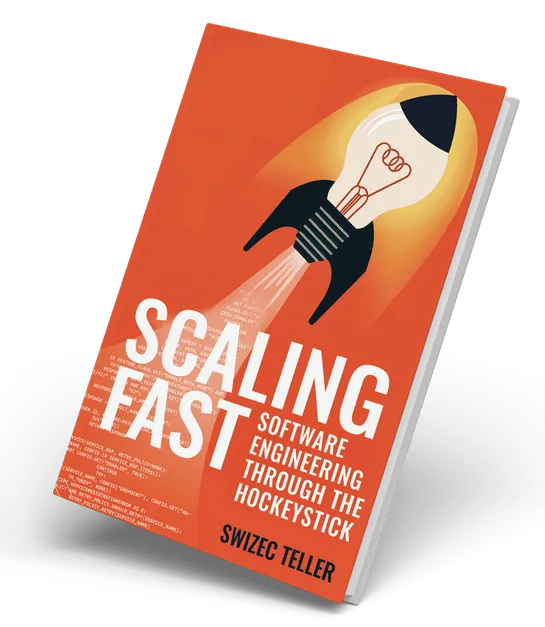
The Software Factory: Why Your Team Will Never Work the Same Again

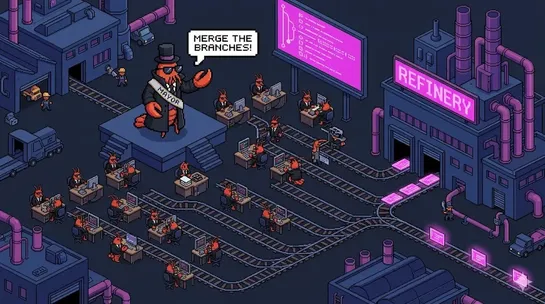
The current models and tooling are enough to build software factories. In a software factory, developers stop writing code by hand, and AI coding agents implement features and fix bugs while developers design and improve the factory. Tools like Claude Code and Gas Town enable this shift towards a mo.. read more  

The Software Factory: Why Your Team Will Never Work the Same Again
Link
@devopslinks shared a link, 1 month, 3 weeks ago
FAUN.dev()

How I Use LLMs for Security Work

LLMs like Claude, Cursor, and ChatGPT help tackle complex problems, but prompting them like Google won't cut it. Use role-stacking for varied perspectives (e.g.: you are a senior security engineer and sr. software engineer with experience in Docker, Kubernete..) and always specify your tools for bet.. read more  

News FAUN.dev() Team
@devopslinks shared an update, 1 month, 3 weeks ago
FAUN.dev()

Systemd Gets a birthDate Field - and a "Liberated" Fork in Response

Age verification laws just reached the Linux init system. Systemd added an optional birthDate field to user records - not a policy engine, just a data slot other projects can build on. That was not enough to stop a fork. Liberated systemd removes it entirely, and the debate is not going away.

Story
@laura_garcia shared a post, 1 month, 3 weeks ago
Software Developer, RELIANOID

Deploy RELIANOID on Azure in minutes

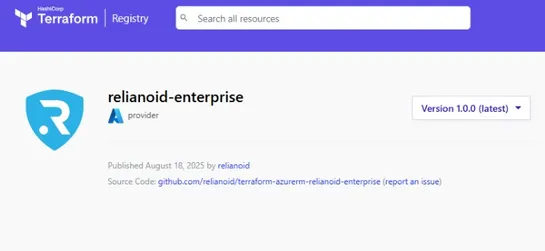
🚀 Deploy RELIANOID on Azure in minutes Looking to automate your infrastructure? Our latest guide shows how to deploy 𝗥𝗘𝗟𝗜𝗔𝗡𝗢𝗜𝗗 𝗟𝗼𝗮𝗱 𝗕𝗮𝗹𝗮𝗻𝗰𝗲𝗿 𝗘𝗻𝘁𝗲𝗿𝗽𝗿𝗶𝘀𝗲 𝗘𝗱𝗶𝘁𝗶𝗼𝗻 𝘃𝟴 𝗼𝗻 𝗠𝗶𝗰𝗿𝗼𝘀𝗼𝗳𝘁 𝗔𝘇𝘂𝗿𝗲 𝘂𝘀𝗶𝗻𝗴 𝗧𝗲𝗿𝗿𝗮𝗳𝗼𝗿𝗺 — fast, simple, and fully automated. 💡 What you’ll get: - End-to-end deployment (VM, network, IP, secu..

terraform_relianoid_enterprise_azure_img2
 Activity
@jillelliott created an organization eSiteWorld TechnoLabs Pvt. Ltd. , 1 month, 3 weeks ago.
 Activity
@aarroondiazz created an organization Gojek App Clone , 1 month, 3 weeks ago.
AIStor is an enterprise-grade, high-performance object storage platform built for modern data workloads such as AI, machine learning, analytics, and large-scale data lakes. It is designed to handle massive datasets with predictable performance, operational simplicity, and hyperscale efficiency, while remaining fully compatible with the Amazon S3 API. AIStor is offered under a commercial license as a subscription-based product.

At its core, AIStor is a software-defined, distributed object store that runs on commodity hardware or in containerized environments like Kubernetes. Rather than being limited to traditional file or block interfaces, it exposes object storage semantics that scale from petabytes to exabytes within a single namespace, enabling consistent, flat addressing of vast datasets. It is engineered to sustain very high throughput and concurrency, with examples of multi-TiB/s read performance on optimized clusters.

AIStor is optimized specifically for AI and data-intensive workloads, where throughput, low latency, and horizontal scalability are critical. It integrates broadly with modern AI and analytics tools, including frameworks such as TensorFlow, PyTorch, Spark, and Iceberg-style table engines, making it suitable as the foundational storage layer for pipelines that demand both performance and consistency.

Security and enterprise readiness are central to AIStor’s design. It includes capabilities like encryption, replication, erasure coding, identity and access controls, immutability, lifecycle management, and operational observability, which are important for mission-critical deployments that must meet compliance and data protection requirements.

AIStor is positioned as a platform that unifies diverse data workloads — from unstructured storage for application data to structured table storage for analytics, as well as AI training and inference datasets — within a consistent object-native architecture. It supports multi-tenant environments and can be deployed across on-premises, cloud, and hybrid infrastructure.