Join us

ContentUpdates and recent posts about Arti..
Link
@devopslinks shared a link, 7 months ago
FAUN.dev()

How and Why Netflix Built a Real-Time Distributed Graph -  Ingesting and Processing Data Streams at Internet Scale

Netflix built a Real-Time Distributed Graph (RDG) to connect member interactions across different devices instantly. Using Apache Flink and Kafka, they process up to1 millionmessages per second for node and edge updates. Scaling Flink jobs individually reduced operational headaches and allowed for s.. read more  

Link
@devopslinks shared a link, 7 months ago
FAUN.dev()

Jump Starting Quantum Computing on Azure

Microsoft just pulled off full-stack quantum teleportation withAzure Quantum, wiring up Qiskit and Quantinuum’s simulator in the process. Entanglement? Check. Hadamard and CNOT gates set the stage. Classical control logic wrangles the flow. Validation lands cleanly on the backend... read more  

News FAUN.dev() Team
@kala shared an update, 7 months ago
FAUN.dev()

FSF Talks GPL Compliance and AI Code at GNU Cauldron

The FSF's Licensing and Compliance Lab engaged with GNU toolchain maintainers at GNU Cauldron to discuss GPL compliance, AI-generated code, and attribution in containerized environments.

FSF Talks GPL Compliance and AI Code at GNU Cauldron
News FAUN.dev() Team
@varbear shared an update, 7 months ago
FAUN.dev()

Arkade’s New Off-Chain Protocol Promises Smoother Bitcoin Transactions

Arkade introduces a new protocol to enhance Bitcoin's global financial capabilities by enabling offchain payments and transaction batching, inviting developers to explore its public beta.

Arkade’s New Off-Chain Protocol Promises Smoother Bitcoin Transactions
News FAUN.dev() Team
@kala shared an update, 7 months ago
FAUN.dev()

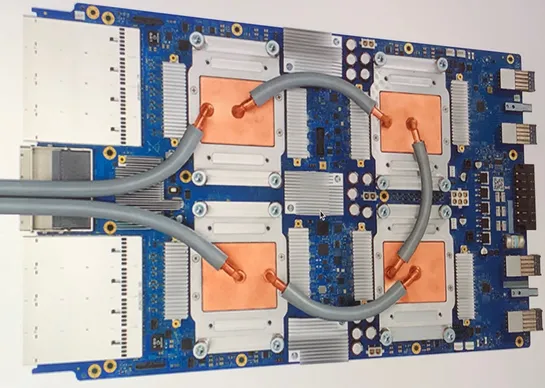
Anthropic Scales Up Google Cloud TPUs to Power Next-Gen AI Research

Google Kubernetes Engine (GKE)

Anthropic plans a major expansion of its Google Cloud TPU usage to enhance AI research and development, driven by increasing customer demand and valued at tens of billions of dollars.

Anthropic Scales Up Google Cloud TPUs to Power Next-Gen AI Research
News FAUN.dev() Team
@devopslinks shared an update, 7 months ago
FAUN.dev()

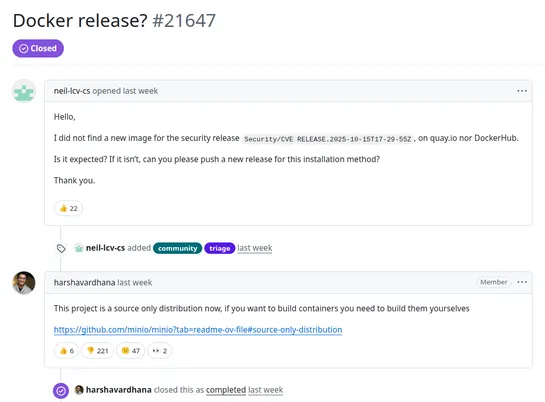
MinIO Pulls Docker Images and Documentation - Community Calls Move "Malicious" and "Lock-In Strategy"

MinIO

MinIO transitions to a source-only distribution model, ending pre-compiled Docker images, sparking community concerns over security and feature removal.

MinIO GitHub Issue
News FAUN.dev() Team
@devopslinks shared an update, 7 months ago
FAUN.dev()

Cloudflare Turns Workers into an Email Platform - Private Beta Begins.

Cloudflare Workers Cloudflare

Cloudflare introduces a private beta for its Email Service, integrating email sending into Workers to streamline email management and enhance delivery reliability for developers.

Cloudflare Turns Workers into an Email Platform - Private Beta Begins.
News FAUN.dev() Team
@devopslinks shared an update, 7 months ago
FAUN.dev()

A New Terraform Alternative Has Arrived - Platform Engineering Labs Launches Formae

formae Terraform

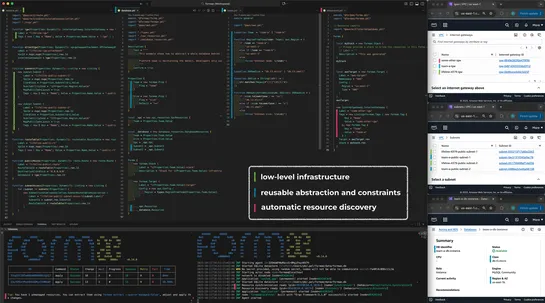
Platform Engineering Labs introduces formae, an open-source IaC platform, to streamline cloud resource management and replace traditional systems like Terraform.

A New Terraform Alternative Has Arrived - Platform Engineering Labs Launches Formae
News FAUN.dev() Team
@varbear shared an update, 7 months ago
FAUN.dev()

Even Your Bed Isn’t Safe from AWS Outages - Eight Sleep Learns the Hard Way

Amazon Web Services

An AWS outage disrupted Eight Sleep's smart beds, prompting plans for an "outage mode" to enhance system resilience and prevent future connectivity issues.

Eight Sleep technology
News FAUN.dev() Team
@kala shared an update, 7 months ago
FAUN.dev()

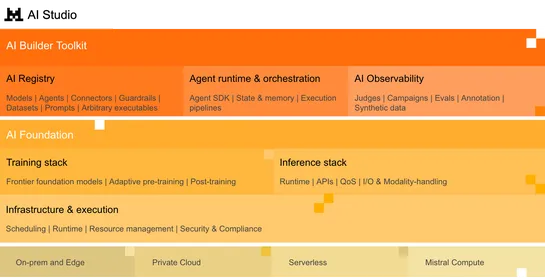
Mistral AI Studio Launches: Streamlining AI from Prototype to Production

Mistral AI Studio

Mistral AI Studio launches to aid enterprise AI teams in moving from prototypes to production with enhanced infrastructure and governance features.

Mistral AI Studio Marketplace
Arti is an official Tor Project initiative to rewrite the Tor client stack in Rust. Its primary goal is to address long-standing safety, reliability, and maintainability challenges inherent in the legacy C-based Tor implementation. By leveraging Rust’s strong compile-time guarantees for memory safety and concurrency, Arti eliminates entire classes of bugs that have historically affected Tor, including many security vulnerabilities.

Arti is architected as a modular, embeddable library rather than a monolithic application. This makes it easier for developers to integrate Tor networking capabilities directly into other applications, services, and platforms. From its earliest versions, Arti has supported multi-core cryptography, cleaner APIs, and a more maintainable internal design.

While early releases focused on client functionality such as bootstrapping, running as a SOCKS proxy, and routing traffic over the Tor network, the long-term roadmap includes full feature parity with the existing Tor client, support for onion services, anti-censorship mechanisms, and eventually Tor relay functionality. Arti represents the future foundation of the Tor ecosystem, prioritizing long-term security, developer velocity, and adaptability.