Join us

ContentUpdates and recent posts about Arti..
Link
@kaptain shared a link, 5 months, 3 weeks ago
FAUN.dev()

Kubernetes Configuration Good Practices

Stripped down and sharp, the blog lays out Kubernetes config best practices: keep YAML manifests in version control, use Deployments (not raw Pods), and label like you mean it - semantically, not just alphabet soup. It digs into sneaky pain points too, like how YAML mangles booleans (yes≠true), and .. read more  

Link
@kala shared a link, 5 months, 3 weeks ago
FAUN.dev()

How I Built a 100% Offline “Second Brain” for Engineering Docs using Docker & Llama 3 (No OpenAI)

Senior Automation Engineer built an offline RAG system for technical documents using Ollama, Llama 3, and ChromaDB in a Dockerized microservices architecture. The system enables efficient retrieval and generation of information from PDFs with a streamlined UI. The deployment package, including compl.. read more  

Link
@kala shared a link, 5 months, 3 weeks ago
FAUN.dev()

How to Evaluate LLMs Without Opening Your Wallet

A new mock-based framework lets QA and automation folks stress-test LLM outputs - no API calls, no surprise charges. It runs entirely local, usingpytest fixtures, structured test flows, and JSON schema checks to keep things tight. Test logic stays modular. Cross-validation’s baked in. And if you nee.. read more  

Link
@kala shared a link, 5 months, 3 weeks ago
FAUN.dev()

I tested ChatGPT’s backend API using RENTGEN, and found more issues than expected

A closer look at OpenAI’s API uncovers some shaky ground: misconfiguredCORS headers, missingX-Frame-Options, noinput validation, and borkedHTTP status handling. Large uploads? Boom..crash!CORS preflightrequests? Straight-up denied. So much for smooth browser support... read more  

I tested ChatGPT’s backend API using RENTGEN, and found more issues than expected
Link
@kala shared a link, 5 months, 3 weeks ago
FAUN.dev()

Writing a good CLAUDE.md

Anthropic’s Claude Code now deprioritizes parts of the root context file it sees as irrelevant. It still reads the file every session, but won’t waste cycles on side quests. The message to devs: stop stuffing it with catch-all instructions. Instead, use modular context that unfolds as needed - think.. read more  

Writing a good CLAUDE.md
Link
@kala shared a link, 5 months, 3 weeks ago
FAUN.dev()

1,500+ PRs Later: Spotify’s Journey with Our Background Coding Agent

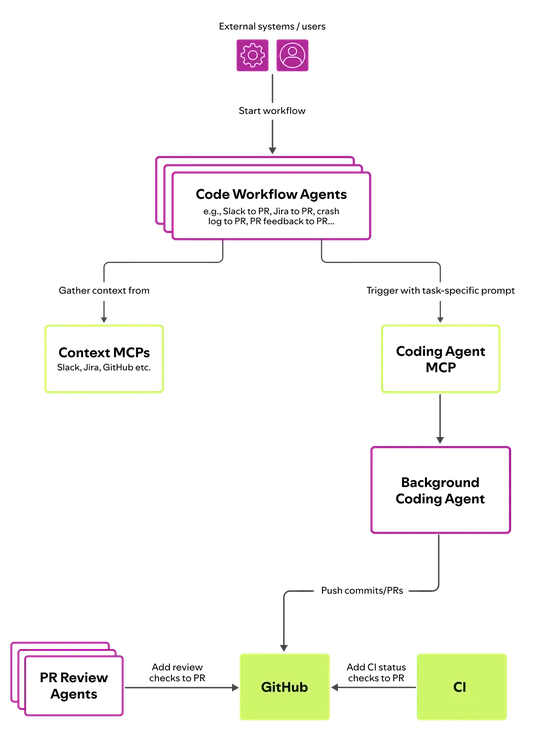
Spotify just gave its internal Fleet Management tooling a serious brain upgrade. They've wired inAI coding agentsthat now handle source-to-source transformations across repos - automatically. So far? Over 1,500 AI-generated PRs pushed. Not just lint fixes - these include heavy-duty migrations. They'.. read more  

1,500+ PRs Later: Spotify’s Journey with Our Background Coding Agent
Link
@kala shared a link, 5 months, 3 weeks ago
FAUN.dev()

AI and QE: Patterns and Anti-Patterns

The author shared insights on how AI can be leveraged as a QE and highlighted potential dangers to watch out for, drawing parallels with misuse of positive behaviors or characteristics taken out of context. The post outlined anti-patterns related to automating tasks, stimulating thinking, and tailor.. read more  

Link
@kala shared a link, 5 months, 3 weeks ago
FAUN.dev()

Cato CTRL™ Threat Research: HashJack - Novel Indirect Prompt Injection Against AI Browser Assistants

A new attack method -HashJack- shows how AI browsers can be tricked with nothing more than a URL fragment. It works like this: drop malicious instructions after the#in a link, and AI copilots likeComet,Copilot for Edge, andGemini for Chromemight swallow them whole. No need to hack the site. The LLM .. read more  

Link
@devopslinks shared a link, 5 months, 3 weeks ago
FAUN.dev()

How when AWS was down, we were not

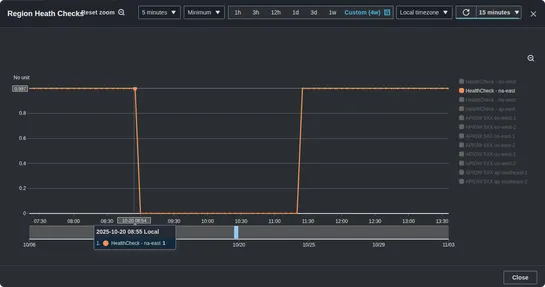
During the AWS us-east-1 meltdown - when DynamoDB, IAM, and other key services went dark - Authress kept the lights on. Their trick? A ruthless edge-first, multi-region setup built for failure. They didn’t hope DNS would save them. They wired in automated failover, rolled their own health checks, an.. read more  

How when AWS was down, we were not
Link
@devopslinks shared a link, 5 months, 3 weeks ago
FAUN.dev()

Collaborating with Terraform: How Teams Can Work Together Without Breaking Things

When working with Terraform in a team environment, common issues may arise such as state locking, version mismatches, untracked local applies, and lack of transparency. Atlantis is an open-source tool that can help streamline collaboration by automatically running Terraform commands based on GitHub .. read more  

Arti is an official Tor Project initiative to rewrite the Tor client stack in Rust. Its primary goal is to address long-standing safety, reliability, and maintainability challenges inherent in the legacy C-based Tor implementation. By leveraging Rust’s strong compile-time guarantees for memory safety and concurrency, Arti eliminates entire classes of bugs that have historically affected Tor, including many security vulnerabilities.

Arti is architected as a modular, embeddable library rather than a monolithic application. This makes it easier for developers to integrate Tor networking capabilities directly into other applications, services, and platforms. From its earliest versions, Arti has supported multi-core cryptography, cleaner APIs, and a more maintainable internal design.

While early releases focused on client functionality such as bootstrapping, running as a SOCKS proxy, and routing traffic over the Tor network, the long-term roadmap includes full feature parity with the existing Tor client, support for onion services, anti-censorship mechanisms, and eventually Tor relay functionality. Arti represents the future foundation of the Tor ecosystem, prioritizing long-term security, developer velocity, and adaptability.