Join us

ContentUpdates and recent posts about AWX..
Link
@devopslinks shared a link, 3 months, 1 week ago
FAUN.dev()

Why Serverless Compute Partners Are Now More Important Than Ever

The note saysAIworkloads are bursty. They spawn parallel tool calls, pull multi‑GB model weights into RAM, and endure long cold starts (e.g.,vLLM,SGLang). Companies wrestle with a fragmentedGPUmarket and poor peakGPU utilization. To hit latency, compliance, and cost targets they adoptmulti‑region/mu.. read more  
Why Serverless Compute Partners Are Now More Important Than Ever
Story
@shubham321 shared a post, 3 months, 1 week ago
Software engineer, Keploy

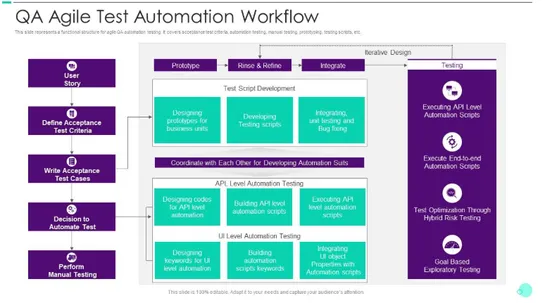
What Is QA Automation? Benefits, Tools, Challenges & Future

QA automation is a modern software testing approach that uses automated tools and frameworks to execute test cases efficiently and consistently. Instead of relying solely on manual testing, QA automation enables teams to validate application functionality, performance, and reliability at every stage of the development lifecycle. It plays a crucial role in Agile and DevOps environments, where frequent code changes and faster release cycles demand continuous testing.

One of the biggest advantages of QA automation is speed. Automated tests can run in minutes, allowing teams to detect defects early and provide quick feedback to developers. This leads to improved software quality and reduced risk of critical issues reaching production. Automation also enhances accuracy by eliminating human errors that commonly occur in repetitive manual testing tasks.

qa automation
Story
@suarezsara shared a post, 3 months, 1 week ago

Why SharePoint Application Development Still Powers Enterprise Collaboration in 2026

Learn how businesses use SharePoint for workflow automation, seamless Microsoft 365 integration, and enhanced governance.

Story Keploy Team
@sancharini shared a post, 3 months, 1 week ago

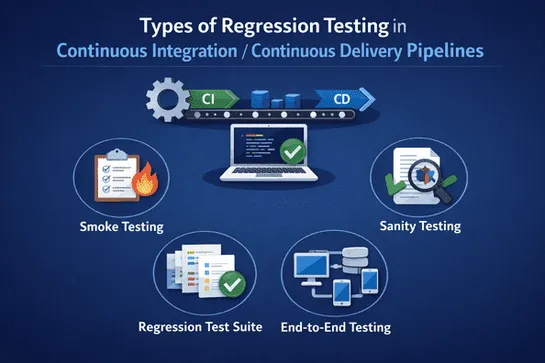
Types of Regression Testing in CI/CD Pipelines

Learn how different types of regression testing in CI/CD pipelines help teams detect defects early, maintain software quality, and reduce production risks while optimizing automated workflows.

Types of Regression Testing in CI/CD Pipelines
Story Keploy Team
@sancharini shared a post, 3 months, 1 week ago

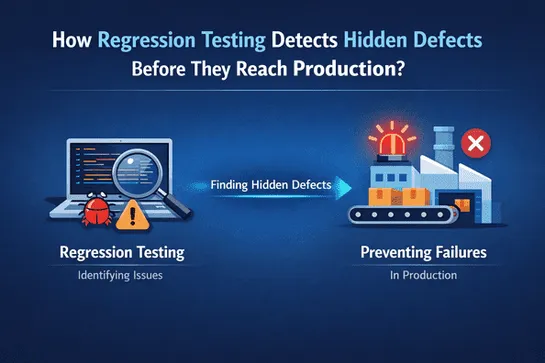
How Regression Testing Detects Hidden Defects Before They Reach Production?

Understand how regression testing helps teams identify hidden defects early, maintain system stability, and prevent production issues using effective testing strategies and regression testing tools.

How Regression Testing Detects Hidden Defects Before Production
Story
@elenamia shared a post, 3 months, 1 week ago
Technical Consultant, Damco Solutions

Is Your Application Evolving or Aging? The Role of Software Maintenance Services in Continuous Improvement

Read this blog to learn how software maintenance services fuel continuous improvement, prevent downtime, and protect your digital investments.

126795
Story
@marxjenes shared a post, 3 months, 1 week ago

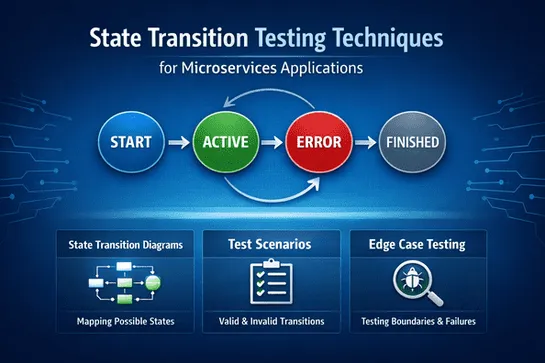
State Transition Testing Techniques for Microservices Applications

Learn effective state transition testing techniques for microservices applications. Ensure reliable service behavior, validate workflows, and strengthen regression testing in CI/CD pipelines.

State Transition Testing Techniques for Microservices Applications
 Activity
@kala added a new tool Claude Code , 3 months, 1 week ago.
News FAUN.dev() Team Trending
@kala shared an update, 3 months, 1 week ago
FAUN.dev()

NanoClaw Brings Container-Isolated AI Agents to WhatsApp and Telegram

NanoClaw OpenClaw Claude Code

NanoClaw is a lightweight open-source personal AI agent that runs locally and connects to apps like WhatsApp and Telegram. Built with only ~3,900 lines of code across 15 files, it uses container isolation to securely run agents and aims to offer a simpler, fully auditable alternative to large frameworks like OpenClaw.

 Activity
@kala added a new tool NanoClaw , 3 months, 1 week ago.
AWX is the open source, community supported upstream project for Red Hat Ansible Automation Platform, formerly known as Ansible Tower. It gives teams a web based interface, a full REST API, and a distributed task engine on top of Ansible, turning command line playbook runs into a managed, auditable automation service.

The project began at AnsibleWorks as the commercial Ansible Tower product, and after Red Hat acquired Ansible, it open sourced the codebase as AWX in September 2017, positioning it as the development ground where new features land before they are hardened into the supported Automation Platform controller. With AWX, you organize automation around projects (synced from Git or other source control), inventories (static or dynamically pulled from cloud providers), credentials (stored encrypted and injected at runtime), and job templates that tie a playbook to its inventory and credentials. On top of that, it adds role based access control, a visual dashboard, job scheduling, workflow chaining, webhooks, and real time job output, so multiple teams can run, track, and delegate automation without sharing SSH keys or sitting at a terminal.

Modern AWX runs on Kubernetes or OpenShift through the AWX Operator, which manages installation, upgrades, and scaling declaratively, reflecting its shift from a single host application to a cloud native, container based platform. Because it is the upstream of a paid product, AWX moves fast and ships frequently, which makes it ideal for labs, learning, and self managed deployments, though teams needing formal support and long term stability typically run the downstream Automation Platform instead.