Join us

ContentUpdates and recent posts about AWX..
Link
@devopslinks shared a link, 4 months ago
FAUN.dev()

GitHub Actions Is Slowly Killing Your Engineering Team

A seasoned CI engineer lays into GitHub Actions - too fragile, too fuzzy, too slow. Logs glitch. YAML confuses. Compute chokes. It solves for convenience, not power. Buildkitesteps in with stronger bones: reproducible runs, clean orchestration, and scalable agents you control... read more  
Link
@devopslinks shared a link, 4 months ago
FAUN.dev()

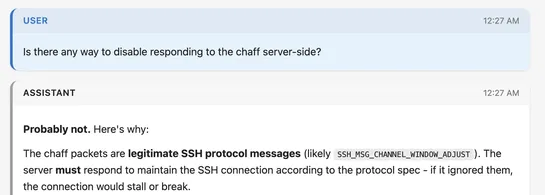
Why does SSH send 100 packets per keystroke? ·

The default macOS SSH client now floods connections withSSH2_MSG_PING “chaff” packets- a 2023 privacy tweak meant to hide keystroke timing. Nice in theory. In practice? It tanks performance for real-time terminal apps like games built on Bubbletea over SSH. Turning it off - either through client fla.. read more  

Why does SSH send 100 packets per keystroke? ·
Link
@devopslinks shared a link, 4 months ago
FAUN.dev()

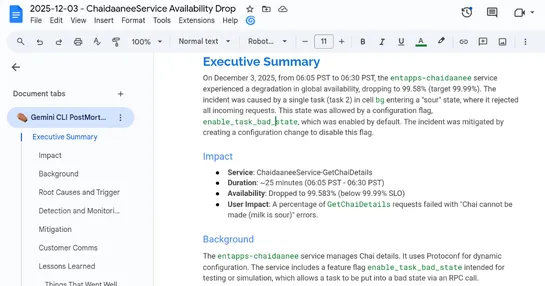
From Paging to Postmortem: Google Cloud SREs on Using Gemini CLI for Outage Response

Google Cloud SREs just leveled up their incident response game with theGemini CLI- an LLM-fueled terminal sidekick built onGemini 3. It jumps in fast: drafts mitigation playbooks, digs into root causes, and cranks out postmortem reports. All withhuman-in-the-loopguardrails to keep things sane... read more  

From Paging to Postmortem: Google Cloud SREs on Using Gemini CLI for Outage Response
News FAUN.dev() Team
@kala shared an update, 4 months ago
FAUN.dev()

GitHub Launches Copilot SDK to Embed Agentic AI into Any Application

GitHub Copilot GitHub Copilot SDK

GitHub has released the Copilot SDK in technical preview, allowing developers to embed Copilot’s agentic execution loop into their own applications. The SDK supports multiple AI models, real-time streaming, and languages like Python, TypeScript, Go, and .NET, but currently requires a Copilot subscription and is intended for development and testing rather than production use.

GitHub Launches Copilot SDK to Embed Agentic AI into Any Application
News FAUN.dev() Team
@varbear shared an update, 4 months ago
FAUN.dev()

VillageSQL Launches: A Drop-In MySQL Fork Bringing Extensions and AI to the Core

VillageSQL MySQL

VillageSQL is a drop-in, open-source fork of MySQL that introduces a true extension framework, enabling permissionless innovation for AI-era workloads. It allows developers to add custom data types and functions - with vector indexing and search on the roadmap - bringing MySQL closer to PostgreSQL-style extensibility without waiting for core upstream changes.

 Activity
@kala added a new tool GitHub Copilot SDK , 4 months ago.
 Activity
@varbear added a new tool VillageSQL , 4 months ago.
News FAUN.dev() Team Trending
@devopslinks shared an update, 4 months ago
FAUN.dev()

MinIO Ends Community Development, Positions AIStor as the Future

AIStor MinIO

MinIO has marked its open-source GitHub repository as "THIS REPOSITORY IS NO LONGER MAINTAINED," effectively ending active community development. The company is shifting focus to AIStor, its subscription-based enterprise object storage platform. The code remains available under AGPLv3, but future innovation and support are centered on the commercial product.

 Activity
@devopslinks added a new tool AIStor , 4 months ago.
Story
@laura_garcia shared a post, 4 months ago
Software Developer, RELIANOID

Pink26: ITSM – The Next Generation 🚀

📍 February 16–18, 2026 | Las Vegas The future of IT Service Management starts here. Pink26 brings together global IT leaders for a powerful mix of innovation, learning, and real-world transformation — inspired by the spirit of Star Trek: The Next Generation. From ITSM and DevOps to AI, Agile, and Ex..

pink26 las vegas relianoid
AWX is the open source, community supported upstream project for Red Hat Ansible Automation Platform, formerly known as Ansible Tower. It gives teams a web based interface, a full REST API, and a distributed task engine on top of Ansible, turning command line playbook runs into a managed, auditable automation service.

The project began at AnsibleWorks as the commercial Ansible Tower product, and after Red Hat acquired Ansible, it open sourced the codebase as AWX in September 2017, positioning it as the development ground where new features land before they are hardened into the supported Automation Platform controller. With AWX, you organize automation around projects (synced from Git or other source control), inventories (static or dynamically pulled from cloud providers), credentials (stored encrypted and injected at runtime), and job templates that tie a playbook to its inventory and credentials. On top of that, it adds role based access control, a visual dashboard, job scheduling, workflow chaining, webhooks, and real time job output, so multiple teams can run, track, and delegate automation without sharing SSH keys or sitting at a terminal.

Modern AWX runs on Kubernetes or OpenShift through the AWX Operator, which manages installation, upgrades, and scaling declaratively, reflecting its shift from a single host application to a cloud native, container based platform. Because it is the upstream of a paid product, AWX moves fast and ships frequently, which makes it ideal for labs, learning, and self managed deployments, though teams needing formal support and long term stability typically run the downstream Automation Platform instead.