Join us

ContentUpdates and recent posts about AWX..
Story
@eon01 shared a post, 4 months, 1 week ago
Founder, FAUN.dev

Three Events. One Week. The Heart of SoCal Tech.

Docker Kubernetes Pulumi Terraform vLLM

This March, Pasadena becomes a rare convergence point for security, open source, and DevOps practitioners. As a media partner,FAUN.dev()is proud to support three community-driven events that are deeply practitioner-focused and unapologetically real. - SCALEanchors the week asNorth America's largest..

SCaLE
Link
@varbear shared a link, 4 months, 1 week ago
FAUN.dev()

I struggled to code with AI until I learned this workflow

AI coding assistants work best when given clear context, a specific plan, and implemented in small, reviewable steps. Start with context, then a plan, and iterate through implementation and testing to avoid AI freelancing pitfalls... read more  

Link
@varbear shared a link, 4 months, 1 week ago
FAUN.dev()

What Is an Async Agent, Really?

An async agent is not inherently async, it depends on whether you wait for it to finish or not. Async agents can manage their own event loop of other agents, spawning and coordinating them to handle tasks, just like an async runtime in programming. This architectural distinction allows for concurren.. read more  

Link
@varbear shared a link, 4 months, 1 week ago
FAUN.dev()

Discord Alternatives, Ranked

A veteran Discord admin did a deep dive into chat platform alternatives - Signal, Matrix, Zulip, Rocket.Chat, Discourse - stacked against five key pillars: functionality, openness, security, safety, and decentralization. Discord didn't come out looking great. Centralized. No end-to-end encryption. S.. read more  

Discord Alternatives, Ranked
Link
@varbear shared a link, 4 months, 1 week ago
FAUN.dev()

Company as Code

Organisations rely heavily on digital systems, yet manage important organisational data using outdated manual methods despite advanced automation capabilities in other areas. A novel "Company as Code" concept proposes a programmatic representation of the entire organisation, enabling structured, ver.. read more  

Link
@kaptain shared a link, 4 months, 1 week ago
FAUN.dev()

How GKE Inference Gateway improved latency for Vertex AI

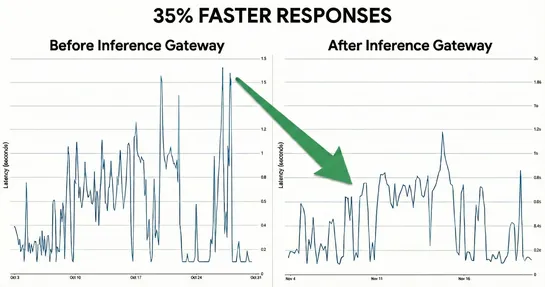
Vertex AI now plays nice withGKE Inference Gateway, hooking into the Kubernetes Gateway API to manage serious generative AI workloads. What’s new:load-awareandcontent-aware routing. It pulls from Prometheus metrics and leverages KV cache context to keep latency low and throughput high - exactly what.. read more  

How GKE Inference Gateway improved latency for Vertex AI
Link
@kaptain shared a link, 4 months, 1 week ago
FAUN.dev()

Why Kubernetes is retiring Ingress NGINX

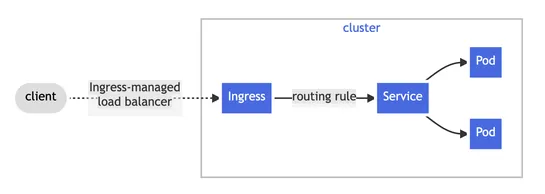
The Kubernetes Steering Committee is pulling the plug onIngress NGINX- official support ends March 2026. No more updates. No security patches. Gone. Why? It's been coasting on fumes. One or two part-time maintainers couldn't keep up. The tech debt piled up. Now it's a security liability. What's next.. read more  

Why Kubernetes is retiring Ingress NGINX
Link
@kaptain shared a link, 4 months, 1 week ago
FAUN.dev()

CVE-2026-22039: Kyverno Authorization Bypass

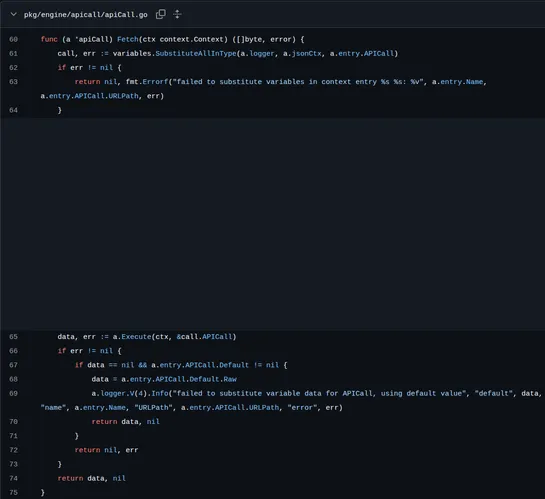
Kyverno - a CNCF policy engine for Kubernetes - just dropped a critical one:CVE-2026-22039. It lets limited-access users jump namespaces by hijacking Kyverno'scluster-wide ServiceAccountthrough crafty use of policy context variable substitution. Think privilege escalation without breaking a sweat. I.. read more  

CVE-2026-22039: Kyverno Authorization Bypass
Link
@kaptain shared a link, 4 months, 1 week ago
FAUN.dev()

Introducing Node Readiness Controller

Kubernetes just dropped theNode Readiness Controller- a smarter way to track node health. It slaps taints on nodes based on custom signals, not just the plain old "Ready" status. The goal? Safer pod scheduling that actually reflects what’s going on under the hood. It's powered by theNodeReadinessRul.. read more  

Link
@kaptain shared a link, 4 months, 1 week ago
FAUN.dev()

How Kubernetes Learned to Resize Pods Without Restarting Them

Kubernetes v1.35 introduces in-place Pod resizing, allowing dynamic adjustments to CPU and memory limits without restarting containers. This feature addresses the operational gap of vertical scaling in Kubernetes by maintaining the same Pod UID and workload identity during resizing. With this breakt.. read more  

How Kubernetes Learned to Resize Pods Without Restarting Them
AWX is the open source, community supported upstream project for Red Hat Ansible Automation Platform, formerly known as Ansible Tower. It gives teams a web based interface, a full REST API, and a distributed task engine on top of Ansible, turning command line playbook runs into a managed, auditable automation service.

The project began at AnsibleWorks as the commercial Ansible Tower product, and after Red Hat acquired Ansible, it open sourced the codebase as AWX in September 2017, positioning it as the development ground where new features land before they are hardened into the supported Automation Platform controller. With AWX, you organize automation around projects (synced from Git or other source control), inventories (static or dynamically pulled from cloud providers), credentials (stored encrypted and injected at runtime), and job templates that tie a playbook to its inventory and credentials. On top of that, it adds role based access control, a visual dashboard, job scheduling, workflow chaining, webhooks, and real time job output, so multiple teams can run, track, and delegate automation without sharing SSH keys or sitting at a terminal.

Modern AWX runs on Kubernetes or OpenShift through the AWX Operator, which manages installation, upgrades, and scaling declaratively, reflecting its shift from a single host application to a cloud native, container based platform. Because it is the upstream of a paid product, AWX moves fast and ships frequently, which makes it ideal for labs, learning, and self managed deployments, though teams needing formal support and long term stability typically run the downstream Automation Platform instead.