Join us

ContentUpdates and recent posts about AWX..
Link
@devopslinks shared a link, 4 months, 2 weeks ago
FAUN.dev()

Moltbot Personal Assistant Goes Viral, And So Do Your Secrets

Moltbot, the self-hosted AI agent with native hooks for Slack, Telegram, and WhatsApp, exploded from 50-ish to over 3,000 GitHub forks a day after going viral on Jan 24, 2026. It's built around a file-backed workspace and automates everything from code deploys to cloud orchestration. Cool? Definitel.. read more  

Moltbot Personal Assistant Goes Viral, And So Do Your Secrets
 Activity
News FAUN.dev() Team
@kala shared an update, 4 months, 2 weeks ago
FAUN.dev()

OpenClaw - Former Moltbot, Former Clawdbot - Went Viral Overnight. Then Security Reality Hit.

OpenClaw

OpenClaw, an open-source AI assistant platform, has been launched, evolving from Clawdbot and Moltbot. It features new plugins, enhanced security, and support for new models, while addressing a major security vulnerability. The platform emphasizes community involvement and invites contributions for its development.

OpenClaw - Former Moltbot, Former Clawdbot - Went Viral Overnight. Then Security Reality Hit.
 Activity
@kala added a new tool OpenClaw , 4 months, 2 weeks ago.
News FAUN.dev() Team
@kaptain shared an update, 4 months, 2 weeks ago
FAUN.dev()

Cluster API v1.12 Released: In-Place Updates and Chained Upgrades

Kubernetes

Cluster API v1.12 introduces in-place updates and chained upgrades to enhance Kubernetes cluster management. In-place updates modify existing machines without deletion, while chained upgrades streamline multi-version upgrades. The release also includes improvements to immutable rollouts and various bug fixes.

Cluster API v1.12 Released: In-Place Updates and Chained Upgrades
Story
@laura_garcia shared a post, 4 months, 2 weeks ago
Software Developer, RELIANOID

Shield Your Core 🛡️

Cybersec Asia is coming to Bangkok on February 4–5, 2026 — the key APAC event for cybersecurity, cloud, and data protection. 🌏 Bringing together global and regional leaders to tackle evolving threats and unlock new opportunities across CLMVT & APAC. 🤝 Meet RELIANOID and discover how we deliver secur..

cybersec asia 2026 RELIANOID
Story Keploy Team
@sancharini shared a post, 4 months, 3 weeks ago

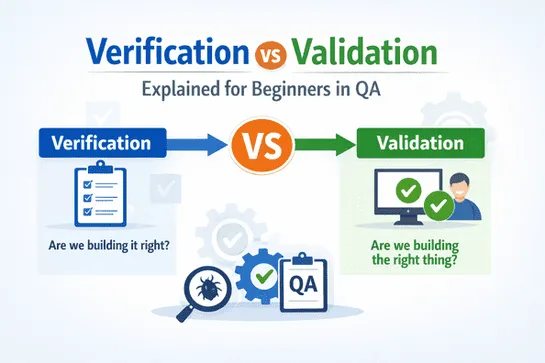
Verification vs Validation Explained for Beginners in QA

Learn the difference between verification vs validation in QA. This beginner-friendly guide explains how both ensure software is built correctly and meets user expectations.

Verification vs Validation
Story
@laura_garcia shared a post, 4 months, 3 weeks ago
Software Developer, RELIANOID

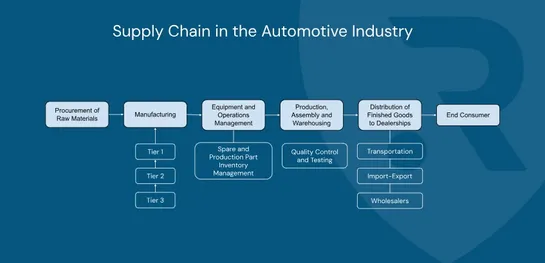
🚗🔐 Automotive Cybersecurity: Connected Cars and a Vulnerable Supply Chain

We originally published this article back in November, but it remains highly relevant today. Sharing it again in case you missed it 👇 Connected cars are no longer just mechanical machines — they are computers on wheels, embedded in complex digital ecosystems. As shown in the “Supply Chain in the aut..

Supply-Chain-in-the-Automotive-Industry_RELIANOID
Story
@laura_garcia shared a post, 4 months, 3 weeks ago
Software Developer, RELIANOID

New Article: Emerging Cyber Threats Impacting Today’s Financial Ecosystem

Financial institutions continue to face rising cyber risks—not just from direct attacks, but from the vast networks of third-party suppliers that support their operations. Recent industry analyses reveal critical insights: Many essential vendors are far more important than organisations realise. ..

Story
@nelly96 shared a post, 4 months, 3 weeks ago
Marketing specialist, Winston AI

How Accurate Are AI Detectors? (What the Data Actually Shows in 2026)

Do you also wonder, “Are AI detectors accurate?” and think the answer is a simple yes or no? The problem lies in the expectation. AI detectors don’t work like switches. They assign a probability of the text being AI-generated. The job of an AI detector is to estimate the likelihood, not to give verdicts. 

how-accurate-are-AI-detectors
AWX is the open source, community supported upstream project for Red Hat Ansible Automation Platform, formerly known as Ansible Tower. It gives teams a web based interface, a full REST API, and a distributed task engine on top of Ansible, turning command line playbook runs into a managed, auditable automation service.

The project began at AnsibleWorks as the commercial Ansible Tower product, and after Red Hat acquired Ansible, it open sourced the codebase as AWX in September 2017, positioning it as the development ground where new features land before they are hardened into the supported Automation Platform controller. With AWX, you organize automation around projects (synced from Git or other source control), inventories (static or dynamically pulled from cloud providers), credentials (stored encrypted and injected at runtime), and job templates that tie a playbook to its inventory and credentials. On top of that, it adds role based access control, a visual dashboard, job scheduling, workflow chaining, webhooks, and real time job output, so multiple teams can run, track, and delegate automation without sharing SSH keys or sitting at a terminal.

Modern AWX runs on Kubernetes or OpenShift through the AWX Operator, which manages installation, upgrades, and scaling declaratively, reflecting its shift from a single host application to a cloud native, container based platform. Because it is the upstream of a paid product, AWX moves fast and ships frequently, which makes it ideal for labs, learning, and self managed deployments, though teams needing formal support and long term stability typically run the downstream Automation Platform instead.