Join us

ContentUpdates and recent posts about AWX..
Link
@kaptain shared a link, 4 months, 4 weeks ago
FAUN.dev()

v1.35: Mutable PersistentVolume Node Affinity (alpha)

Kubernetes 1.35 (alpha) cracks openPersistentVolume node affinity. You can now update it on the fly. Before, it was locked down - once set, it stayed set. That got in the way of shifting workloads when disks were upgraded or moved across zones. Now? More flexibility. Less pain... read more  

Link
@kaptain shared a link, 4 months, 4 weeks ago
FAUN.dev()

What has Docker become?

Docker’s not just about containers anymore. It’s pivoting hard into AI infrastructure - with some teeth. The newModel Runner,GPU offloading, and fresh AI-native integrations with Google Cloud and Vercel show where it’s headed: less dev environment, more AI runtime engine. Under the hood, Docker drop.. read more  

Link
@kala shared a link, 4 months, 4 weeks ago
FAUN.dev()

How to build a Frontend for LangChain Deep Agents with CopilotKit!

LangChain recently introduced Deep Agents: a new way to build structured, multi-agent systems that can plan, delegate, and reason across multiple steps. It comes with built-in planning, a filesystem for context, and subagent spawning. But connecting that agent to a real frontend is still surprisingl.. read more  

Link
@kala shared a link, 4 months, 4 weeks ago
FAUN.dev()

How to Train an AI Agent for Command-Line Tasks with Synthetic Data and Reinforcement Learning

NVIDIA shows how to fine-tuneNemotron-Nano-9B-V2to handle new CLI tools - without touching real user data. The trick? A mix ofsynthetic data,reinforcement learning with verifiable rewards (RLVR), and their home-grown trainer stack:NeMo GymplusGRPO. The result: an LLM agent that adapts fast, plays ni.. read more  

How to Train an AI Agent for Command-Line Tasks with Synthetic Data and Reinforcement Learning
Link
@kala shared a link, 4 months, 4 weeks ago
FAUN.dev()

Don't fall into the anti-AI hype

The writer recently left their job to explore AI and programming through various projects, including creating a YouTube channel focused on these topics. They discuss how AI is changing the landscape of programming, allowing for faster, more efficient coding methods. Despite concerns about job displa.. read more  

Link
@kala shared a link, 4 months, 4 weeks ago
FAUN.dev()

The Rise of GPUOps: Where Infrastructure Meets Thermodynamics

GPU demand for AI has shot up 600% since 2020. It’s outpaced the cloud abstractions devs rely on - highlighting a growing gap between slick DevOps dashboards and the gritty realities of heat, cost, and silicon. EnterGPUOps. It's not just a trend - it’s a new layer in the stack. Think observability w.. read more  

The Rise of GPUOps: Where Infrastructure Meets Thermodynamics
Link
@devopslinks shared a link, 4 months, 4 weeks ago
FAUN.dev()

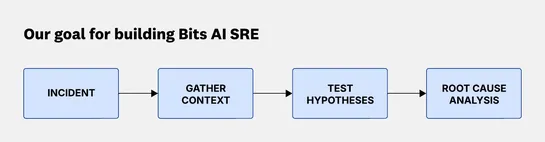
How we built an AI SRE agent that investigates like a team of engineers

Datadog just droppedBits AI SRE, an autonomous agent that thinks more like an SRE than a chatbot. It doesn't just regurgitate summaries - it investigates. It builds hypotheses, tests them against telemetry, and chases down actual root causes. Older tools leaned hard on LLMs to summarize alerts. That.. read more  

How we built an AI SRE agent that investigates like a team of engineers
Link
@devopslinks shared a link, 4 months, 4 weeks ago
FAUN.dev()

Preparing for Post-Quantum Cryptography

NIST locked in itsPost-Quantum Cryptography (PQC) standardsin August 2024. The countdown’s on: U.S. federal systems need to make the leap by 2035. Wiz jumped early with aPQC Security Framework. It scans for shaky encryption, maps your crypto assets, and flags what’s PQC-ready, all cloud-wide, using .. read more  

Preparing for Post-Quantum Cryptography
Link
@devopslinks shared a link, 4 months, 4 weeks ago
FAUN.dev()

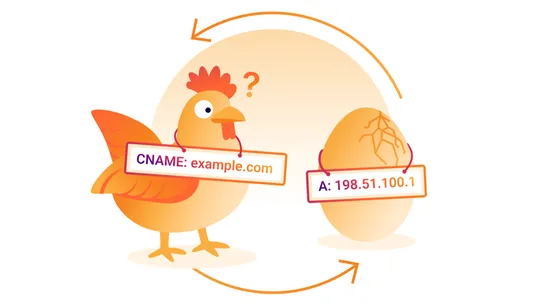
What came first: the CNAME or the A record?

A recent change to 1.1.1.1 accidentally altered the order of CNAME records in DNS responses, breaking resolution for some clients. This post explores the technical root cause, examines the source code of affected resolvers, and dives into the inherent ambiguities of the DNS RFCs... read more  

What came first: the CNAME or the A record?
Link
@devopslinks shared a link, 4 months, 4 weeks ago
FAUN.dev()

SSH has no Host header

A dev built a custom SSH proxy that punches through IPv4 limits without handing out public IPs like candy. Their trick:shared IPv4s with per-user relative IP mapping. It maps incoming SSH traffic to the right VM using thesource IPandpublic key combo. No Host header? No problem. They sidestep that ho.. read more  

AWX is the open source, community supported upstream project for Red Hat Ansible Automation Platform, formerly known as Ansible Tower. It gives teams a web based interface, a full REST API, and a distributed task engine on top of Ansible, turning command line playbook runs into a managed, auditable automation service.

The project began at AnsibleWorks as the commercial Ansible Tower product, and after Red Hat acquired Ansible, it open sourced the codebase as AWX in September 2017, positioning it as the development ground where new features land before they are hardened into the supported Automation Platform controller. With AWX, you organize automation around projects (synced from Git or other source control), inventories (static or dynamically pulled from cloud providers), credentials (stored encrypted and injected at runtime), and job templates that tie a playbook to its inventory and credentials. On top of that, it adds role based access control, a visual dashboard, job scheduling, workflow chaining, webhooks, and real time job output, so multiple teams can run, track, and delegate automation without sharing SSH keys or sitting at a terminal.

Modern AWX runs on Kubernetes or OpenShift through the AWX Operator, which manages installation, upgrades, and scaling declaratively, reflecting its shift from a single host application to a cloud native, container based platform. Because it is the upstream of a paid product, AWX moves fast and ships frequently, which makes it ideal for labs, learning, and self managed deployments, though teams needing formal support and long term stability typically run the downstream Automation Platform instead.