Join us

ContentUpdates and recent posts about AWX..
Link
@varbear shared a link, 5 months, 2 weeks ago
FAUN.dev()

The Code Review That Cost $2 Million, CodeGood

New data shows only15% of code review comments catch real bugs. The rest? Nitpicks on style, naming, or formatting - stuff linters and AI were made to handle. Human reviews burn through$3.6M a yearin larger orgs and still miss the tough stuff: threading issues, system integration bugs, rare edge cas.. read more  

Link
@kaptain shared a link, 5 months, 2 weeks ago
FAUN.dev()

BadPods Series: Everything Allowed on AWS EKS

A security researcher ran a full-blown container escape on EKS usingBadPods- a tool that spins up dangerously overprivileged pods. The pod broke out of its container, poked around the host node, moved laterally, and swiped AWS IAM creds. All of it slipped past EKS’s defaultPod Security Admission (PS.. read more  

BadPods Series: Everything Allowed on AWS EKS
Link
@kaptain shared a link, 5 months, 2 weeks ago
FAUN.dev()

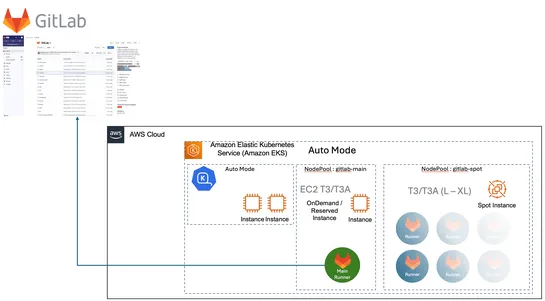
Streamline your containerized CI/CD with GitLab Runners and Amazon EKS Auto Mode

GitLab Runners now work withAmazon EKS Auto Mode. That means hands-off infra, smarter scaling, and built-in AWS security. Runners spin up onEC2 Spot Instances, so teams can cut CI/CD compute costs by as much as90%- without hacking together flaky pipelines... read more  

Streamline your containerized CI/CD with GitLab Runners and Amazon EKS Auto Mode
Link
@kaptain shared a link, 5 months, 2 weeks ago
FAUN.dev()

Implementing assurance pipeline for Amazon EKS Platform

AWS released a full-stack CI/CD validation pipeline forAmazon EKS. It pulls in six layers of testing,Terraform,Helm,Locustload testing, and evenAWS Fault Injectionfor pushing resilience to the edge. The goal: bake policy checks, functional tests, and brutal load tests right into pre-deployment. Fewe.. read more  

Link
@kaptain shared a link, 5 months, 2 weeks ago
FAUN.dev()

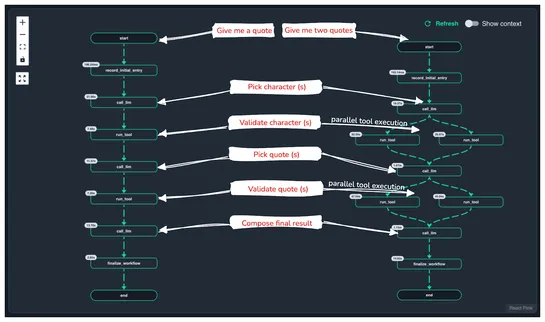
From Deterministic to Agentic: Creating Durable AI Workflows with Dapr

Dapr droppedDurable Agents- a mashup of classic workflows and LLM-driven agents that can actually get things done and survive rough edges. They track reasoning steps, tool calls, and chat states like a champ. If things crash, no problem: Dapr Workflows and Diagrid Catalyst bring it all back... read more  

From Deterministic to Agentic: Creating Durable AI Workflows with Dapr
Link
@kaptain shared a link, 5 months, 2 weeks ago
FAUN.dev()

Kubernetes GPU Management Just Got a Major Upgrade

Kubernetes 1.34 droppedDynamic Resource Allocation (DRA)- think persistent volumes, but for GPUs and custom hardware. Vendors can now plug in drivers and schedulers for their devices, and workloads can pick exactly what they need. Coming in 1.35: a newworkload abstractionthat speaks the language of .. read more  

Link
@kaptain shared a link, 5 months, 2 weeks ago
FAUN.dev()

v1.35: Watch Based Route Reconciliation in the Cloud Controller Manager

Kubernetes v1.35 sneaks in an alphafeature gatethat flips the CCM route controller from "check every X minutes" to "watch and react." It now usesinformersto trigger syncs when nodes change - plus a light periodic check every 12–24 hours... read more  

Link
@kaptain shared a link, 5 months, 2 weeks ago
FAUN.dev()

v1.35: New level of efficiency with in-place Pod restart

Kubernetes 1.35, as you may know, introducedin-place Pod restarts(alpha). It's a real reset: all containers, init and sidecars included - without killing the Pod or kicking off a reschedule. Think restart without the cloud drama. Big win for workloads with heavy inter-container dependencies or massi.. read more  

Link
@kaptain shared a link, 5 months, 2 weeks ago
FAUN.dev()

1.35: Enhanced Debugging with Versioned z-pages APIs

Kubernetes 1.35 makes a quiet-but-crucial upgrade: z-pages debugging endpoints now returnstructured, machine-readable JSON. That means tools- not just tired humans - can parse control plane state directly. The responses areversioned, backward-compatible, and tucked behind feature flags for now... read more  

Link
@kala shared a link, 5 months, 2 weeks ago
FAUN.dev()

The 2026 Data Engineering Roadmap: Building Data Systems for the Agentic AI Era

Data engineering’s getting flipped.AI agentsandLLMsaren’t just tagging along anymore - they’re the main users now. That means engineers need to buildcontext-aware, machine-readable data systemsthat don’t just store info but actually make sense of it. Think:vector databases,knowledge graphs,semantic .. read more  

The 2026 Data Engineering Roadmap: Building Data Systems for the Agentic AI Era
AWX is the open source, community supported upstream project for Red Hat Ansible Automation Platform, formerly known as Ansible Tower. It gives teams a web based interface, a full REST API, and a distributed task engine on top of Ansible, turning command line playbook runs into a managed, auditable automation service.

The project began at AnsibleWorks as the commercial Ansible Tower product, and after Red Hat acquired Ansible, it open sourced the codebase as AWX in September 2017, positioning it as the development ground where new features land before they are hardened into the supported Automation Platform controller. With AWX, you organize automation around projects (synced from Git or other source control), inventories (static or dynamically pulled from cloud providers), credentials (stored encrypted and injected at runtime), and job templates that tie a playbook to its inventory and credentials. On top of that, it adds role based access control, a visual dashboard, job scheduling, workflow chaining, webhooks, and real time job output, so multiple teams can run, track, and delegate automation without sharing SSH keys or sitting at a terminal.

Modern AWX runs on Kubernetes or OpenShift through the AWX Operator, which manages installation, upgrades, and scaling declaratively, reflecting its shift from a single host application to a cloud native, container based platform. Because it is the upstream of a paid product, AWX moves fast and ships frequently, which makes it ideal for labs, learning, and self managed deployments, though teams needing formal support and long term stability typically run the downstream Automation Platform instead.