Join us

ContentUpdates and recent posts about Flask..
Link
@kaptain shared a link, 1 month, 3 weeks ago
FAUN.dev()

From public static void main to Golden Kubestronaut: The Art of unlearning

The author left JVM monolith ops forKubernetes. They stacked certs:CKA,CKAD,CKS,KCNA,KCSA,CNCF Golden Kubestronaut. They treatPodsas the atomic deployable. They pick fights:IngressvsNodePort. They warn aboutConfigMapdrift. They spotlight runtime primitives:Horizontal Pod Autoscalerandservice meshfor.. read more  
From public static void main to Golden Kubestronaut: The Art of unlearning
Link
@kaptain shared a link, 1 month, 3 weeks ago
FAUN.dev()

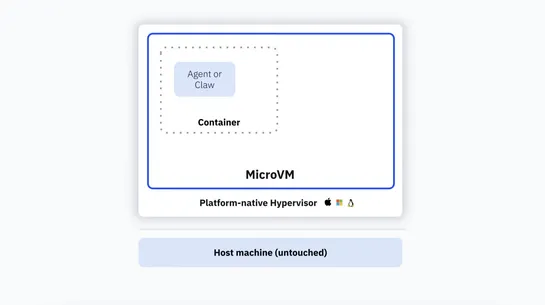
Why MicroVMs: The Architecture Behind Sandboxes

Docker Sandboxes puts each agent session in a dedicatedmicroVM. Each microVM runs a privateDocker daemoninside the VM boundary. That blocks access to the host. A new cross‑platformVMMruns on macOS, Windows, and Linux hypervisors. It slashes cold starts and runs fullDockerbuild, run, and compose work.. read more  

Why MicroVMs: The Architecture Behind Sandboxes
Link
@kaptain shared a link, 1 month, 3 weeks ago
FAUN.dev()

The AI-driven shift in vulnerability discovery: What maintainers and bug finders need to know

AI modelslet non-experts craft real and fake vulnerabilities at scale. They spit out low-quality noise and the occasional high-value report. Reports floodOSS maintainers. Triage, patching, release cadences, and downstreamupgrade/compliancepipelines buckle under the load. Guidance recommends publishi.. read more  

The AI-driven shift in vulnerability discovery: What maintainers and bug finders need to know
Link
@kaptain shared a link, 1 month, 3 weeks ago
FAUN.dev()

v1.36: User Namespaces in are finally GA

Kubernetesv1.36promotesUser Namespacesto GA on Linux. It brings rootless workload isolation. Kubelet leans on kernelID-mapped mounts. It sidesteps expensivechownby remappingUID/GIDat mount time and confines privileged processes. No more mass-chown screams... read more  

Link
@kaptain shared a link, 1 month, 3 weeks ago
FAUN.dev()

Building a fault-tolerant metrics storage system at Airbnb

Airbnb built a metrics system that ingests50M samples/s, stores2.5PBof logical time series, and hosts1.3B active series. They use tenant-per-service grouping andshuffle sharding. They enforce per-tenant guardrails and a consolidatedcontrol plane. They shard queries and compaction. They run zone-awar.. read more  

Building a fault-tolerant metrics storage system at Airbnb
Link
@kala shared a link, 1 month, 3 weeks ago
FAUN.dev()

Introducing Coregit

Coregit reimplements Git's object model inTypeScriptand runs onCloudflare Workersas a serverless edge Git API. Its commit endpoint accepts up to 1,000 file changes per request and replaces 105+ GitHub calls with one. Yes - one. It acknowledges writes inDurable Objects(~2ms), then flushes objects toR.. read more  

Link
@kala shared a link, 1 month, 3 weeks ago
FAUN.dev()

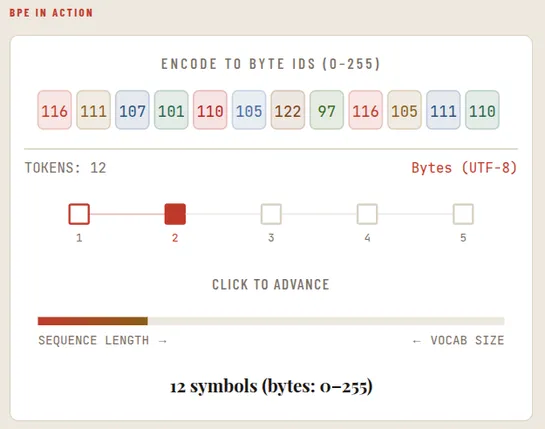
How LLMs Work — A Visual Deep Dive

A complete walkthrough of how large language models like ChatGPT are built, from raw internet text to a conversational assistant... read more  

How LLMs Work — A Visual Deep Dive
Link
@kala shared a link, 1 month, 3 weeks ago
FAUN.dev()

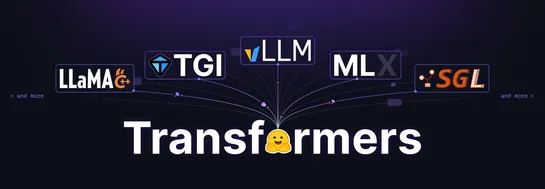
The PR you would have opened yourself

ASkillports models fromtransformerstomlx-lm. It bootstraps an env, discovers variants, downloads checkpoints, writes MLX implementations, and runs layered tests. It produces disclosed PRs with per-layer diffs, dtype checks, generation examples, numerical comparisons, and a reproducible, non-agentict.. read more  

The PR you would have opened yourself
Link
@kala shared a link, 1 month, 3 weeks ago
FAUN.dev()

Introducing Ternary Bonsai: Top Intelligence at 1.58 Bits

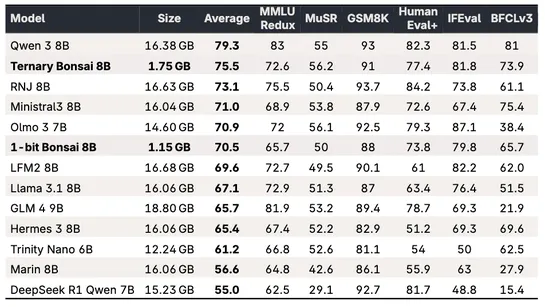
PrismML unveilsTernary Bonsai: a family of1.58-bitLMs in1.7B,4B, and8Bsizes. Models use ternary weights {-1,0,+1} with group-wise quantization. Weights are ternary (-1,0,+1). Each group of128weights shares anFP16scale. That cuts memory by ~9x versus 16-bit and boosts benchmark scores. The8Bhits 75.5.. read more  

Introducing Ternary Bonsai: Top Intelligence at 1.58 Bits
Link
@kala shared a link, 1 month, 3 weeks ago
FAUN.dev()

A GitHub agentic workflow

The developer automated parsing of unstructured release notes withGitHub agentic workflows. The pipeline compilesMarkdowntoYAML, then runs an agent. The setup requires afine-grained Copilot token. It enforces a hardenedsandboxpolicy and forbids Marketplace actions. CI runs a compile-then-compare che.. read more  

A GitHub agentic workflow
Flask is an open-source web framework written in Python and created by Armin Ronacher in 2010. It is known as a microframework, not because it is weak or incomplete, but because it provides only the essential building blocks for developing web applications. Its core focuses on handling HTTP requests, defining routes, and rendering templates, while leaving decisions about databases, authentication, form handling, and other components to the developer. This minimalistic design makes Flask lightweight, flexible, and easy to learn, but also powerful enough to support complex systems when extended with the right tools.

At the heart of Flask are two libraries: Werkzeug, which is a WSGI utility library that handles the low-level details of communication between web servers and applications, and Jinja2, a templating engine that allows developers to write dynamic HTML pages with embedded Python logic. By combining these two, Flask provides a clean and pythonic way to create web applications without imposing strict architectural patterns.

One of the defining characteristics of Flask is its explicitness. Unlike larger frameworks such as Django, Flask does not try to hide complexity behind layers of abstraction or dictate how a project should be structured. Instead, it gives developers complete control over how they organize their code and which tools they integrate. This explicit nature makes applications easier to reason about and gives teams the freedom to design solutions that match their exact needs. At the same time, Flask benefits from a vast ecosystem of extensions contributed by the community. These extensions cover areas such as database integration through SQLAlchemy, user session and authentication management, form validation with CSRF protection, and database migration handling. This modular approach means a developer can start with a very simple application and gradually add only the pieces they require, avoiding the overhead of unused components.

Flask is also widely appreciated for its simplicity and approachability. Many developers write their first web application in Flask because the learning curve is gentle, the documentation is clear, and the framework itself avoids unnecessary complexity. It is particularly well suited for building prototypes, REST APIs, microservices, or small to medium-sized web applications. At the same time, production-grade deployments are supported by running Flask applications on WSGI servers such as Gunicorn or uWSGI, since the development server included with Flask is intended only for testing and debugging.

The strengths of Flask lie in its minimalism, flexibility, and extensibility. It gives developers the freedom to assemble their application architecture, choose their own libraries, and maintain tight control over how things work under the hood. This is attractive to experienced engineers who dislike being boxed in by heavy frameworks. However, the same freedom can become a limitation. Flask does not include features like an ORM, admin interface, or built-in authentication system, which means teams working on very large applications must take on more responsibility for enforcing patterns and maintaining consistency. In situations where a project requires an opinionated, all-in-one solution, Django or another full-stack framework may be a better fit.

In practice, Flask has grown far beyond its initial positioning as a lightweight tool. It has been used by startups for rapid prototypes and by large companies for production systems. Its design philosophy—keep the core simple, make extensions easy, and let developers decide—continues to attract both beginners and professionals. This balance between simplicity and power has made Flask one of the most enduring and widely used Python web frameworks.