Join us

ContentUpdates and recent posts about Flask..
Link
@kala shared a link, 2 months ago
FAUN.dev()

Critical Claude Code vulnerability: Deny rules silently bypassed because security checks cost too many tokens

Clause Code security bypass: Anthropic's performance fix silently disabled deny rules for 500K+ developers when more than 50 subcommands were used in a command, impacting permission validation and security policy enforcement. The vulnerability stemmed from a tradeoff between security and performance.. read more  

Link
@kala shared a link, 2 months ago
FAUN.dev()

China has ‘nearly erased’ America’s lead in AI

Stanford HAI's 2026 AI Index shows China cut the U.S. lead inArenascores. In March 2026,Claude Opus 4.6ledDola‑Seed 2.0by 2.7%. A 2.7% margin is a photo finish. China outpaces the U.S. inpublicationcitations (20.6% vs 12.6% in 2024) and inindustrial robots(~295,000 vs 34,200). It also holds surplusc.. read more  

China has ‘nearly erased’ America’s lead in AI
Link
@devopslinks shared a link, 2 months ago
FAUN.dev()

Don’t trust, verify

Daniel Stenberg, creator of curl, argues that software security should be built on verification rather than trust, outlining the many ways a widely used project like curl could be compromised - from malicious insiders and breached credentials to hacked distribution sites and CI tool exploits. To cou.. read more  

Don’t trust, verify
Link
@devopslinks shared a link, 2 months ago
FAUN.dev()

Shell Tricks That Actually Make Life Easier (And Save Your Sanity)

This post provides a collection of lesser-known terminal tricks that can improve productivity and efficiency when working in various POSIX shells. The tricks cover a range of functions, from efficient text manipulation to file operations and script writing. By incorporating these tips into daily wor.. read more  

Shell Tricks That Actually Make Life Easier (And Save Your Sanity)
Link
@devopslinks shared a link, 2 months ago
FAUN.dev()

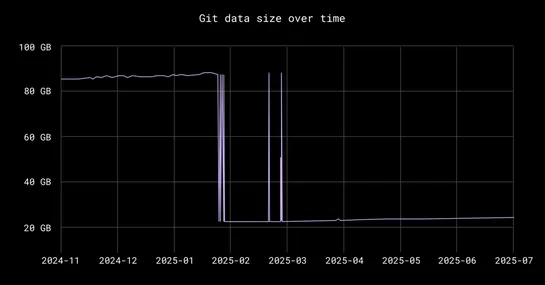
Reducing our monorepo size to improve developer velocity

Dropbox cut itsmonorepofrom 87GB to 20GB. It ran a GitHub‑approved server‑sidegit repack, tuned bywindow/depth. Clone times dropped to under 15 minutes. Engineers traced growth to Git’s 16‑char path heuristic. That heuristic mispairedi18nfiles. They tested--path-walklocally, then ran phased replica .. read more  

Reducing our monorepo size to improve developer velocity
Link
@devopslinks shared a link, 2 months ago
FAUN.dev()

Figma's next-generation data caching platform

Figma rearchitected their storage systems to support scalability, including horizontally sharding their Postgres stack and building FigCache, a stateless proxy service for Redis. FigCache decouples connection scalability from Redis, centralizes traffic routing, enhances security, and provides end-to.. read more  

Figma's next-generation data caching platform
Story
@laura_garcia shared a post, 2 months ago
Software Developer, RELIANOID

how to migrate ADC services from Array Networks APV Series to RELIANOID—step by step.

Migrating from legacy ADC platforms doesn’t have to be complex. In our latest Knowledge Base article, we walk you through how to migrate ADC services from Array Networks APV Series to RELIANOID—step by step. 🔍 What you’ll find inside: - Clear terminology mapping between both platforms - Practical mi..

Knowledge base migrate ADC services from ARRAY NETWORKS APV SERIES to RELIANOID
Story
@laura_garcia shared a post, 2 months ago
Software Developer, RELIANOID

DevOpsCon Amsterdam 2026

- 𝗗𝗲𝘃𝗢𝗽𝘀𝗖𝗼𝗻 𝗔𝗺𝘀𝘁𝗲𝗿𝗱𝗮𝗺 𝟮𝟬𝟮𝟲 𝗶𝘀 𝗷𝘂𝘀𝘁 𝗮𝗿𝗼𝘂𝗻𝗱 𝘁𝗵𝗲 𝗰𝗼𝗿𝗻𝗲𝗿! - Amsterdam, Netherlands April 20–24, 2026 Simplify complexity, amplify agility, and accelerate innovation. Join DevOpsCon Amsterdam 2026 — one of the leading conferences for professionals working with CI/CD, Kubernetes, Platform Engineering, ..

devopscon amsterdam april 26
Story WrapPixel Team
@sanjayjoshi shared a post, 2 months ago

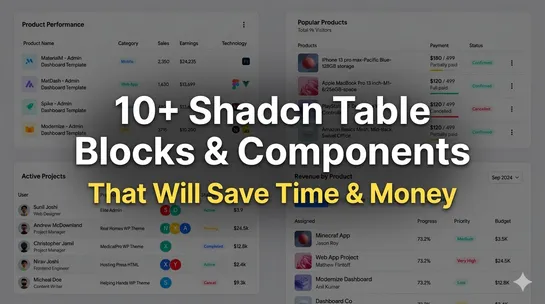
10+ Shadcn Table Components, Blocks & Tools

A curated list of Shadcn table components and blocks you can use in React and Next.js projects to build clean, flexible, and production-ready data tables faster.

Thumbnail Shadcn Table
Story Keploy Team
@sancharini shared a post, 2 months ago

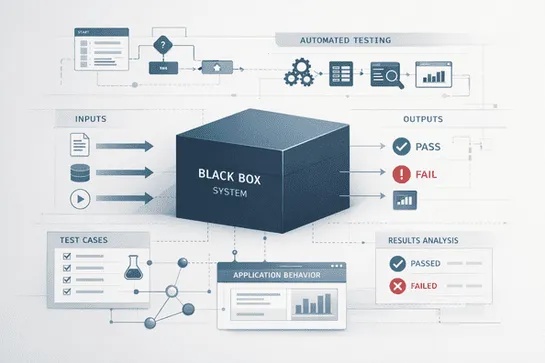
Black Box Testing Techniques to Improve Test Coverage

Learn black box testing techniques to improve test coverage. Explore methods like equivalence partitioning, boundary value analysis, and more with practical examples.

black box testing techniques
Flask is an open-source web framework written in Python and created by Armin Ronacher in 2010. It is known as a microframework, not because it is weak or incomplete, but because it provides only the essential building blocks for developing web applications. Its core focuses on handling HTTP requests, defining routes, and rendering templates, while leaving decisions about databases, authentication, form handling, and other components to the developer. This minimalistic design makes Flask lightweight, flexible, and easy to learn, but also powerful enough to support complex systems when extended with the right tools.

At the heart of Flask are two libraries: Werkzeug, which is a WSGI utility library that handles the low-level details of communication between web servers and applications, and Jinja2, a templating engine that allows developers to write dynamic HTML pages with embedded Python logic. By combining these two, Flask provides a clean and pythonic way to create web applications without imposing strict architectural patterns.

One of the defining characteristics of Flask is its explicitness. Unlike larger frameworks such as Django, Flask does not try to hide complexity behind layers of abstraction or dictate how a project should be structured. Instead, it gives developers complete control over how they organize their code and which tools they integrate. This explicit nature makes applications easier to reason about and gives teams the freedom to design solutions that match their exact needs. At the same time, Flask benefits from a vast ecosystem of extensions contributed by the community. These extensions cover areas such as database integration through SQLAlchemy, user session and authentication management, form validation with CSRF protection, and database migration handling. This modular approach means a developer can start with a very simple application and gradually add only the pieces they require, avoiding the overhead of unused components.

Flask is also widely appreciated for its simplicity and approachability. Many developers write their first web application in Flask because the learning curve is gentle, the documentation is clear, and the framework itself avoids unnecessary complexity. It is particularly well suited for building prototypes, REST APIs, microservices, or small to medium-sized web applications. At the same time, production-grade deployments are supported by running Flask applications on WSGI servers such as Gunicorn or uWSGI, since the development server included with Flask is intended only for testing and debugging.

The strengths of Flask lie in its minimalism, flexibility, and extensibility. It gives developers the freedom to assemble their application architecture, choose their own libraries, and maintain tight control over how things work under the hood. This is attractive to experienced engineers who dislike being boxed in by heavy frameworks. However, the same freedom can become a limitation. Flask does not include features like an ORM, admin interface, or built-in authentication system, which means teams working on very large applications must take on more responsibility for enforcing patterns and maintaining consistency. In situations where a project requires an opinionated, all-in-one solution, Django or another full-stack framework may be a better fit.

In practice, Flask has grown far beyond its initial positioning as a lightweight tool. It has been used by startups for rapid prototypes and by large companies for production systems. Its design philosophy—keep the core simple, make extensions easy, and let developers decide—continues to attract both beginners and professionals. This balance between simplicity and power has made Flask one of the most enduring and widely used Python web frameworks.