Join us

ContentUpdates and recent posts about Fleet..
 Activity
@smh started using tool Node.js , 4 days, 11 hours ago.
 Activity
@smh started using tool Next.js , 4 days, 11 hours ago.
 Activity
@smh started using tool New Relic , 4 days, 11 hours ago.
 Activity
@smh started using tool Kubernetes , 4 days, 11 hours ago.
 Activity
@smh started using tool Kubectl , 4 days, 11 hours ago.
 Activity
@smh started using tool Go , 4 days, 11 hours ago.
 Activity
@smh started using tool Datadog , 4 days, 11 hours ago.
 Activity
@smh started using tool Amazon Web Services , 4 days, 11 hours ago.
Story WPWeb Infotech Team
@rafidbottler shared a post, 4 days, 23 hours ago
Full Stack Engineer, WPWeb Infotech

Angular vs React: Which Framework Is Better for Web Development?

Angular vs React: discover the main differences, performance, and use cases to choose the best framework for modern web development projects in 2026.
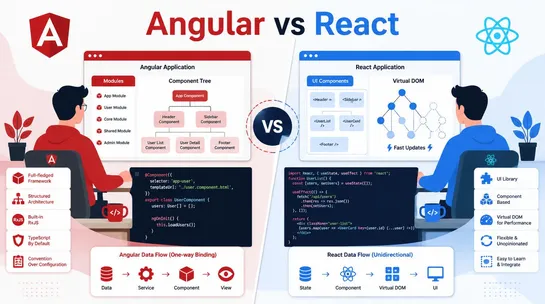
Angular vs React
Story
@viktoriiagolovtseva shared a post, 5 days, 3 hours ago

How to Make Your Jira Sprint Planning Really Agile

You know the drill:build a product roadmap in Jira, create your product backlog, review it, update the user stories, come up with a sprint goal before the meeting, and finally, review every story to decide which ones need to be completed this sprint. Easier said than done, right? Well-planned sprint..
Zrzut ekranu 2026-04-29 152303
Fleet is a high-scale GitOps system built to support the realities of multi-cluster operations. Instead of pushing YAMLs or relying on brittle scripts, Fleet treats Git as the authoritative state and continuously reconciles that state across every cluster under management.

Its architecture uses lightweight agents, bundling, and content distribution to propagate changes efficiently - whether you’re managing five clusters or five thousand. Policies, Helm charts, CRDs, and raw manifests all become versioned, reviewable, and auditable through Git.

Fleet integrates cleanly with Rancher, enabling teams to automate cluster bootstrapping, enforce standards, roll out updates safely, and instantly detect drift. It excels in environments that demand consistency: edge fleets, hybrid cloud estates, regulated sectors, and platform teams building opinionated Kubernetes platforms.