Join us

ContentUpdates and recent posts about Gemini 3..
Link
@kaptain shared a link, 1 month, 2 weeks ago
FAUN.dev()

Trivy Hack Spreads Infostealer via Docker, Triggers Worm and Kubernetes Wiper

Cybersecurity researchers found malicious artifacts distributed via Docker Hub after the Trivy supply chain attack. Malicious versions 0.69.4, 0.69.5, and 0.69.6 of Trivy were removed from the image library. Threat actor TeamPCP targeted Aqua Security's GitHub organization, compromising 44 repositor.. read more  

Trivy Hack Spreads Infostealer via Docker, Triggers Worm and Kubernetes Wiper
Link
@kaptain shared a link, 1 month, 2 weeks ago
FAUN.dev()

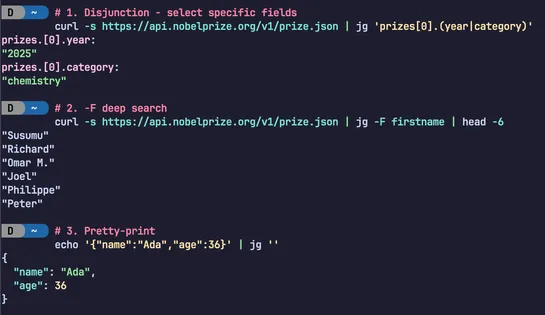
jsongrep is faster than {jq, jmespath, jsonpath-rust, jql}

This article introduces a tool called jsongrep, explains the internal search engine it uses, and outlines the benchmarking strategy used to compare its performance with other JSON path-like query tools. The tool parses the JSON document, constructs an NFA from the query, determinizes the NFA into a .. read more  

jsongrep is faster than {jq, jmespath, jsonpath-rust, jql}
Link
@kala shared a link, 1 month, 2 weeks ago
FAUN.dev()

What 81,000 people want from AI

Anthropic used a version of Claude to interview 80,508 users across 159 countries and 70 languages - claiming the largest qualitative AI study ever conducted. The top ask wasn't productivity, it was time back for things that matter outside of work. The top fear was hallucinations and unreliability. .. read more  

What 81,000 people want from AI
Link
@kala shared a link, 1 month, 2 weeks ago
FAUN.dev()

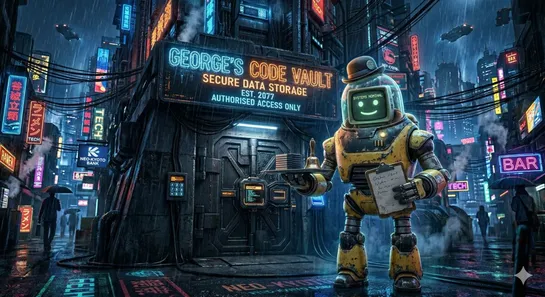
Building a digital doorman

Larson runs a dual-agent system. A tiny public doorman,nullclaw, lives on a $7 VPS. A private host,ironclaw, runs over Tailscale. Nullclaw sandboxes repo cloning. It routes heavy work to ironclaw viaA2AJSON‑RPC. It enforcesUFW, Cloudflare proxying, and single‑gateway billing... read more  

Building a digital doorman
Link
@kala shared a link, 1 month, 2 weeks ago
FAUN.dev()

Inside our approach to the Model Spec

OpenAI introduces Model Spec, a formal framework defining behavioral rules for their AI models to follow, aiming for transparency, safety, and public insight. The Model Spec includes a Chain of Command to resolve instruction conflicts and interpretive aids for consistent gray area decisions, emphasi.. read more  

Inside our approach to the Model Spec
Link
@kala shared a link, 1 month, 2 weeks ago
FAUN.dev()

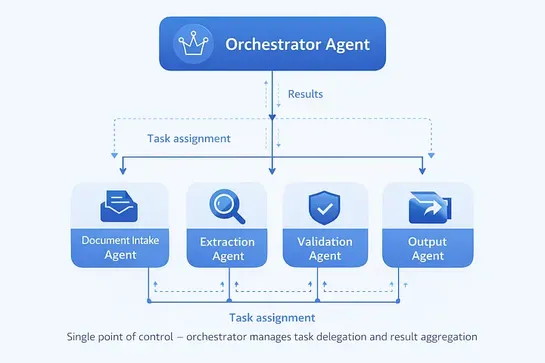
Multi-Agent AI Systems: Architecture Patterns for Enterprise Deployment

Last quarter, a mid-sized insurance company struggled to deploy an AI agent that collapsed in production due to cognitive overload. Enterprises are facing similar challenges when building single-agent AI systems and are moving towards multi-agent architectures to distribute responsibilities effectiv.. read more  

Multi-Agent AI Systems: Architecture Patterns for Enterprise Deployment
Link
@kala shared a link, 1 month, 2 weeks ago
FAUN.dev()

How OpenAI Codex Works

Engineering leaders report limited ROI from AI, often missing full lifecycle costs. OpenAI's Codex model for cloud-based coding required significant engineering work beyond the AI model itself. The system's orchestration layer ensures rich context for the model to execute tasks effectively... read more  

Link
@devopslinks shared a link, 1 month, 2 weeks ago
FAUN.dev()

Software engineer interviews for the age of AI

AI is becoming more prevalent in coding interviews, sparking interest from experienced candidates tired of traditional methods. Hiring great engineers is crucial for maintaining reliable services, especially in the era of AI-generated code. System design interviews help identify candidates with hand.. read more  

Software engineer interviews for the age of AI
Link
@devopslinks shared a link, 1 month, 2 weeks ago
FAUN.dev()

Why system architects now default to Arm in AI data centers

Architects rebase infrastructure torack-levelsystems. They anchor designs onArm NeoverseCPUs. Goal: balance energy, thermals, memory bandwidth, and sustained throughput. Benchmarks showGraviton4(Neoverse) outperforms comparableAMDandIntelEC2instances on price/performance for generative AI, DB, ML, a.. read more  

Why system architects now default to Arm in AI data centers
Link
@devopslinks shared a link, 1 month, 2 weeks ago
FAUN.dev()

How I Use LLMs for Security Work

LLMs like Claude, Cursor, and ChatGPT help tackle complex problems, but prompting them like Google won't cut it. Use role-stacking for varied perspectives (e.g.: you are a senior security engineer and sr. software engineer with experience in Docker, Kubernete..) and always specify your tools for bet.. read more  

Gemini 3 is Google’s third-generation large language model family, designed to power advanced reasoning, multimodal understanding, and long-running agent workflows across consumer and enterprise products. It represents a major step forward in factual reliability, long-context comprehension, and tool-driven autonomy.

At its core, Gemini 3 emphasizes low hallucination rates, deep synthesis across large information spaces, and multi-step reasoning. Models in the Gemini 3 family are trained with scaled reinforcement learning for search and planning, enabling them to autonomously formulate queries, evaluate results, identify gaps, and iterate toward higher-quality outputs.

Gemini 3 powers advanced agents such as Gemini Deep Research, where it excels at producing well-structured, citation-rich reports by combining web data, uploaded documents, and proprietary sources. The model supports very large context windows, multimodal inputs (text, images, documents), and structured outputs like JSON, making it suitable for research, finance, science, and enterprise knowledge work.

Gemini 3 is available through Google’s AI platforms and APIs, including the Interactions API, and is being integrated across products such as Google Search, NotebookLM, Google Finance, and the Gemini app. It is positioned as Google’s most factual and research-capable model generation to date.