Join us

ContentUpdates and recent posts about GPT-5.4..
Link
@devopslinks shared a link, 4 months ago
FAUN.dev()

The $1,000 AWS mistake

A missingVPC Gateway Endpointsent EC2-to-S3 traffic through aNAT Gateway, lighting up over$1,000in unnecessary data processing charges. All that for in-region traffic hitting an AWS service. Why? AWS defaulted the route to the NAT Gateway. It only takes the free S3 Gateway Endpoint if youtellit to. .. read more  

The $1,000 AWS mistake
Link
@devopslinks shared a link, 4 months ago
FAUN.dev()

Terraform Workbook - Your Guide to Infra as Code (IaC)

This post outlines the various Terraform project files and their purposes, such as vars.tf for default variable declarations, terraform.tfvars for overriding default variable values, terraform.tf for tfstate backends and provider declarations, version.tf for Terraform version constraints, and .terra.. read more  

Terraform Workbook - Your Guide to Infra as Code (IaC)
Link
@devopslinks shared a link, 4 months ago
FAUN.dev()

A Love Letter to FreeBSD

A Linux user takes FreeBSD for a spin - and comes away impressed. What stands out? Clean, deliberate engineering.Boot environmentsmake updates stress-free. The newpkgbasesystem adds modularity without chaos. And the OS treatsuptimenot just as a metric, but as a design goal. The essay makes a solid c.. read more  

News FAUN.dev() Team Trending
@kaptain shared an update, 4 months ago
FAUN.dev()

Docker Desktop 4.50 Supercharges Daily Development With AI, Security, and Faster Workflows

Docker Docker Desktop Docker Compose Kubernetes

Docker Desktop 4.50 enhances software development with improved debugging, AI integration, and enterprise security features, streamlining workflows and boosting productivity.

Docker Desktop 4.50 Supercharges Daily Development With AI, Security, and Faster Workflows
News FAUN.dev() Team Trending
@kala shared an update, 4 months ago
FAUN.dev()

Guido van Rossum: “AI Should Adapt to Python - Not the Other Way Around”

Python TypeScript

Guido van Rossum discussed Python's enduring relevance in AI and education at GitHub's Octoverse, emphasizing its clarity, accessibility, and community-driven growth despite TypeScript's rise.

Guido van Rossum: “AI Should Adapt to Python - Not the Other Way Around”
Story Palark Team
@shurup shared a post, 4 months ago
@palark

Kubernetes 1.35 new alpha features

Kubernetes

The next Kubernetes release, v1.35, is scheduled for December 17th. It should bring 15 new Alpha features, including the following ones: - Gang scheduling support - Mutable PersistentVolume node affinity - Restart all containers on container exits - Consider terminating Pods in Deployments - CSI vol..

Kubernetes v1.35 release
News FAUN.dev() Team Trending
@varbear shared an update, 4 months ago
FAUN.dev()

NordPass: Worst Passwords of 2025 and How Each Generation Compares

NordPass's latest research reveals the ongoing global reliance on weak passwords like "123456" and "password," despite slight improvements in security practices.

NordPass: Worst Passwords of 2025 and How Each Generation Compares
News FAUN.dev() Team Trending
@kaptain shared an update, 4 months ago
FAUN.dev()

Kubernetes v1.35: A Deep Dive Into the Biggest Changes Before the December 17 Release

Kubernetes containerd

Kubernetes v1.35 release removes cgroup v1 and containerd v1.X support, urging admins to migrate to newer versions and adopt enhancements like in-place Pod updates and OCI image volume support.

Kubernetes v1.35: A Deep Dive Into the Biggest Changes Before the December 17 Release
News FAUN.dev() Team
@devopslinks shared an update, 4 months ago
FAUN.dev()

Researcher Scans 5.6M GitLab Repositories, Uncovers 17,000 Live Secrets and a Decade of Exposed Credentials

TruffleHog AWS Lambda GitLab GitLab CI/CD Atlassian Bitbucket

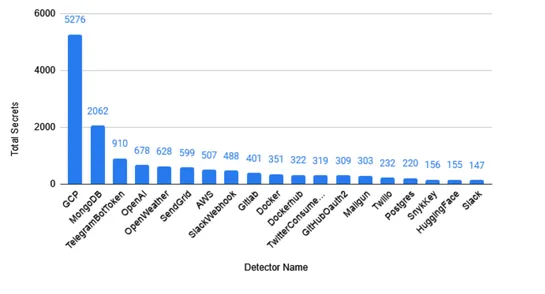
A security research project led by Luke Marshall scanned 5.6 million GitLab repositories, uncovering over 17,000 live secrets and earning $9,000 in bounties, highlighting GitLab's larger scale and higher exposure risk compared to Bitbucket.

Researcher Scans 5.6M GitLab Repositories, Uncovers 17,000 Live Secrets and a Decade of Exposed Credentials
 Activity
@devopslinks added a new tool TruffleHog , 4 months ago.
GPT-5.4 is OpenAI’s latest frontier AI model designed to perform complex professional and technical work more reliably. It combines advances in reasoning, coding, tool use, and long-context understanding into a single system capable of handling multi-step workflows across software environments. The model builds on earlier GPT-5 releases while integrating the strong coding capabilities previously introduced with GPT-5.3-Codex.

One of the defining features of GPT-5.4 is its ability to operate as part of agent-style workflows. The model can interact with tools, APIs, and external systems to complete tasks that extend beyond simple text generation. It also introduces native computer-use capabilities, allowing AI agents to operate applications using keyboard and mouse commands, screenshots, and browser automation frameworks such as Playwright.

GPT-5.4 supports context windows of up to one million tokens, enabling it to process and reason over very large documents, long conversations, or complex project contexts. This makes it suitable for tasks such as analyzing codebases, generating technical documentation, working with large spreadsheets, or coordinating long-running workflows. The model also introduces a feature called tool search, which allows it to dynamically retrieve tool definitions only when needed. This reduces token usage and makes it more efficient to work with large ecosystems of tools, including environments with dozens of APIs or MCP servers.

In addition to improved reasoning and automation capabilities, GPT-5.4 focuses on real-world productivity tasks. It performs better at generating and editing spreadsheets, presentations, and documents, and it is designed to maintain stronger context across longer reasoning processes. The model also improves factual accuracy and reduces hallucinations compared with previous versions.

GPT-5.4 is available across OpenAI’s ecosystem, including ChatGPT, the OpenAI API, and Codex. A higher-performance variant, GPT-5.4 Pro, is also available for users and developers who require maximum performance for complex tasks such as advanced research, large-scale automation, and demanding engineering workflows. Together, these capabilities position GPT-5.4 as a model aimed not just at conversation, but at executing real work across software systems.