Join us

ContentUpdates and recent posts about GPT-5.4..
Link
@anjali shared a link, 4 months, 2 weeks ago
Customer Marketing Manager, Last9

7 Observability Solutions for Full-Fidelity Telemetry

A quick guide to how seven leading observability tools support full-fidelity telemetry and the architectural choices behind them.

full_fieldiity_telemetry
Link
@varbear shared a link, 4 months, 2 weeks ago
FAUN.dev()

We are replacing OOP with something worse

Object-oriented programming didn’t die - it evolved. Now it lives in the guts of infrastructure. Services talk through strict interfaces, crossing process and network lines like pros. Classes and objects? They're nowOpenAPI schemas,Docker containers, andKubernetes clusters- same old encapsulation ga.. read more  

Link
@varbear shared a link, 4 months, 2 weeks ago
FAUN.dev()

Why is Zig so Cool?

Zig bringscross-compilationandC interoperabilityto the forefront - no extra setup, no toolchain fuss. It builds across architectures, links with C code like it was born to, and skips headers entirely. Its real flex?Compile-time execution, sharperror handling, and azero-fat runtime. All wrapped in a .. read more  

Link
@varbear shared a link, 4 months, 2 weeks ago
FAUN.dev()

How the classic anime 'Ghost in the Shell' predicted the future of cybersecurity 30 years ago

“Ghost in the Shell” turned 30 this week. Still hits hard. Back in 1989, it dropped cyberpunk bombs that would take the real world decades to catch up with: government-grade AI hackers, behavior-based intrusion detection, malware tailored for humans, and remote code attribution that vanishes into th.. read more  

How the classic anime 'Ghost in the Shell' predicted the future of cybersecurity 30 years ago
Link
@varbear shared a link, 4 months, 2 weeks ago
FAUN.dev()

Programming Languages in the Age of AI Agents

GitHub Copilot and friends tend to shine in languages with rich static types - think Rust or Scala. Why? The compiler does the heavy lifting. It flags mistakes fast, keeps structure tight, and gives the AI sharper signals to riff on. But drop that agent into a sprawling legacy repo, and cracks show... read more  

Programming Languages in the Age of AI Agents
Link
@varbear shared a link, 4 months, 2 weeks ago
FAUN.dev()

The (lazy) Git UI You Didn't Know You Need

Lazygit is a snappy terminal Git UI that’s picking up steam - and for good reason. It streamlines common tasks like staging, rebasing, and patching without dragging you through clunky menus. The interface sticks close to native Git commands but adds just enough structure to reduce context switches a.. read more  
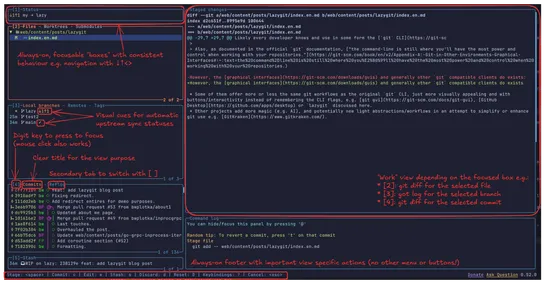
The (lazy) Git UI You Didn't Know You Need
Link
@varbear shared a link, 4 months, 2 weeks ago
FAUN.dev()

Your URL Is Your State

Modern frontend apps love to complicate state. But they keep forgetting the URL - shareable, dependency-free, and built for the job. This piece breaks down how a well-structured URL can capture UI state, track history, and make bookmarking effortless. NolocalStorage. No cookies. No bloated global st.. read more  

Link
@varbear shared a link, 4 months, 2 weeks ago
FAUN.dev()

ChatGPT as My Coding Mentor: How I Learned React and Next.js as a Junior Developer

A junior dev leveled up their React and Next.js chops just by writing better prompts. Big wins came from getting specific - like stating their skill level, asking for analogies, and stacking questions to unpack how Next.js splits client and server. Trend to watch:Prompting is a core dev skill for an.. read more  
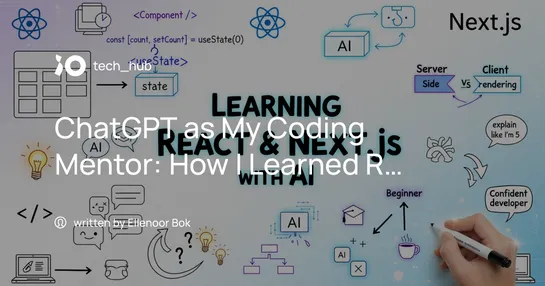
ChatGPT as My Coding Mentor: How I Learned React and Next.js as a Junior Developer
Link
@varbear shared a link, 4 months, 2 weeks ago
FAUN.dev()

How to Benchmark Python Code?

pytest-benchmarknow plugs straight intoCodSpeedfor automatic performance runs in CI - flamegraphs, metrics, and history included. Just toss a decorator on your test and it turns into a benchmark. Want to measure a slice of code more precisely? Use fixtures to zoom in... read more  
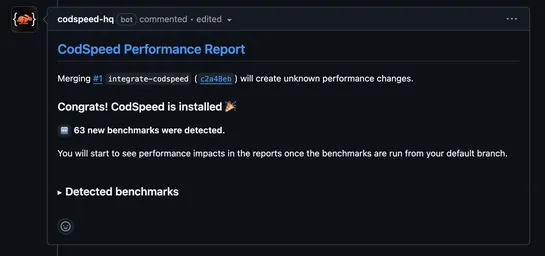
How to Benchmark Python Code?
Link
@kaptain shared a link, 4 months, 2 weeks ago
FAUN.dev()

Docker Workbook - Your Guide to Containerization

This guide cuts through modern Docker workflows. It coversBuildKitfor faster, smarter builds. Shows howmulti-stage Dockerfilesmake images slimmer. Breaks down howENTRYPOINTandCMDactually work. Walks through usingsupervisordto wrangle multi-process containers. Then zooms out toDocker Compose, where l.. read more  
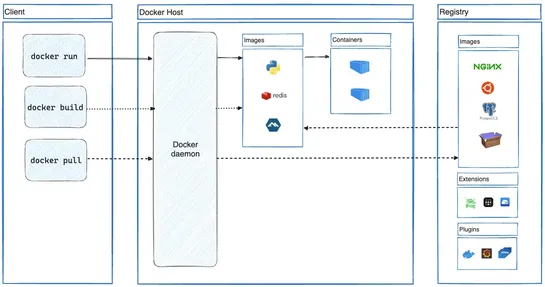
Docker Workbook - Your Guide to Containerization
GPT-5.4 is OpenAI’s latest frontier AI model designed to perform complex professional and technical work more reliably. It combines advances in reasoning, coding, tool use, and long-context understanding into a single system capable of handling multi-step workflows across software environments. The model builds on earlier GPT-5 releases while integrating the strong coding capabilities previously introduced with GPT-5.3-Codex.

One of the defining features of GPT-5.4 is its ability to operate as part of agent-style workflows. The model can interact with tools, APIs, and external systems to complete tasks that extend beyond simple text generation. It also introduces native computer-use capabilities, allowing AI agents to operate applications using keyboard and mouse commands, screenshots, and browser automation frameworks such as Playwright.

GPT-5.4 supports context windows of up to one million tokens, enabling it to process and reason over very large documents, long conversations, or complex project contexts. This makes it suitable for tasks such as analyzing codebases, generating technical documentation, working with large spreadsheets, or coordinating long-running workflows. The model also introduces a feature called tool search, which allows it to dynamically retrieve tool definitions only when needed. This reduces token usage and makes it more efficient to work with large ecosystems of tools, including environments with dozens of APIs or MCP servers.

In addition to improved reasoning and automation capabilities, GPT-5.4 focuses on real-world productivity tasks. It performs better at generating and editing spreadsheets, presentations, and documents, and it is designed to maintain stronger context across longer reasoning processes. The model also improves factual accuracy and reduces hallucinations compared with previous versions.

GPT-5.4 is available across OpenAI’s ecosystem, including ChatGPT, the OpenAI API, and Codex. A higher-performance variant, GPT-5.4 Pro, is also available for users and developers who require maximum performance for complex tasks such as advanced research, large-scale automation, and demanding engineering workflows. Together, these capabilities position GPT-5.4 as a model aimed not just at conversation, but at executing real work across software systems.