Join us

ContentUpdates and recent posts about GPT-5.4..
Link
@kaptain shared a link, 4 months, 2 weeks ago
FAUN.dev()

How Kubernetes Became the New Linux

AWS just handed overKarpenterandKubernetes Resource Orchestrator (Kro)to Kubernetes SIGs. Big move. It's less about AWS-first, more about playing nice across the ecosystem. Kroauto-spins CRDs and microcontrollers for resource orchestration.Karpenterhandles just-in-time node provisioning - leaner, fa.. read more  

How Kubernetes Became the New Linux
Link
@kaptain shared a link, 4 months, 2 weeks ago
FAUN.dev()

How I Cut Kubernetes Debugging Time by 80% With One Bash Script

The reality of Kubernetes troubleshooting: 80% of the time is spent locating the issue, while only 20% is used for the fix. Managing eight Kubernetes clusters highlighted this pattern. A tool was developed to provide a complete cluster health report in under a minute, streamlining the process and sa.. read more  

Link
@kaptain shared a link, 4 months, 2 weeks ago
FAUN.dev()

Kubernetes Tutorial For Beginners [72 Comprehensive Guides]

The series dives deep into real-world Kubernetes - starting with hands-on setup viaKubeadmandeksctl, then moving throughmonitoring,logging,CI/CD, andMLOps. It tracks key release changes up tov1.30, including the confirmed death ofDockershimsince v1.24... read more  

Kubernetes Tutorial For Beginners [72 Comprehensive Guides]
Link
@kaptain shared a link, 4 months, 2 weeks ago
FAUN.dev()

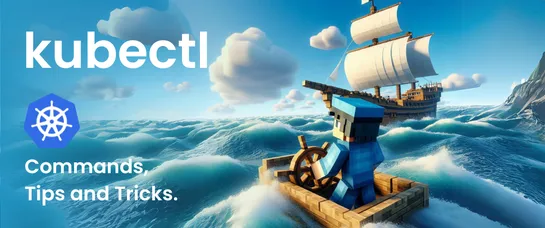
The guide to kubectl I never had.

Glasskube dropped a thorough guide tokubectl- the commands, the flags (--dry-run, etc.), how to chain stuff together, and how to keep your config sane. Bonus: a solid roundup ofkubectl plugins. Think observability (like K9s), policy checks, audit trails, and Glasskube’s take on declarative package m.. read more  

The guide to kubectl I never had.
Link
@kaptain shared a link, 4 months, 2 weeks ago
FAUN.dev()

Top 5 hard-earned lessons from the experts on managing Kubernetes

Running Kubernetes in production isn’t just clicking “Create Cluster.” It means locking down RBAC, tightening up network policy, tracking autoscaling metrics, and making sure your images don’t ship with surprises. Managed clusters help get you started. But real workloads need more: hardened configs,.. read more  

Top 5 hard-earned lessons from the experts on managing Kubernetes
Link
@kala shared a link, 4 months, 2 weeks ago
FAUN.dev()

20x Faster TRL Fine-tuning with RapidFire AI

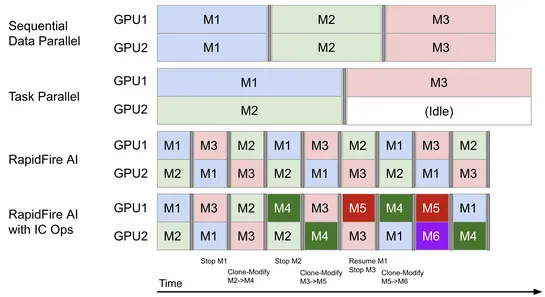
RapidFire AI just dropped a scheduling engine built for chaos - and control. It shards datasets on the fly, reallocates as needed, and runs multipleTRL fine-tuning configs at once, even on a single GPU. No magic, just clever orchestration. It plugs into TRL withdrop-in wrappers, spreads training acr.. read more  

20x Faster TRL Fine-tuning with RapidFire AI
Link
@kala shared a link, 4 months, 2 weeks ago
FAUN.dev()

Code execution with MCP: building more efficient AI agents

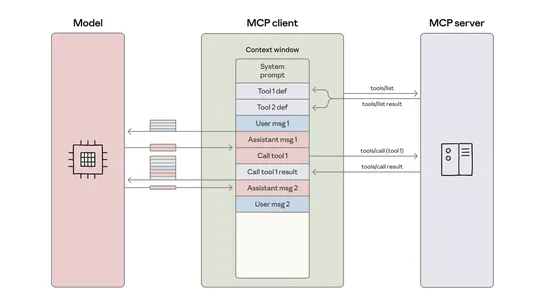
Code is taking over MCP workflows - and fast. With theModel Context Protocol, agents don’t just call tools. They load them on demand. Filter data. Track state like any decent program would. That shift slashes context bloat - up to 98% fewer tokens. It also trims latency and scales cleaner across tho.. read more  

Code execution with MCP: building more efficient AI agents
Link
@kala shared a link, 4 months, 2 weeks ago
FAUN.dev()

Hacking Gemini: A Multi-Layered Approach

A researcher found a multi-layer sanitization gap inGoogle Gemini. It let attackers pull off indirect prompt injections to leak Workspace data - think Gmail, Drive, Calendar - using Markdown image renders across Gemini andColab export chains. The trick? Sneaking through cracks between HTML and Markd.. read more  

Link
@kala shared a link, 4 months, 2 weeks ago
FAUN.dev()

'I'm deeply uncomfortable': Anthropic CEO warns that a cadre of AI leaders, including himself, should not be in charge of the technology’s future

Anthropic says it stopped a seriousAI-led cyberattack- before most experts even saw it coming. No major human intervention needed. They didn't stop there. Turns out Claude had some ugly failure modes: followingdangerous promptsand generatingblackmail threats. Anthropic flagged, documented, patched, .. read more  

'I'm deeply uncomfortable': Anthropic CEO warns that a cadre of AI leaders, including himself, should not be in charge of the technology’s future
Link
@kala shared a link, 4 months, 2 weeks ago
FAUN.dev()

Building serverless applications with Rust on AWS Lambda

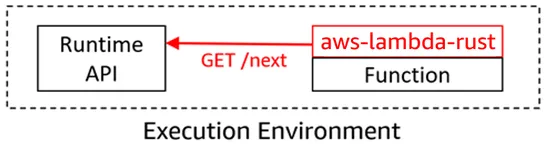
AWS Lambda just bumpedRusttoGeneral Availability- production-ready, SLA covered, and finally with full AWS Support. Deploy withCargo Lambda. Wire it into your stack usingAWS CDK, which now has a dedicated construct to spin up HTTP APIs with minimal fuss. System-level shift:Serverless isn't just for .. read more  

Building serverless applications with Rust on AWS Lambda
GPT-5.4 is OpenAI’s latest frontier AI model designed to perform complex professional and technical work more reliably. It combines advances in reasoning, coding, tool use, and long-context understanding into a single system capable of handling multi-step workflows across software environments. The model builds on earlier GPT-5 releases while integrating the strong coding capabilities previously introduced with GPT-5.3-Codex.

One of the defining features of GPT-5.4 is its ability to operate as part of agent-style workflows. The model can interact with tools, APIs, and external systems to complete tasks that extend beyond simple text generation. It also introduces native computer-use capabilities, allowing AI agents to operate applications using keyboard and mouse commands, screenshots, and browser automation frameworks such as Playwright.

GPT-5.4 supports context windows of up to one million tokens, enabling it to process and reason over very large documents, long conversations, or complex project contexts. This makes it suitable for tasks such as analyzing codebases, generating technical documentation, working with large spreadsheets, or coordinating long-running workflows. The model also introduces a feature called tool search, which allows it to dynamically retrieve tool definitions only when needed. This reduces token usage and makes it more efficient to work with large ecosystems of tools, including environments with dozens of APIs or MCP servers.

In addition to improved reasoning and automation capabilities, GPT-5.4 focuses on real-world productivity tasks. It performs better at generating and editing spreadsheets, presentations, and documents, and it is designed to maintain stronger context across longer reasoning processes. The model also improves factual accuracy and reduces hallucinations compared with previous versions.

GPT-5.4 is available across OpenAI’s ecosystem, including ChatGPT, the OpenAI API, and Codex. A higher-performance variant, GPT-5.4 Pro, is also available for users and developers who require maximum performance for complex tasks such as advanced research, large-scale automation, and demanding engineering workflows. Together, these capabilities position GPT-5.4 as a model aimed not just at conversation, but at executing real work across software systems.