Join us

ContentUpdates and recent posts about GPT-5.4..
 Activity
@paunikar-jayesh started using tool MySQL , 1 week, 3 days ago.
 Activity
@paunikar-jayesh started using tool Laravel , 1 week, 3 days ago.
Story Trending
@laura_garcia shared a post, 1 week, 4 days ago
Software Developer, RELIANOID

DevOpsCon Amsterdam 2026

- 𝗗𝗲𝘃𝗢𝗽𝘀𝗖𝗼𝗻 𝗔𝗺𝘀𝘁𝗲𝗿𝗱𝗮𝗺 𝟮𝟬𝟮𝟲 𝗶𝘀 𝗷𝘂𝘀𝘁 𝗮𝗿𝗼𝘂𝗻𝗱 𝘁𝗵𝗲 𝗰𝗼𝗿𝗻𝗲𝗿! - Amsterdam, Netherlands April 20–24, 2026 Simplify complexity, amplify agility, and accelerate innovation. Join DevOpsCon Amsterdam 2026 — one of the leading conferences for professionals working with CI/CD, Kubernetes, Platform Engineering, ..

devopscon amsterdam april 26
Story WrapPixel Team Trending
@sanjayjoshi shared a post, 1 week, 5 days ago

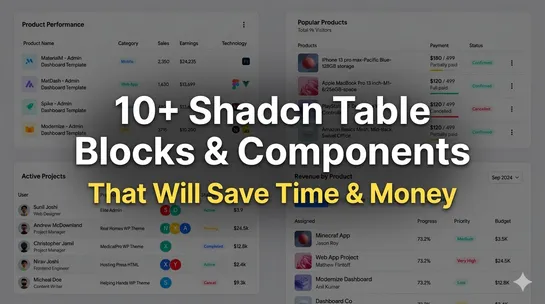
10+ Shadcn Table Components, Blocks & Tools

A curated list of Shadcn table components and blocks you can use in React and Next.js projects to build clean, flexible, and production-ready data tables faster.

Thumbnail Shadcn Table
Story Keploy Team Trending
@sancharini shared a post, 1 week, 5 days ago

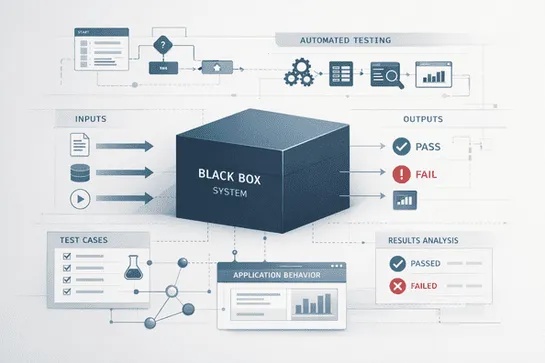
Black Box Testing Techniques to Improve Test Coverage

Learn black box testing techniques to improve test coverage. Explore methods like equivalence partitioning, boundary value analysis, and more with practical examples.

black box testing techniques
Story Trending
@laura_garcia shared a post, 1 week, 5 days ago
Software Developer, RELIANOID

𝗪𝗼𝗿𝗹𝗱 𝗤𝘂𝗮𝗻𝘁𝘂𝗺 𝗗𝗮𝘆

🚀 𝗪𝗼𝗿𝗹𝗱 𝗤𝘂𝗮𝗻𝘁𝘂𝗺 𝗗𝗮𝘆 𝗶𝘀 𝗵𝗲𝗿𝗲… and it’s not just science fiction anymore. Quantum computing is rapidly moving from theory to reality—and with it comes a 𝗺𝗮𝘀𝘀𝗶𝘃𝗲 𝘀𝗵𝗶𝗳𝘁 𝗶𝗻 𝗰𝘆𝗯𝗲𝗿𝘀𝗲𝗰𝘂𝗿𝗶𝘁𝘆 that organizations simply can’t ignore. Here’s the uncomfortable truth: 👉 The same technology that promises breakthrou..

quantum_computing_relianoid
Link
@hamzmu shared a link, 1 week, 6 days ago
Fellow, Rootly

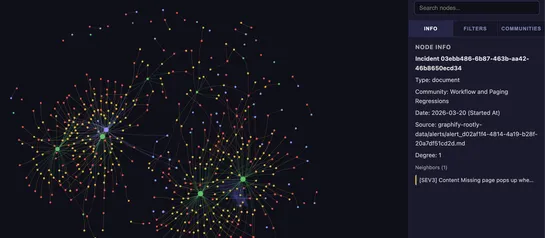
Using Graphify to turn Incident Data into a Knowledge Graph

Karpathy said we should build LLM knowledge bases. 48 hours later made Graphify was made: one command, full semantic knowledge graph.

We applied the idea to incident data turning them into a queryable and interactable semantic graph. This lets us see past fixes, predict failures, cluster services, cut alert noise, and reveal team load in seconds.

If you’re using Rootly, here is a small plugin to explore your incident data.

Check it out: github.com/Rootly-AI-Labs/rootly-graphify-importer

Interactive knowledge graph visualization of incident management data showing clustered services, alerts, and responders with connected nodes and relationships in Graphify
Story Trending
@laura_garcia shared a post, 1 week, 6 days ago
Software Developer, RELIANOID

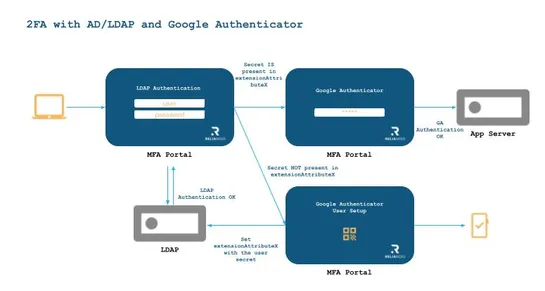
Strengthen Your MFA with Google Authenticator and RELIANOID

🔐 Strengthen Your MFA with Google Authenticator and RELIANOID At RELIANOID, we take authentication seriously. We've just published a new technical guide on how to integrate Google Authenticator into the RELIANOID MFA Portal, using Active Directory or LDAP to manage user secrets. ✅ Understand TOTP vs..

2FA with AD_LDAP and Google Authenticator
 Activity
@roock started using tool Terraform , 2 weeks, 1 day ago.
 Activity
@roock started using tool Python , 2 weeks, 1 day ago.
GPT-5.4 is OpenAI’s latest frontier AI model designed to perform complex professional and technical work more reliably. It combines advances in reasoning, coding, tool use, and long-context understanding into a single system capable of handling multi-step workflows across software environments. The model builds on earlier GPT-5 releases while integrating the strong coding capabilities previously introduced with GPT-5.3-Codex.

One of the defining features of GPT-5.4 is its ability to operate as part of agent-style workflows. The model can interact with tools, APIs, and external systems to complete tasks that extend beyond simple text generation. It also introduces native computer-use capabilities, allowing AI agents to operate applications using keyboard and mouse commands, screenshots, and browser automation frameworks such as Playwright.

GPT-5.4 supports context windows of up to one million tokens, enabling it to process and reason over very large documents, long conversations, or complex project contexts. This makes it suitable for tasks such as analyzing codebases, generating technical documentation, working with large spreadsheets, or coordinating long-running workflows. The model also introduces a feature called tool search, which allows it to dynamically retrieve tool definitions only when needed. This reduces token usage and makes it more efficient to work with large ecosystems of tools, including environments with dozens of APIs or MCP servers.

In addition to improved reasoning and automation capabilities, GPT-5.4 focuses on real-world productivity tasks. It performs better at generating and editing spreadsheets, presentations, and documents, and it is designed to maintain stronger context across longer reasoning processes. The model also improves factual accuracy and reduces hallucinations compared with previous versions.

GPT-5.4 is available across OpenAI’s ecosystem, including ChatGPT, the OpenAI API, and Codex. A higher-performance variant, GPT-5.4 Pro, is also available for users and developers who require maximum performance for complex tasks such as advanced research, large-scale automation, and demanding engineering workflows. Together, these capabilities position GPT-5.4 as a model aimed not just at conversation, but at executing real work across software systems.