Join us

ContentUpdates and recent posts about GPT..
Link
@kala shared a link, 1 week, 4 days ago
FAUN.dev()

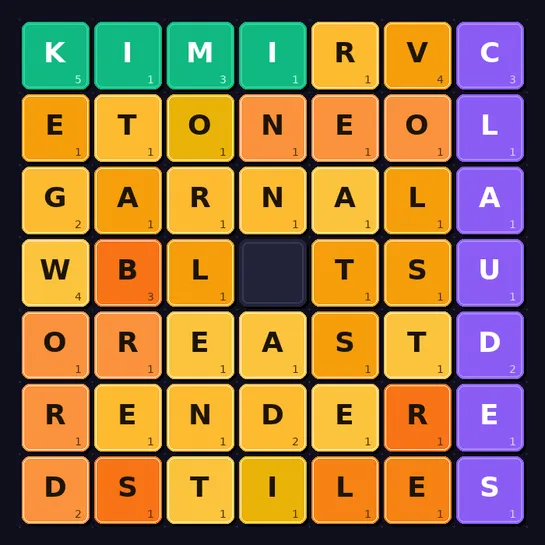
An open-weights Chinese model just beat Claude, GPT-5.5, and Gemini in a programming challenge

The AI Coding Contest Day 12 matched ten models on a sliding‑letter puzzle. Open‑weightsKimi K2.6took first: 22 match points (7‑1‑0).MiMo V2‑Proscored second by blasting claims for intact ≥7‑letter seeds (43 points).GPT‑5.5andClaude Opus 4.7landed third and fifth. Grids ran10×10→30×30. Heavy scrambl.. read more  
An open-weights Chinese model just beat Claude, GPT-5.5, and Gemini in a programming challenge
Link
@kala shared a link, 1 week, 4 days ago
FAUN.dev()

Introducing the Agent Readiness score. Check to see if your site is agent-ready

Cloudflare launchedIsItAgentReady. It scans200kdomains, scoresagent readiness, publishes weekly adoption charts, and exposes results via anAPI. It checksrobots.txt,llms.txt, content negotiation viaAccept: text/markdown,API Catalog,.well-known/mcp.json, OAuth discovery, andx402payments. Cloudflare ov.. read more  

Introducing the Agent Readiness score. Check to see if your site is agent-ready
Link
@kala shared a link, 1 week, 4 days ago
FAUN.dev()

Monitoring LLM behavior: Drift, retries, and refusal patterns

Traditional software is predictable due to determinism, while generative AI is unpredictable. Engineers need a new infrastructure layer, the AI Evaluation Stack, to ship enterprise-ready AI products. The stack includes deterministic assertions and model-based assertions to ensure structural integrit.. read more  

Link
@kala shared a link, 1 week, 4 days ago
FAUN.dev()

Multi-Agent System Reliability

LLMs are unreliable out of the box, but multi-agent systems can improve by dividing work among specialized agents. Building robust systems involves leveraging human system patterns like hierarchy, consensus, adversarial debate, and knock-out in a multi-agent architecture to ensure correctness and re.. read more  

Link
@kala shared a link, 1 week, 4 days ago
FAUN.dev()

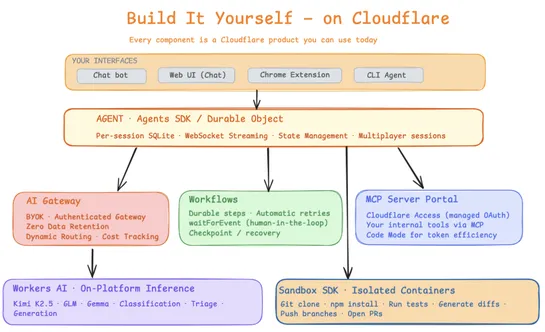
The AI engineering stack we built internally - on the platform we ship

Cloudflare wired AI into the engineering stack. LLM traffic funnels through aproxy WorkerandAI Gateway. It shippedWorkers AIand theAgents SDK. Daily users hit 3,683 (93% R&D). MR throughput climbed to ~10,952/week.Workers AIhandled 51B input tokens and cut a security agent's inference spend by 77%... read more  

The AI engineering stack we built internally - on the platform we ship
Link
@devopslinks shared a link, 1 week, 4 days ago
FAUN.dev()

How incidents can teach us about what’s already working well

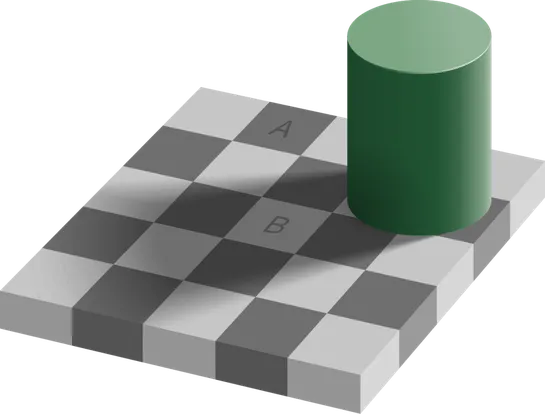
A famous optical illusion developed by Edward H. Adelson shows that two squares, despite appearing different in shade, are actually the same gray. This illusion demonstrates how the brain processes light, shadow, and objects when interpreting visual signals from the optic nerve. Studying such illusi.. read more  

How incidents can teach us about what’s already working well
Link
@devopslinks shared a link, 1 week, 4 days ago
FAUN.dev()

The Software Development Lifecycle Is Dead

AI agents collapse the classicSDLC-requirements,design,implementation,testing,review,deployment- into an intent-driven loop. They generate code, tests, and pipelines together. They commit tomain. Automated verification runs. Deployment and release split withfeature flags... read more  

Link
@devopslinks shared a link, 1 week, 4 days ago
FAUN.dev()

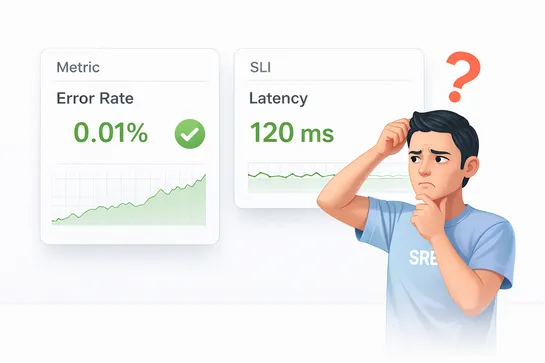
The Silent Failure of Reliability Metrics at Scale: Lessons Learned from a Decade of Broken Metrics

At scale, observability breaks whenSLIsand metrics mix different behaviors and lose clear meaning. Complexity grows: more event types, extra labels, and risingcardinality. That bloats queries, slows evaluation pipelines, and distortsPrometheus,PromQL, andElasticmetrics. Why this matters:Teams must t.. read more  

The Silent Failure of Reliability Metrics at Scale: Lessons Learned from a Decade of Broken Metrics
Link
@devopslinks shared a link, 1 week, 4 days ago
FAUN.dev()

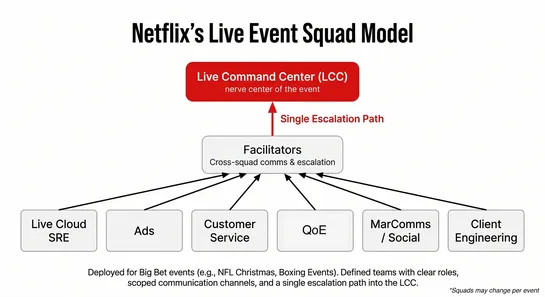
The Human Infrastructure: How Netflix Built the Operations Layer Behind Live at Scale

Netflix has massively scaled its live content, now streaming over nine shows per day with up to 17.9M peak viewers per game, thanks to a complex Broadcast Operations Center, strict transmission quality standards, and a tiered human operations model, including specialized engineering teams and dedica.. read more  

The Human Infrastructure: How Netflix Built the Operations Layer Behind Live at Scale
Link
@devopslinks shared a link, 1 week, 4 days ago
FAUN.dev()

The most severe Linux threat to surface in years catches the world flat-footed

Publicly released exploit code for a critical privilege escalation vulnerability in Linux, known as CopyFail (CVE-2026-31431), allows attackers to gain root access across all vulnerable distributions with a single piece of code. The researchers from Theori disclosed the vulnerability 5 weeks after n.. read more  

The most severe Linux threat to surface in years catches the world flat-footed
GPT (Generative Pre-trained Transformer) is a deep learning model developed by OpenAI that has been pre-trained on massive amounts of text data using unsupervised learning techniques. GPT is designed to generate human-like text in response to prompts, and it is capable of performing a variety of natural language processing tasks, including language translation, summarization, and question-answering. The model is based on the transformer architecture, which allows it to handle long-range dependencies and generate coherent, fluent text. GPT has been used in a wide range of applications, including chatbots, language translation, and content generation.

GPT is a family of language models that have been trained on large amounts of text data using a technique called unsupervised learning. The model is pre-trained on a diverse range of text sources, including books, articles, and web pages, which allows it to capture a broad range of language patterns and styles. Once trained, GPT can be fine-tuned on specific tasks, such as language translation or question-answering, by providing it with task-specific data.

One of the key features of GPT is its ability to generate coherent and fluent text that is indistinguishable from human-generated text. This is achieved by training the model to predict the next word in a sentence given the previous words. GPT also uses a technique called attention, which allows it to focus on relevant parts of the input text when generating a response.

GPT has become increasingly popular in recent years, particularly in the field of natural language processing. The model has been used in a wide range of applications, including chatbots, content generation, and language translation. GPT has also been used to create AI-generated stories, poetry, and even music.