Join us

ContentUpdates and recent posts about Grafana Tempo..
Story
@idjuric660 shared a post, 10 months, 2 weeks ago
Technical Content Writer, Mailtrap

How to Send Emails in Cursor with Mailtrap MCP Server

If you want to send emails in Cursor, you won’t be able to do it since it doesn’t have built-in sending functionality. But don’t worry—I’ve got you covered! In this article, I’ll show you how to integrate Cursor withMailtrap MCPand start sending emails with simple prompts—whether you’re on Windows o..

Link
@anjali shared a link, 10 months, 2 weeks ago
Customer Marketing Manager, Last9

PostgreSQL Performance: Faster Queries and Better Throughput

Understand how PostgreSQL performance works, from MVCC to query planning, and how to optimize for better throughput and latency.

rabbit
Story Trending
@alberthiltonn shared a post, 10 months, 2 weeks ago

Top 12 Angular Best Practices that you need to consider in 2026

Angular

Find out the top 12 Angular best practices to follow in 2026 for building robust and scalable web apps.

Top Angular Best Practices
Story
@idjuric660 shared a post, 10 months, 2 weeks ago
Technical Content Writer, Mailtrap

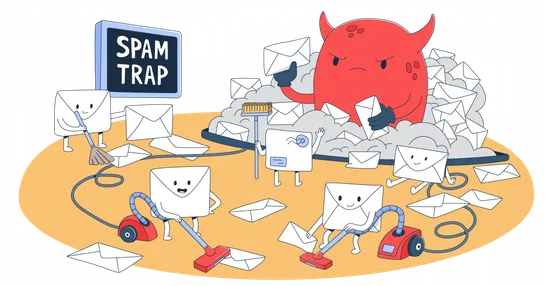
Improve Email Deliverability: Here’s How & Best Practices to Follow

Hitting the inbox is paramount, no matter how big or small a sender you are. If not… - Your marketing campaigns go unseen. - Your transactional emails fail to reach their destination. - Your efforts translate into lost revenue and damaged sender reputation. At Mailtrap, we help you improve deliverab..

FEATURED-IMAGE-5-1-1029x540
Story
@laura_garcia shared a post, 10 months, 2 weeks ago
Software Developer, RELIANOID

Understanding Botnets & How to Defend Against Them

Botnets remain one of the biggest cybersecurity threats, enabling large-scale DDoS attacks, credential theft, and malware distribution. These networks of compromised devices operate silently, controlled by cybercriminals to exploit vulnerabilities. - How do botnets work? Infect devices via phishing,..

Blog2 Botnets Network Attacks RELIANOID protected
Link
@faun shared a link, 10 months, 2 weeks ago
FAUN.dev()

Scaling Netflix's threat detection pipelines without streaming

Netflix’s “Psycho Pattern” stitched togetherSpark, Kafka, and Airflowinto a relentless micro-batch pipeline. It tracked high watermarks for near-real-time threat detection—fast enough, sharp enough. Then came the Flink switch. Lower latency? Sure. But it missed the mark. Signal quality stayed flat... read more  

Link
@faun shared a link, 10 months, 2 weeks ago
FAUN.dev()

GitHub Copilot crosses 20M all-time users

GitHub Copilot just crossed20 million users. Five million joined last quarter alone. Enterprise usage? Up75%quarter-over-quarter. It’s now in the hands of90% of the Fortune 100, according to Microsoft. Here’s the kicker: Copilot’s AI coding biz is now bigger than all of GitHub’s revenue when Micros.. read more  

Link
@faun shared a link, 10 months, 2 weeks ago
FAUN.dev()

The many, many, many JavaScript runtimes of the last decade

JavaScript runtimes aren’t just multiplying—they’re splintering. Big engines likeV8,JavaScriptCore,QuickJS,Hermes, andSpiderMonkeynow sit at the core of purpose-built runtimes everywhere: cloud, edge, mobile, IoT, even smart TVs. Platforms likeCloudflare Workers,Deno Deploy,Bun,LLRT, andNativeScrip.. read more  

Link
@faun shared a link, 10 months, 2 weeks ago
FAUN.dev()

My Functional Programming Awakening: Patterns I'd Been Using All Along

A dev takes functional programming from Python class to JavaScript land—with surprising wins. The usual suspects show up:closures,function composition, and some spicyparser combinators. But the real magic? Swapping out side-effect soup forpure functions,Result-based error handling, andhigher-order f.. read more  

Link
@faun shared a link, 10 months, 2 weeks ago
FAUN.dev()

So you want to parse a PDF?

Out of 3,977 real-world PDFs, 0.5% broke during xref pointer parsing. Not a huge number—unless you're the one parsing them. The top culprit? Junk data before the start pointer. Classic. Other file weirdness: broken xref tables, bad object offsets, and inconsistent xref chains... read more  

Grafana Tempo is a distributed tracing backend built for massive scale and low operational overhead. Unlike traditional tracing systems that depend on complex databases, Tempo uses object storage—such as S3, GCS, or Azure Blob Storage—to store trace data, making it highly cost-effective and resilient. Tempo is part of the Grafana observability stack and integrates natively with Grafana, Prometheus, and Loki, enabling unified visualization and correlation across metrics, logs, and traces.

Technically, Tempo supports ingestion from major tracing protocols including Jaeger, Zipkin, OpenCensus, and OpenTelemetry, ensuring easy interoperability. It features TraceQL, a domain-specific query language for traces inspired by PromQL and LogQL, allowing developers to perform targeted searches and complex trace-based analytics. The newer TraceQL Metrics capability even lets users derive metrics directly from trace data, bridging the gap between tracing and performance analysis.

Tempo’s Traces Drilldown UI further enhances usability by providing intuitive, queryless analysis of latency, errors, and performance bottlenecks. Combined with the tempo-cli and tempo-vulture tools, it delivers a full suite for trace collection, verification, and debugging.

Built in Go and following OpenTelemetry standards, Grafana Tempo is ideal for organizations seeking scalable, vendor-neutral distributed tracing to power observability at cloud scale.