Join us

ContentUpdates and recent posts about Grafana Tempo..
Link
@varbear shared a link, 3 months, 2 weeks ago
FAUN.dev()

Reversing YouTube's "Most Replayed" Graph

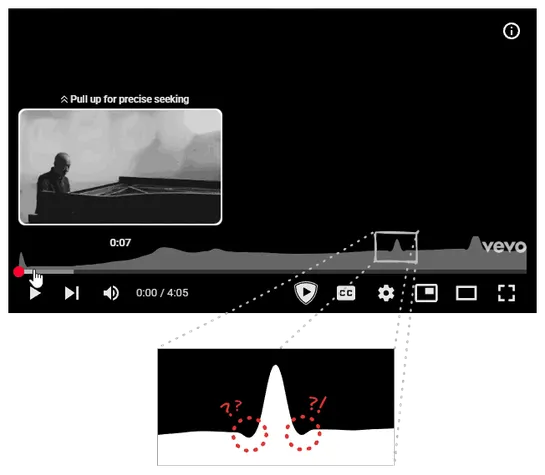
An engineer cracked open YouTube’s “most replayed” heatmap. Turns out it runs onsampled view frequency arrays, client-sidenormalization, andSVG renderingstitched together withCubic Bézier splinesfor that smooth, snappy curve. Behind the scenes, playback gets logged with adifference array + prefix su.. read more  
Reversing YouTube's "Most Replayed" Graph
Link
@varbear shared a link, 3 months, 2 weeks ago
FAUN.dev()

An Honest Review of Go

Go gets big props for its built-in concurrency model withgoroutinesandchannels, which make lightweight, scalable parallelism easy and ergonomic. The author criticizes Go's type system for lacking things likeenums, closed type sets, and tuples, making certain patterns awkward compared with Rust's ric.. read more  

Link
@varbear shared a link, 3 months, 2 weeks ago
FAUN.dev()

How Github monopoly is destroying the open source ecosystem

Out of 238 student open source contributions over seven years, 237 landed onGitHub- even though they were told to look elsewhere. One short-lived GitHub IP block brought everything to a standstill. No commits. No reviews. Just silence. Turns out, a single platform holds the keys to a whole ecosystem.. read more  

How Github monopoly is destroying the open source ecosystem
Story
@laura_garcia shared a post, 3 months, 2 weeks ago
Software Developer, RELIANOID

🚨 Join RELIANOID at the Dallas Cybersecurity Conference 2026! 🚨

📍 Dallas, Texas | 🗓 January 22, 2026 Securing the Future starts here. We’re excited to be part of FutureCon Dallas, a high-impact event bringing together CISOs, C-suite leaders, and senior security professionals to tackle today’s most pressing cyber threats. 🔹 Why attend? Gain actionable insights in..

dallas_cybersecurity_conference_2026_relianoid
Link
@kaptain shared a link, 3 months, 2 weeks ago
FAUN.dev()

v1.35: Restricting executables invoked by kubeconfigs via exec plugin allowList added to kuberc

Kubernetes v1.35 lands with acredential plugin allowlist, now in beta, no feature gate needed. It lets you lock down whichexecplugins your kubeconfigs can run. Tighter leash, lower risk. Especially when the credential pipeline gets sketchy... read more  

Link
@kaptain shared a link, 3 months, 2 weeks ago
FAUN.dev()

From Bare Metal to Containers: A Developer's Guide to Execution Environments

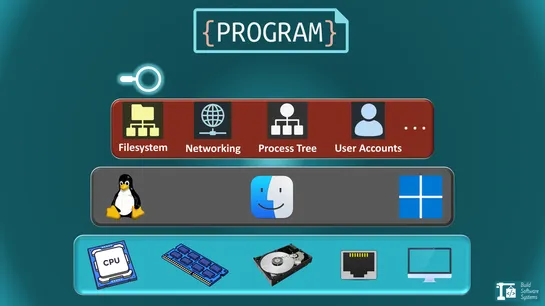
A sharp look at how execution environments evolved - from bare metal to VMs, containers, sandboxes, and language-level runtimes. The focus: isolation. Hardware, kernel, processes, runtimes - each adds a boundary. Modern stacks mix and match layers to dial in the right amount. VMs, containers, venvs... read more  

From Bare Metal to Containers: A Developer's Guide to Execution Environments
Link
@kaptain shared a link, 3 months, 2 weeks ago
FAUN.dev()

Run Your Project in a Dev Container, in Zed

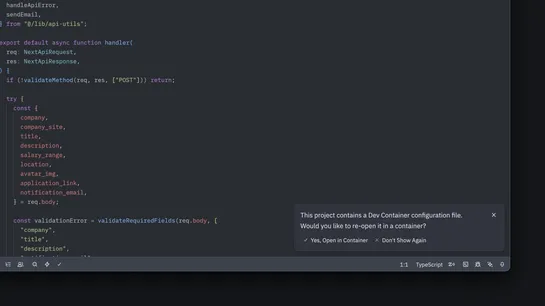
Zed v0.218 addsDev Containersupport with Docker. Projects can now spin up in clean, spec-compliant environments built from.devcontainer.json. It hooks into theDevelopment Containers CLI, with a Zed remote server running backend ops and piping through standard IO. Fast and clean. The bigger picture?L.. read more  

Run Your Project in a Dev Container, in Zed
Link
@kaptain shared a link, 3 months, 2 weeks ago
FAUN.dev()

A Brief Deep-Dive into Attacking and Defending Kubernetes

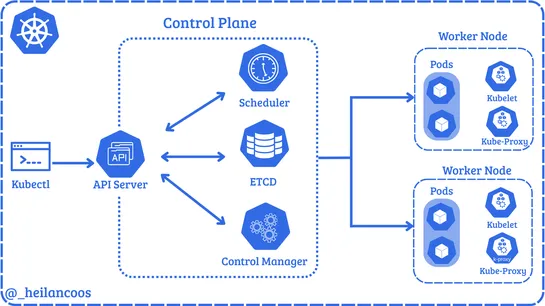
A sharp teardown of Kubernetes’ attack surface maps out where things go sideways: pods, the control plane, RBAC, admission controllers, and etcd. Misconfigurations like anonymous API access, wildcard roles, and hostPath mounts aren't just sloppy- they're attack vectors. Fixes? ThinkFalco,RBAC lockdo.. read more  

A Brief Deep-Dive into Attacking and Defending Kubernetes
Link
@kala shared a link, 3 months, 2 weeks ago
FAUN.dev()

Recursive Language Models: the paradigm of 2026

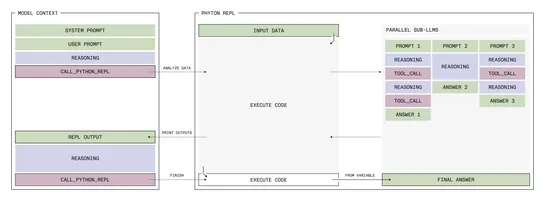
Prime Intellect dropped a fresh take on long-range LLM workflows with itsRecursive Language Model (RLM)scaffold. It pulls off two smart moves: folds context to free up tokens and spins off sub-LLMs to handle chunkier tasks. Think persistent Python REPL meets lightweight agent swarm... read more  

Recursive Language Models: the paradigm of 2026
Link
@kala shared a link, 3 months, 2 weeks ago
FAUN.dev()

FinePDFs: Liberating 3T of the finest tokens from PDFs - a Hugging Face Space by HuggingFaceFW

Hugging Face introduces FinePDFs, a large open dataset built by extracting and cleaning text from millions of PDF documents, reaching trillions of tokens across many languages. The post explains how the pipeline handles messy PDF structure, layout noise, duplication, and low-quality content to produ.. read more  

Grafana Tempo is a distributed tracing backend built for massive scale and low operational overhead. Unlike traditional tracing systems that depend on complex databases, Tempo uses object storage—such as S3, GCS, or Azure Blob Storage—to store trace data, making it highly cost-effective and resilient. Tempo is part of the Grafana observability stack and integrates natively with Grafana, Prometheus, and Loki, enabling unified visualization and correlation across metrics, logs, and traces.

Technically, Tempo supports ingestion from major tracing protocols including Jaeger, Zipkin, OpenCensus, and OpenTelemetry, ensuring easy interoperability. It features TraceQL, a domain-specific query language for traces inspired by PromQL and LogQL, allowing developers to perform targeted searches and complex trace-based analytics. The newer TraceQL Metrics capability even lets users derive metrics directly from trace data, bridging the gap between tracing and performance analysis.

Tempo’s Traces Drilldown UI further enhances usability by providing intuitive, queryless analysis of latency, errors, and performance bottlenecks. Combined with the tempo-cli and tempo-vulture tools, it delivers a full suite for trace collection, verification, and debugging.

Built in Go and following OpenTelemetry standards, Grafana Tempo is ideal for organizations seeking scalable, vendor-neutral distributed tracing to power observability at cloud scale.