Join us

ContentUpdates and recent posts about k3d..
Link
@kala shared a link, 3 months, 2 weeks ago
FAUN.dev()

Introducing helm

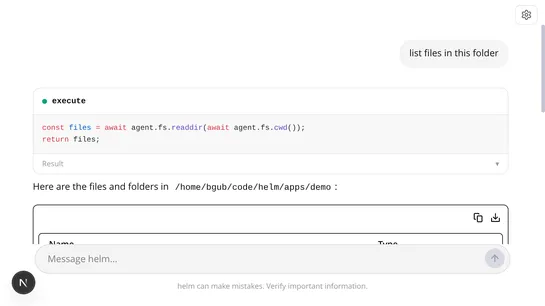
helm usesTypeScripttypes to registerskillsas typed functions with structured I/O. Permissions follow a clear precedence: exact→wildcard→skill→global. Agents get a keywordsearchtool and a code-execution tool that runs JS inside anSESsandbox. A recursiveproxyforwards calls overIPCto the parent, which .. read more  
Introducing helm
Link
@kala shared a link, 3 months, 2 weeks ago
FAUN.dev()

Do you need an MCP to build your native app?

Do you need an MCP to build your native app? Surprisingly, modern agents succeed either way. The real difference is how much time, cost, and context you waste along the way... read more  

Do you need an MCP to build your native app?
Link
@kaptain shared a link, 3 months, 2 weeks ago
FAUN.dev()

Before You Migrate: Five Surprising Ingress-NGINX Behaviors You Need to Know

The K8s blog exposesIngress-NGINXdefaults that clash withGateway API. These include case-insensitive prefix regexes. Host-wide annotation effects. Path rewrites. Slash redirects. URL normalization. Kubernetes retiresIngress-NGINXinMarch 2026.Gateway API 1.5graduatesListenerSetand theHTTPRoute CORS.. read more  

Link
@kaptain shared a link, 3 months, 2 weeks ago
FAUN.dev()

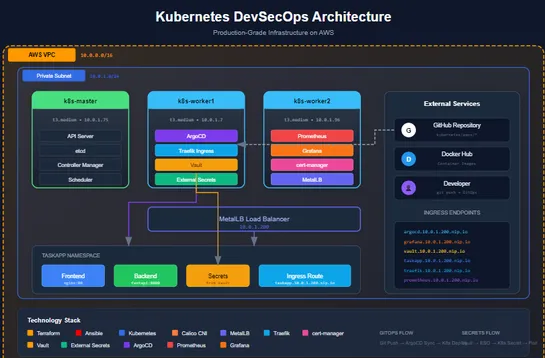
I Built a Production-Grade Kubernetes Platform in 48 Hours.

A dev built a production-grade Kubernetes platform in 48 hours, encountering challenges and solutions along the way. The setup included multiple layers such as infrastructure, cluster, platform, delivery, and observability, each requiring troubleshooting and adjustments. The process involved deployi.. read more  

I Built a Production-Grade Kubernetes Platform in 48 Hours.
Link
@kaptain shared a link, 3 months, 2 weeks ago
FAUN.dev()

Spotlight on SIG Architecture: API Governance

Kubernetes SIG Architecture’s API Governance crew is tightening the screws on stability, consistency, and cross-cutting sanity across the whole API surface. Not just REST. They’re eyeing the overlooked stuff too - CLI flags, config formats, anything that shapes how users and tools touch the system. .. read more  

Link
@kaptain shared a link, 3 months, 2 weeks ago
FAUN.dev()

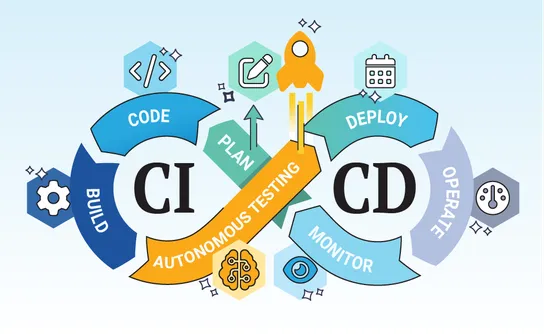
From Chaos to Clarity: How We Built a Self-Healing CI/CD Pipeline That Talks to JIRA

Transitioning JIRA tickets to trigger deployments was key for this team struggling with manual deploys, leading to significant savings in time and reduction in errors. The architecture involved a JIRA Controller Pipeline, a Project Deployment Pipeline, and a JIRA Manager Pipeline, all aimed at seaml.. read more  

From Chaos to Clarity: How We Built a Self-Healing CI/CD Pipeline That Talks to JIRA
Link
@devopslinks shared a link, 3 months, 2 weeks ago
FAUN.dev()

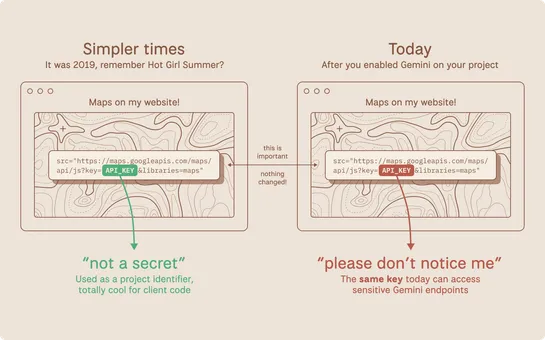
Google API Keys Weren't Secrets. But then Gemini Changed the Rules

A report reveals Google Cloud'sAPI keysuse the same format for public IDs and secret auth. That overlap lets public keys reach theGemini API. New keys default toUnrestricted. Existing keys can be retroactively granted Gemini access. Google will add scoped defaults, block leaked keys, and notify affe.. read more  

Google API Keys Weren't Secrets. But then Gemini Changed the Rules
Link
@devopslinks shared a link, 3 months, 2 weeks ago
FAUN.dev()

How to scale GitOps in the enterprise: From single cluster to fleet management

In GitOps, the "Argo Ceiling" is the point where tooling that worked at a small scale becomes unmanageable as you scale up to multiple clusters. To address this, you can consider using OCI registries and ConfigHub as alternative state store options. When it comes to secrets management, options like .. read more  

How to scale GitOps in the enterprise: From single cluster to fleet management
Link
@devopslinks shared a link, 3 months, 2 weeks ago
FAUN.dev()

Rendering 100M pixels a second over ssh

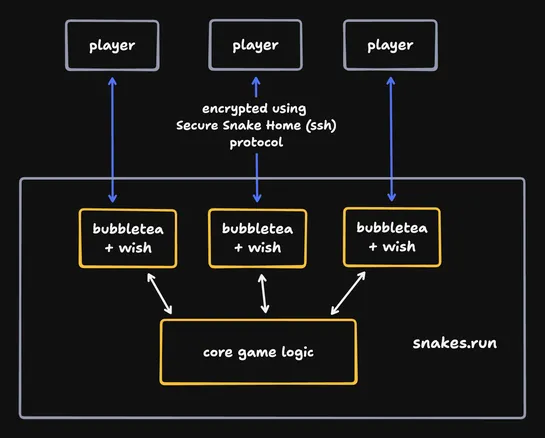
A massively multiplayer snake game accessible over ssh, capable of handling thousands of concurrent players and rendering over a hundred million pixels a second. The game utilizes bubbletea for rendering frames and custom techniques to reduce bandwidth usage to around 2.5 KB/sec. Performance improve.. read more  

Rendering 100M pixels a second over ssh
Link
@devopslinks shared a link, 3 months, 2 weeks ago
FAUN.dev()

LLMs Are Good at SQL. We Gave Ours Terabytes of CI Logs.

Mendral's agent runs ad‑hocSQLagainst compressedClickHouselogs. It traces flaky tests across months and scans up to 4.3B rows per investigation. They denormalize 48 metadata columns per log line. They compress 5.31 TiB down to ~154 GiB (~21 bytes/line) — a 35:1 ratio. That turns arbitrary filters in.. read more  

LLMs Are Good at SQL. We Gave Ours Terabytes of CI Logs.
k3d is an open-source utility designed to simplify running Kubernetes locally by wrapping K3s (Rancher’s lightweight Kubernetes distribution) inside Docker containers. Instead of creating virtual machines, k3d uses Docker as the execution layer, allowing developers to spin up multi-node Kubernetes clusters in seconds using minimal system resources.

k3d is especially popular for local development, CI pipelines, demos, and testing Kubernetes-native applications. It supports advanced setups such as multi-node clusters, load balancers, custom container registries, port mappings, and volume mounts, while remaining easy to tear down and recreate.

Because it uses K3s, k3d inherits a simplified control plane, bundled components, and reduced memory footprint compared to full Kubernetes distributions. This makes it ideal for developers who want a realistic Kubernetes environment without the overhead of tools like Minikube or full VM-based clusters.

k3d integrates cleanly with common Kubernetes workflows and tools such as kubectl, Helm, Skaffold, and Argo CD. It is frequently used to validate manifests, test Helm charts, and simulate production-like environments locally before deploying to cloud or on-prem clusters.