Join us

ContentUpdates and recent posts about Kata Containers..
Link
@kaptain shared a link, 4 months ago
FAUN.dev()

1.35: Enhanced Debugging with Versioned z-pages APIs

Kubernetes 1.35 makes a quiet-but-crucial upgrade: z-pages debugging endpoints now returnstructured, machine-readable JSON. That means tools- not just tired humans - can parse control plane state directly. The responses areversioned, backward-compatible, and tucked behind feature flags for now... read more  

Link
@kala shared a link, 4 months ago
FAUN.dev()

The 2026 Data Engineering Roadmap: Building Data Systems for the Agentic AI Era

Data engineering’s getting flipped.AI agentsandLLMsaren’t just tagging along anymore - they’re the main users now. That means engineers need to buildcontext-aware, machine-readable data systemsthat don’t just store info but actually make sense of it. Think:vector databases,knowledge graphs,semantic .. read more  

The 2026 Data Engineering Roadmap: Building Data Systems for the Agentic AI Era
Link
@kala shared a link, 4 months ago
FAUN.dev()

2025: The year in LLMs

2025 was the year LLMs stopped just answering questions and started building things.Reasoning modelslike OpenAI’s o-series and Claude Code took over tool-driven workflows. Asynchronous coding agentsbroke out. These models didn’t just write code - they ran it, debugged it, then did it again. That loo.. read more  

2025: The year in LLMs
Link
@kala shared a link, 4 months ago
FAUN.dev()

Streamlining Security Investigations with Agents

Slack broke down how it's threading AI into its product without torching user trust.Slack AIleans hard ontenant-specific data isolationandzero data retention- no leftover crumbs from LLM interactions. Instead of piping user data through someone else’s APIs, Slack runs LLMs onits own infrawhere it ca.. read more  

Streamlining Security Investigations with Agents
Link
@kala shared a link, 4 months ago
FAUN.dev()

My LLM coding workflow going into 2026

Anthropic saysClaude Code writes about 90% of its own code now. Why? Because devs are getting smart with AI. They're slicing problems into tight, testable chunks and running structured workflows that keep LLMs on a short leash. It's not just prompts anymore. Think context packaging, multi-agent setu.. read more  

My LLM coding workflow going into 2026
Link
@kala shared a link, 4 months ago
FAUN.dev()

The Architects of AI Are TIME's 2025 Person of the Year

The Architects of AI drove the economy, shaped geopolitics, and changed the way we interact with the world... read more  

The Architects of AI Are TIME's 2025 Person of the Year
Link
@kala shared a link, 4 months ago
FAUN.dev()

Meet the ‘Mad Max’-Loving CEO Challenging Nvidia With a Renegade Chip

June Paik spurned a takeover offer from Meta Platforms last year. Now his South Korean company, FuriosaAI, has an AI chip entering mass production... read more  

Link
@devopslinks shared a link, 4 months ago
FAUN.dev()

Race Condition in DynamoDB DNS System: Analyzing the AWS US-EAST-1 Outage

A long AWS smackdown in US-EAST-1 traced back to a ticking time bomb inDynamoDB’s automated DNS system. The flaw torpedoed EC2 networking, hobbled Lambda and Fargate, and dragged down theNetwork Load Balancer. Endpoints ghosted. Configs stalled. Everything snowballed. AWS says they’ll upgrade EC2 th.. read more  

Race Condition in DynamoDB DNS System: Analyzing the AWS US-EAST-1 Outage
Link
@devopslinks shared a link, 4 months ago
FAUN.dev()

You don’t need NAT gateway to deploy Lambda into VPC

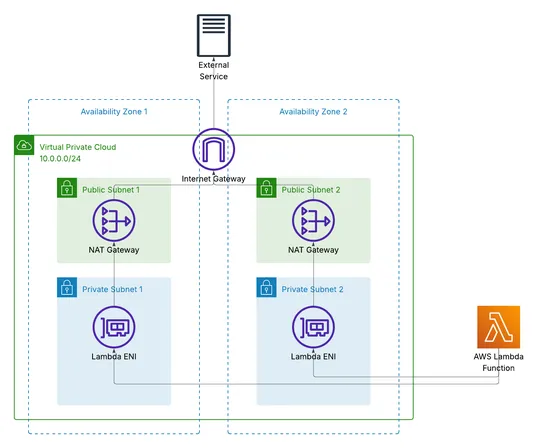
AWS just made a big dent in NAT gateway bills. You can now runLambda in VPCs with IPv6 and an egress-only Internet gateway- no more always-on NAT draining your wallet. Keep the private subnets locked down. Still get outbound Internet access. IPv6 handles the traffic, slicing out the NAT middleman... read more  

You don’t need NAT gateway to deploy Lambda into VPC
Link
@devopslinks shared a link, 4 months ago
FAUN.dev()

ArgoCD diffs at scale

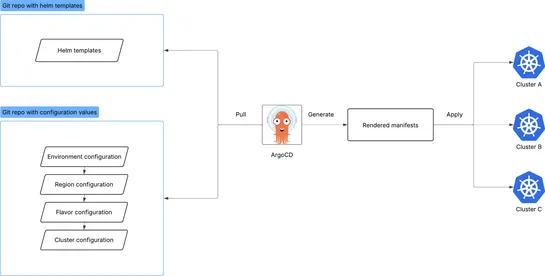
Monday.com ditched ArgoCD's built-in manifest diffing. Instead, they wired up a custom CI renderer that pre-renders Helm charts using real cluster data. Then it compares the desired states across Git branches. The kicker: diffs go to a UI with custom grouping support. Reviews get easier. New devs ge.. read more  

ArgoCD diffs at scale
Kata Containers is a Cloud Native Computing Foundation (CNCF) project designed to close the security gap between traditional Linux containers and virtual machines. Instead of sharing a single host kernel like standard containers, Kata Containers launches each pod or container inside its own lightweight virtual machine using hardware virtualization.

This approach dramatically reduces the attack surface and prevents container escape vulnerabilities, making Kata ideal for multi-tenant, untrusted, or sensitive workloads. Despite using VMs under the hood, Kata is optimized for fast startup times and integrates seamlessly with Kubernetes through the Container Runtime Interface (CRI), allowing it to be used alongside runtimes like containerd and CRI-O.

Kata Containers is commonly used in scenarios such as multi-tenant Kubernetes clusters, confidential computing, sandboxed AI workloads, serverless platforms, and agent execution environments where strong isolation is mandatory. It supports multiple hypervisors, including QEMU, Firecracker, and Cloud Hypervisor, and continues to evolve toward faster boot times, lower memory overhead, and better hardware acceleration support.