Join us

ContentUpdates and recent posts about Kubernetes..
News FAUN.dev() Team
@kala shared an update, 4 months, 1 week ago
FAUN.dev()

Anthropic’s New "Economic Primitives" Reveal Who Uses Claude, for What, and How Well It Works

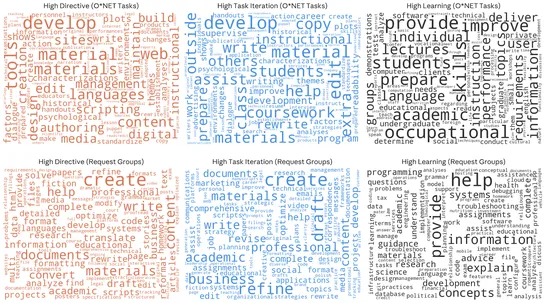
Anthropic's new Economic Index report introduces five "economic primitives" to measure *how* Claude is used: task complexity, user and AI skill level, use case (work, coursework, personal), autonomy, and task success - built from privacy-preserving classification of anonymized Claude.ai and first-party API transcripts from **November 2025**.
Anthropic’s New "Economic Primitives" Reveal Who Uses Claude, for What, and How Well It Works
News FAUN.dev() Team
@varbear shared an update, 4 months, 1 week ago
FAUN.dev()

Tailwind CSS Lays Off 75% of Its Engineering Team as AI Cuts Documentation Traffic by 40%

tailwindcss Vercel

Tailwind CSS laid off roughly **75% of its engineering team** after a **~40% drop in documentation traffic** and an estimated **~80% decline in revenue**, even as usage of the framework continues to grow. According to its creator, AI-driven access to documentation has broken the link between adoption and sustainability.

News FAUN.dev() Team
@devopslinks shared an update, 4 months, 1 week ago
FAUN.dev()

Pulumi Expands IaC Platform to Support Terraform, OpenTofu, and Native HCL

Terraform Pulumi

Pulumi added support for managing Terraform and OpenTofu state in Pulumi Cloud and introduced native HCL support in its infrastructure as code engine. These changes allow teams to use Terraform, OpenTofu, Pulumi languages, and HCL side by side, with shared state visibility, governance features, and AI-assisted operations available across tools.

Story
@laura_garcia shared a post, 4 months, 1 week ago
Software Developer, RELIANOID

🔐 RELIANOID Load Balancer – Security Contributions

At RELIANOID, we actively and selflessly contribute to improving global cybersecurity, staying true to our open-source spirit. 🤝 We maintain close collaborations with security platforms, forums, and threat-intelligence communities, sharing our expertise to help strengthen protection across the Inter..

abuseipdb contributor relianoid
Story
@laura_garcia shared a post, 4 months, 2 weeks ago
Software Developer, RELIANOID

📍 RELIANOID at Bett UK 2026

We’re excited to take part in Bett UK 2026, the world’s leading EdTech event, bringing together educators, innovators, and decision-makers shaping the future of education. 🗓 January 21–23, 2026 📍 London, United Kingdom Join us to discover how RELIANOID enables secure, scalable, and highly available ..

bett_uk_event_london_2026_relianoid
Story
@laura_garcia shared a post, 4 months, 2 weeks ago
Software Developer, RELIANOID

🚀 If you’re building AI systems, reliability is no longer optional

Many teams are rushing to adopt AI, but few are asking the most critical question: 👉 What happens when AI fails? Back in December, we published an article that remains more relevant than ever: AI is redefining Site Reliability Engineering (SRE). Why? Because AI inference workloads introduce new reli..

 Activity
@aleonrangel gave 🐾 to Difference between Agile and Scrum , 4 months, 2 weeks ago.
 Activity
@aleonrangel gave 🐾 to Difference between Agile and Scrum , 4 months, 2 weeks ago.
Story
@laura_garcia shared a post, 4 months, 2 weeks ago
Software Developer, RELIANOID

🔐 Reminder: Azure MFA Enforcement Is Now in Place

Some time ago, Microsoft announced and enforced mandatory multifactor authentication (MFA) for all Azure tenants performing resource management actions. 👉 This marked a clear turning point: MFA is no longer optional — it’s a requirement. At RELIANOID, we shared how this change reinforces the need to..

Link
@varbear shared a link, 4 months, 2 weeks ago
FAUN.dev()

How to build internal developer tools with a small team

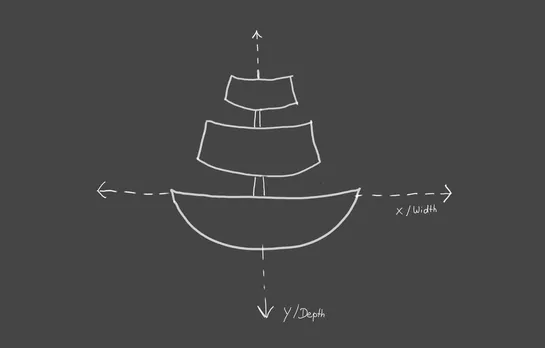
A fresh way to think about internal dev tooling: three axes,width(new features),depth(polish and stability), andpreparation(future-ready architecture). Instead of treating tradeoffs as binary, the model maps them as vectors in a shared space. Less tug-of-war. More informed roadmap moves... read more  

How to build internal developer tools with a small team
Kubernetes, often abbreviated as K8s, is an open-source orchestration platform designed to automate the deployment, scaling, and management of containerized applications. It acts as a "brain" for your infrastructure, ensuring that your containers run exactly where and how they should across a cluster of physical or virtual machines, abstracting away the underlying hardware to treat the entire data center as a single computational resource.

At its core, Kubernetes operates on a declarative model: you define the "desired state" of your application—such as how many replicas should be running or how much CPU they should use - and the system continuously works to maintain that state. If a container crashes or a node fails, Kubernetes automatically detects the discrepancy and restarts or reschedules the workload to ensure zero downtime, providing a self-healing environment that is critical for modern, high-availability systems.

Beyond simple container management, Kubernetes provides a robust ecosystem for networking, storage, and security. It handles service discovery and load balancing internally, allowing containers to communicate seamlessly without hardcoded IP addresses, and orchestrates storage mounting from various providers. By standardizing how applications are deployed and scaled, Kubernetes enables developers to move from local development to global production with consistent and predictable results.