Join us

ContentUpdates and recent posts about Magento 2 Multi Vendor Indian GST Extension..
Link
@faun shared a link, 8 months ago
FAUN.dev()

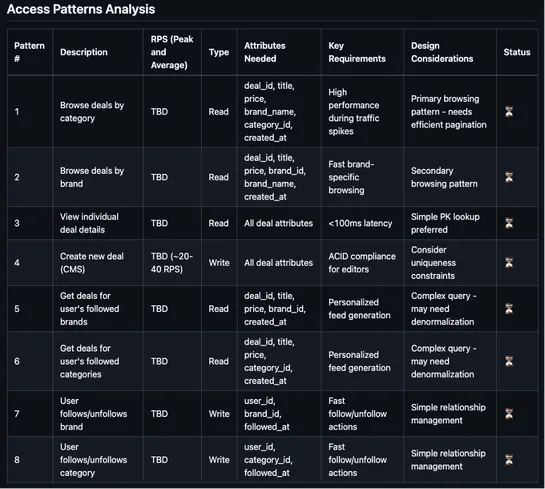
Introducing the Amazon DynamoDB data modeling MCP tool

Amazon just dropped theDynamoDB MCP data modeling tool—a natural language assistant that turns app specs into DynamoDB schemas without the boilerplate. It plugs intoAmazon QandVS Code, tracks access patterns, estimates costs, and throws in real-time design trade-offs... read more  
Introducing the Amazon DynamoDB data modeling MCP tool
Link
@faun shared a link, 8 months ago
FAUN.dev()

GPT-5 is here

GPT-5 tightens reasoning and lands cleaner hits inmath,science,finance, andlaw. It outpaces GPT-4—not just wider, but deeper... read more  

GPT-5 is here
Link
@faun shared a link, 8 months ago
FAUN.dev()

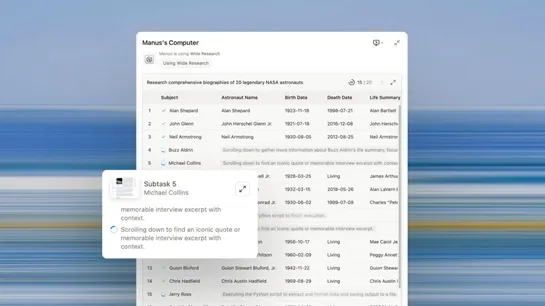
Manus AI Launches ‘Wide Research,’ Pitting 100-Agent Swarms Against ‘Deep Research‘ from Google and OpenAI

Manus just droppedWide Research—a swarm of 100+ AI agents, each spun up as a Turing-complete VM. They don’t follow orders. They solve massive tasks in parallel, straight from natural language prompts. Forget rigid chains of command. These agents don’t play roles—they run jobs. No hierarchies. No br.. read more  

Manus AI Launches ‘Wide Research,’ Pitting 100-Agent Swarms Against ‘Deep Research‘ from Google and OpenAI
Link
@faun shared a link, 8 months ago
FAUN.dev()

Anthropic says OpenAI engineers using Claude Code ahead of GPT-5 launch

Anthropic just shut the door on OpenAI, yanking access to theClaude Code APIafter spotting ChatGPT engineers poking around—likely prepping forGPT-5. Claude Codeisn’t just an internal toy. It’s a serious coding co-pilot, used in the wild by devs who want answers without babysitting a model. Market .. read more  

Link
@faun shared a link, 8 months ago
FAUN.dev()

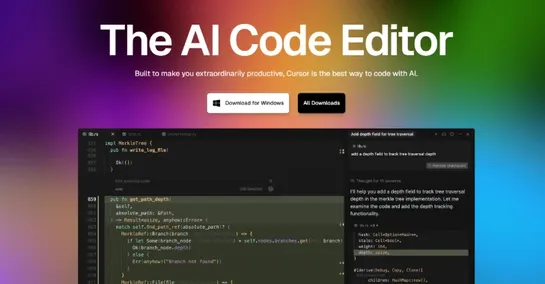
Cursor AI Code Editor Fixed Flaw Allowing Attackers to Run Commands via Prompt Injection

XM Cyber dropped a practical guide for rolling outContinuous Threat Exposure Management (CTEM)with its platform—geared for those eyeing 2025 readiness. It dives into wiring up real-time exposure visibility, validating actual risk, and tightening up remediation across complex enterprise setups. Why .. read more  

Cursor AI Code Editor Fixed Flaw Allowing Attackers to Run Commands via Prompt Injection
Link
@faun shared a link, 8 months ago
FAUN.dev()

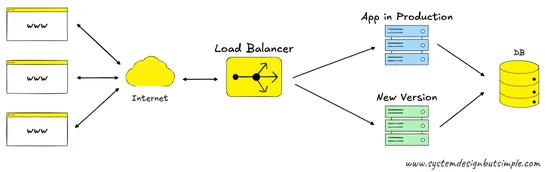
Blue‑Green Deployment in 1 diagram and 195 words

Blue-Green deployment runs two matching environments so you can flip traffic with zero downtime—and yank it back fast if something breaks. Kubernetes + IstioandSpinnakerhandle the heavy lifting. They steer traffic between versions and keep infra lean... read more  

Blue‑Green Deployment in 1 diagram and 195 words
Link
@faun shared a link, 8 months ago
FAUN.dev()

Perplexity is using stealth, undeclared crawlers to evade website no-crawl directives

Perplexity AI’s stealth crawling behavior includes modifying user agents and source ASNs to avoid website blocks, highlighting the importance of transparent bot behavior... read more  

Link
@faun shared a link, 8 months ago
FAUN.dev()

Project Ire autonomously identifies malware at scale

Microsoft just droppedProject Ire, an autonomous AI that tears through software like a experienced reverse engineer. It decompiles, analyzes, classifies malware—all on its own. Under the hood: LLMs, decompilers, and a tool-use API running the show. On public Windows driver datasets, it scored0.98 p.. read more  

Project Ire autonomously identifies malware at scale
Link
@faun shared a link, 8 months ago
FAUN.dev()

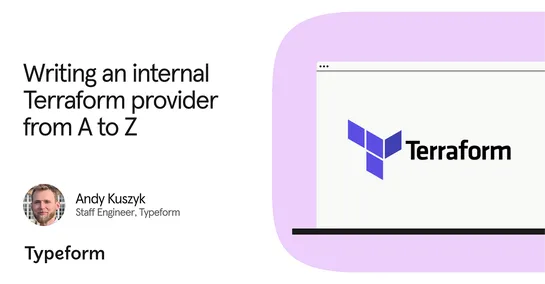
Writing an internal Terraform provider from A to Z

Typeform rolled their ownTerraform providerto wrangle runtime data through an internal API. Built with HashiCorp’sGo SDK, the official scaffolding framework, and wired up withacceptance testsfor full lifecycle muscle. They skipped the publicTerraform Registryentirely. Instead, they shipped provider.. read more  

Writing an internal Terraform provider from A to Z
Link
@faun shared a link, 8 months ago
FAUN.dev()

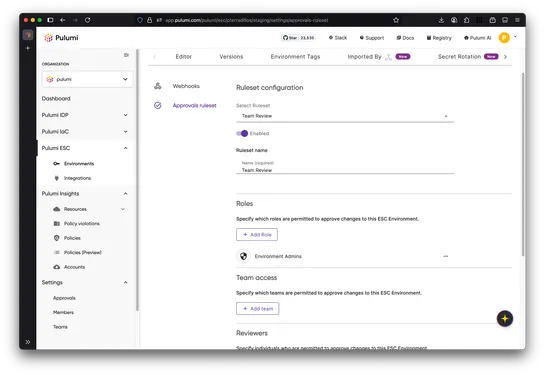
Introducing Approvals in Pulumi ESC

Pulumi ESC just leveled up withApprovals—structured reviews for environment config changes, straight from Console, CLI, SDK, or VS Code. Think pull requests, but for your infra settings. No more YOLO updates. Teams can now lock down config changes with required sign-offs. More control. Cleaner logs.. read more  

Introducing Approvals in Pulumi ESC
On the 1st of July 2017, the Indian government introduced the Goods and Services Tax (GST) to the general public. This tax replaced pre-existing taxes with a destination-based, multi-stage, indirect tax system. The GST applies to all eCommerce and Magento stores within India. The World Bank has stated that the GST is one of the most complex tax systems worldwide due to its intricate nature.

As the GST is bifurcated into multiple tax slabs, it has become more difficult to implement such a complex taxing system in Magento 2. Managing a multi-vendor marketplace entails dealing with numerous vendors who sell various products on your platform. 

This necessitates the computation of GST tax rates based on the product and its category, which can be intricate due to varying tax brackets. An automated system is needed to collect and accurately compute vendor tax rates.

The Magento 2 Multi-vendor Indian GST Extension, also called the Magento Multi-vendor GST Module by MageComp, confidently calculates GST for products sold through your Magento stores by vendors. The module fully complies with the Indian government's GST standards and prominently displays the vendor's GST number and summary in all Magento order documents.

Why choose MageComp’s Magento 2 Multi Vendor Indian GST Extension?

Allows admins to enable/disable the module for global, category, and product-specific configuration.
Orders that are placed with the GST module showcase a detailed bifurcation of tax rates in the order view, credit memos, invoices, new order emails and PDFs.
The GST module displays a detailed SGST and CGST tax bifurcation in the order details.
The module automatically calculates IGST, CGST and SGST based on the products added to the cart.

Benefits of Multi Vendor Indian GST for Admins

Allows admins to mention their GSTIN, CIN and PAN number in all order details.
Admins can import the product-specific GST via a CSV file.
Admins have the option to include or exclude GST tax rates from the product prices.
Admins can easily set their business origins and apply IGST (interstate Magento GST)
The module allows the admin to upload an image and a digital signature to display in invoice PDF.
Admins have the option to generate detailed GST reports based on orders and products.

Benefits for Vendors

Vendors are allowed to add their GST number to all invoices and other documents.
Vendors can set a GST rate from the backend grid while creating a product.
Vendors can also set a minimum order price to apply GST rates.

Benefits for Customers

Customers can enter the buyer’s GST number to signup.
Customers can update their buyer’s GST number any time they want from their account grid.