Join us

ContentUpdates and recent posts about Magento 2 Multi Vendor Indian GST Extension..
Link
@varbear shared a link, 6 months, 1 week ago
FAUN.dev()

Aggressive bots ruined my weekend

Bear Blog went dark after getting swarmed by scrapers. The reverse proxy choked first - too many requests, not enough heads-up. Downstream defenses didn’t catch it in time. So: fire, meet upgrades. What changed: Proxies scaled 5×. Upstream got strict with rate limits. Failover now has a pulse. Resta.. read more  
Link
@varbear shared a link, 6 months, 1 week ago
FAUN.dev()

The bug that taught me more about PyTorch than years of using it

A sneaky bug inPyTorch’s MPS backendlet non-contiguous tensors silently ignore in-place ops likeaddcmul_. That’s optimizer-breaking stuff. The culprit? ThePlaceholder abstraction- meant to handle temp buffers under the hood - forgot to actually write results back to the original tensor... read more  

The bug that taught me more about PyTorch than years of using it
Link
@kaptain shared a link, 6 months, 1 week ago
FAUN.dev()

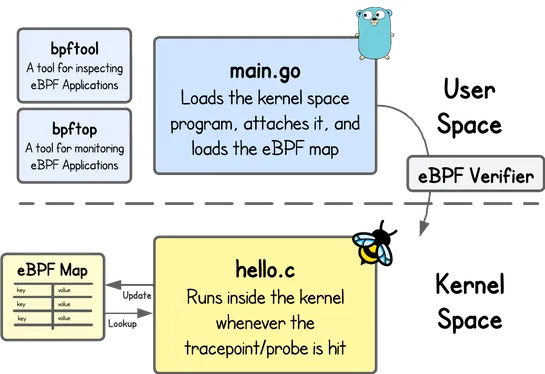
eBPF Beginner Skill Path

This hands-on path drops devs straight into writing, loading, and poking at basiceBPFprograms withlibbpf,maps, and those all-important kernel safety checks. It starts simple - with a beginner-friendly challenge - then dives deeper into theverifierand tools for runtime introspection... read more  

eBPF Beginner Skill Path
Link
@kaptain shared a link, 6 months, 1 week ago
FAUN.dev()

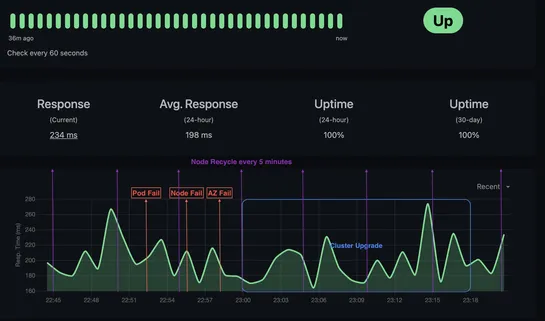
How to build highly available Kubernetes applications with Amazon EKS Auto Mode

Amazon EKS Auto Mode now runs the cluster for you—handling control plane updates, add-on management, and node rotation. It sticks to Kubernetes best practices so your apps stay up through node drains, pod failures, AZ outages, and rolling upgrades. It also respectsPod Disruption Budgets,Readiness Ga.. read more  

How to build highly available Kubernetes applications with Amazon EKS Auto Mode
Link
@kaptain shared a link, 6 months, 1 week ago
FAUN.dev()

Building a Kubernetes Platform — Think Big, Think in Planes

Thinking in planes, as introduced by the Platform Engineering reference model, helps teams describe their platform in a simple, shared language, turning a collection of tools into a platform. It forces you to think horizontally, connecting teams and technologies instead of adding more layers, creati.. read more  

Link
@kaptain shared a link, 6 months, 1 week ago
FAUN.dev()

Helm 4 Overview

Helm 4 ditches the old plugin model for a sharper, plugin-first architecture powered by WebAssembly. That means isolation/control, and deeper customization - if you're ready to adapt! Post-renderers are now plugins. That breaks compatibility with earlier exec-based setups, so expect some rewiring. .. read more  

Link
@kaptain shared a link, 6 months, 1 week ago
FAUN.dev()

Unlocking next-generation AI performance with Dynamic Resource Allocation on Amazon EKS and Amazon EC2 P6e-GB200

Amazon just droppedEC2 P6e-GB200 UltraServers, packingNVIDIA GB200 Grace Blackwellchips. Built for running trillion-parameter AI models onAmazon EKSwithout losing sleep over scaling. Under the hood:NVLink 5.0,IMEX, andEFAv4stitch up to 72 Blackwell GPUs into one memory-coherent cluster per UltraServ.. read more  

Unlocking next-generation AI performance with Dynamic Resource Allocation on Amazon EKS and Amazon EC2 P6e-GB200
Link
@kaptain shared a link, 6 months, 1 week ago
FAUN.dev()

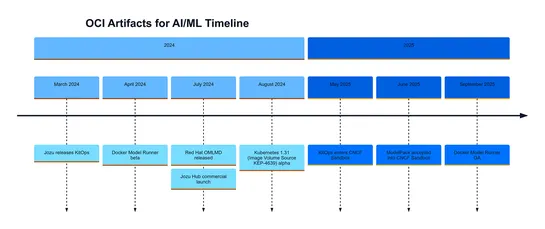
The State of OCI Artifacts for AI/ML

OCI artifacts quietly leveled up. Over the last 18 months, they’ve gone from a niche hack to production muscle for AI/ML workloads on Kubernetes. The signs? Clear enough:KitOpsandModelPacklanded in the CNCF Sandbox. Kubernetes 1.31 got native support forImage Volume Source. Docker pushedModel Runner.. read more  

The State of OCI Artifacts for AI/ML
Link
@kala shared a link, 6 months, 1 week ago
FAUN.dev()

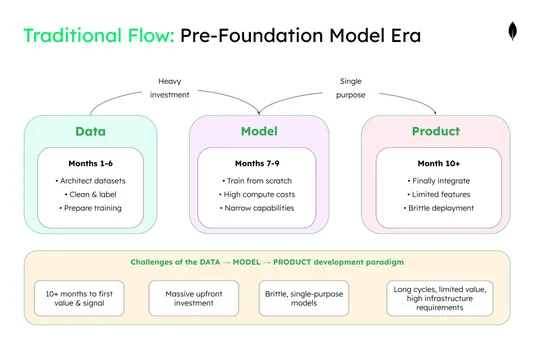
Build AI Agents Worth Keeping: The Canvas Framework

MIT and McKinsey found a gap the size of the Grand Canyon: 80% of companies claim they’re using generative AI, but fewer than 1 in 10 use cases actually ship. Blame it on scattered data, fuzzy goals, and governance that's still MIA. A new stack is stepping in:product → agent → data → model. It flips.. read more  

Build AI Agents Worth Keeping: The Canvas Framework
Link
@kala shared a link, 6 months, 1 week ago
FAUN.dev()

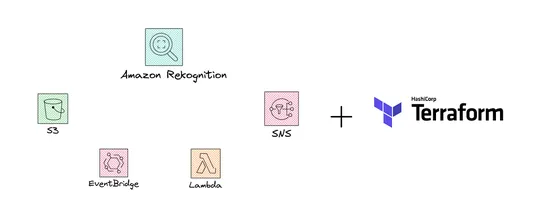
Detect inappropriate images in S3 with AWS Rekognition + Terraform

A serverless AWS pipeline runs image moderation on autopilot - withS3,Lambda,Rekognition,SNS, andEventBridgeall wired up throughTerraform. When a photo gets flagged, it’s tagged, maybe quarantined, and triggers an email alert. Daily scan? Handled... read more  

Detect inappropriate images in S3 with AWS Rekognition + Terraform
On the 1st of July 2017, the Indian government introduced the Goods and Services Tax (GST) to the general public. This tax replaced pre-existing taxes with a destination-based, multi-stage, indirect tax system. The GST applies to all eCommerce and Magento stores within India. The World Bank has stated that the GST is one of the most complex tax systems worldwide due to its intricate nature.

As the GST is bifurcated into multiple tax slabs, it has become more difficult to implement such a complex taxing system in Magento 2. Managing a multi-vendor marketplace entails dealing with numerous vendors who sell various products on your platform. 

This necessitates the computation of GST tax rates based on the product and its category, which can be intricate due to varying tax brackets. An automated system is needed to collect and accurately compute vendor tax rates.

The Magento 2 Multi-vendor Indian GST Extension, also called the Magento Multi-vendor GST Module by MageComp, confidently calculates GST for products sold through your Magento stores by vendors. The module fully complies with the Indian government's GST standards and prominently displays the vendor's GST number and summary in all Magento order documents.

Why choose MageComp’s Magento 2 Multi Vendor Indian GST Extension?

Allows admins to enable/disable the module for global, category, and product-specific configuration.
Orders that are placed with the GST module showcase a detailed bifurcation of tax rates in the order view, credit memos, invoices, new order emails and PDFs.
The GST module displays a detailed SGST and CGST tax bifurcation in the order details.
The module automatically calculates IGST, CGST and SGST based on the products added to the cart.

Benefits of Multi Vendor Indian GST for Admins

Allows admins to mention their GSTIN, CIN and PAN number in all order details.
Admins can import the product-specific GST via a CSV file.
Admins have the option to include or exclude GST tax rates from the product prices.
Admins can easily set their business origins and apply IGST (interstate Magento GST)
The module allows the admin to upload an image and a digital signature to display in invoice PDF.
Admins have the option to generate detailed GST reports based on orders and products.

Benefits for Vendors

Vendors are allowed to add their GST number to all invoices and other documents.
Vendors can set a GST rate from the backend grid while creating a product.
Vendors can also set a minimum order price to apply GST rates.

Benefits for Customers

Customers can enter the buyer’s GST number to signup.
Customers can update their buyer’s GST number any time they want from their account grid.