Join us

ContentUpdates and recent posts about NanoClaw..
Link
@kala shared a link, 2 months ago
FAUN.dev()

LLMs are getting better at unmasking people online

Researchers at ETH Zurich show LLMs can stitch anonymous bios to public web data and reidentify users across platforms. Fine-tuned models and agent chains parse unstructured text and automate deanonymization in minutes at penny-level inference costs... read more  

LLMs are getting better at unmasking people online
Link
@devopslinks shared a link, 2 months ago
FAUN.dev()

Amazon is back up after outage affecting tens of thousands of shoppers

Amazon faced an outage, affecting tens of thousands of shoppers globally on Thursday afternoon. Downdetector reported a surge in complaints, peaking at 20,000 by 3:49 p.m. ET. The outage involved checkout and pricing errors caused by a software code deployment... read more  

Link
@devopslinks shared a link, 2 months ago
FAUN.dev()

Why Serverless Compute Partners Are Now More Important Than Ever

The note saysAIworkloads are bursty. They spawn parallel tool calls, pull multi‑GB model weights into RAM, and endure long cold starts (e.g.,vLLM,SGLang). Companies wrestle with a fragmentedGPUmarket and poor peakGPU utilization. To hit latency, compliance, and cost targets they adoptmulti‑region/mu.. read more  

Why Serverless Compute Partners Are Now More Important Than Ever
Link
@devopslinks shared a link, 2 months ago
FAUN.dev()

AWS Cost Optimization Best Practices: A Maturity-Based Guide [2026]

The guide maps a five-stagematurity model— fromVisibilitytoFinOps Culture. It prescribes staged actions before commitment purchases. It recommends turning onCost ExplorerandAWS Budgets, enforcingtag policies, runningCompute Optimizer, testingGraviton, and usingCloudBurn/Amazon Qfor pre-deploy estima.. read more  

Link
@devopslinks shared a link, 2 months ago
FAUN.dev()

Draw.io MCP for Diagram Generation: Why It’s Worth Using

Draw.io MCPlinks theModel Context Protocoltodraw.io. It ingests structured input (text,CSV,Mermaid) and emitsdraw.io XML, PNG/SVG, or hosted links. Draw.io MCPruns as anMCP Tool Server, CLI, or Copilot skill. It drafts small graphs (<50 nodes) in seconds and stores diagrams inGitfor diffs andCI/CDau.. read more  

Draw.io MCP for Diagram Generation: Why It’s Worth Using
Link
@devopslinks shared a link, 2 months ago
FAUN.dev()

How I Dropped Our Production Database and Now Pay 10% More for AWS

Planned migration shifts the static site fromGitHub PagestoAWS S3. DNS moves toAWS.Djangostages on a subdomain before the main domain swaps. ATerraformauto-approve ran with no remote state. It destroyed productionRDS,VPC,ECS, and automated snapshots.AWSfound a hidden snapshot and recovered the DB in.. read more  

How I Dropped Our Production Database and Now Pay 10% More for AWS
Story
@shubham321 shared a post, 2 months ago
Software engineer, Keploy

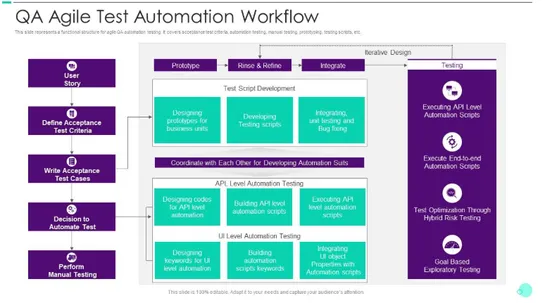
What Is QA Automation? Benefits, Tools, Challenges & Future

QA automation is a modern software testing approach that uses automated tools and frameworks to execute test cases efficiently and consistently. Instead of relying solely on manual testing, QA automation enables teams to validate application functionality, performance, and reliability at every stage of the development lifecycle. It plays a crucial role in Agile and DevOps environments, where frequent code changes and faster release cycles demand continuous testing.

One of the biggest advantages of QA automation is speed. Automated tests can run in minutes, allowing teams to detect defects early and provide quick feedback to developers. This leads to improved software quality and reduced risk of critical issues reaching production. Automation also enhances accuracy by eliminating human errors that commonly occur in repetitive manual testing tasks.

qa automation
Story
@suarezsara shared a post, 2 months ago

Why SharePoint Application Development Still Powers Enterprise Collaboration in 2026

Learn how businesses use SharePoint for workflow automation, seamless Microsoft 365 integration, and enhanced governance.

Story Keploy Team
@sancharini shared a post, 2 months ago

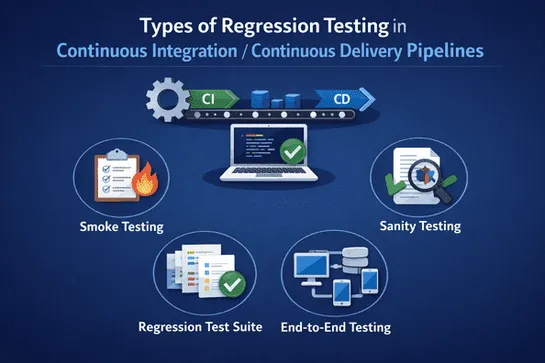
Types of Regression Testing in CI/CD Pipelines

Learn how different types of regression testing in CI/CD pipelines help teams detect defects early, maintain software quality, and reduce production risks while optimizing automated workflows.

Types of Regression Testing in CI/CD Pipelines
Story Keploy Team
@sancharini shared a post, 2 months ago

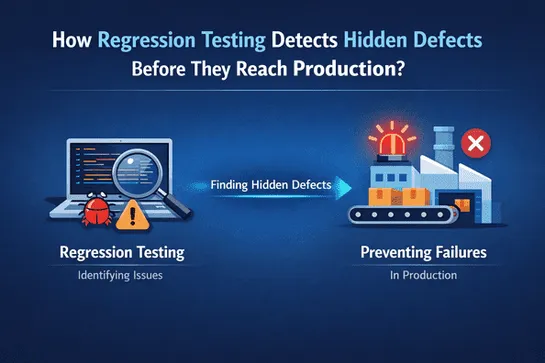
How Regression Testing Detects Hidden Defects Before They Reach Production?

Understand how regression testing helps teams identify hidden defects early, maintain system stability, and prevent production issues using effective testing strategies and regression testing tools.

How Regression Testing Detects Hidden Defects Before Production
NanoClaw is an open-source personal AI agent designed to run locally on your machine while remaining small enough to fully understand and audit. Built as a lightweight alternative to larger agent frameworks, the system runs as a single Node.js process with roughly 3,900 lines of code spread across about 15 source files.

The agent integrates with messaging platforms such as WhatsApp and Telegram, allowing users to interact with their AI assistant directly through familiar chat applications. Each conversation group operates independently and maintains its own memory and execution environment.

A core design principle of NanoClaw is security through isolation. Every agent session runs inside its own container using Docker or Apple Container, ensuring that the agent can only access files and resources that are explicitly mounted. This approach relies on operating system–level sandboxing rather than application-level permission checks.

The architecture is intentionally simple: a single orchestrator process manages message queues, schedules tasks, launches containerized agents, and stores state in SQLite. Additional functionality can be added through a modular skills system, allowing users to extend capabilities without increasing the complexity of the core codebase.

By combining a minimal architecture with container-based isolation and messaging integration, NanoClaw aims to provide a transparent, customizable personal AI agent that users can run and control entirely on their own infrastructure.