Join us

ContentUpdates and recent posts about OpenClaw..
Story
@laura_garcia shared a post, 5 months, 1 week ago
Software Developer, RELIANOID

Cybersecurity in Maritime: The Quiet Threat Persisting Throughout the Entire Lifecycle of a Ship 🚢⚓️🔐

The maritime sector is becoming increasingly digital — and with it comes a growing, often invisible, threat: cybersecurity vulnerabilities that affect vessels from the blueprint stage to decommissioning. 📍 From compromised ECDIS systems to insecure OTA updates and neglected end-of-life data handling..

Blog Maritime Cybersecurity
Link Xygeni Team
@mashka shared a link, 5 months, 1 week ago
Paid Acquisition and Growth Marketing, xygeni

Software Supply Chains Under Pressure: What Malware and AI Changed in 2025 and what to Expect in 2026

2025 exposed a shift in software supply chain attacks. AI-assisted malware, self-propagating techniques, and widespread trust abuse altered how compromises spread across dependencies, registries, and CI/CD pipelines.

This upcoming LinkedIn Live SafeDev Talk examines what truly changed, why long-held security assumptions are breaking down, and what development teams need to rethink as they head into 2026.

📅 January 20th | ⏰ Time: 𝟏𝟔:𝟑𝟎 (𝐂𝐄𝐒𝐓)/𝟏𝟎:𝟑𝟎 (𝐄𝐃𝐓)

Join Us!

SafeDev Talk 1 2026 - Yearly Recap (4)
Link FAUN.dev() Team
@eon01 shared a link, 5 months, 1 week ago
Founder, FAUN.dev

2025 Internet Trends

Cloudflare just released its 2025 Radar Year in Review, a systems report on how the Internet actually behaved last year. A few things stood out in my opinion: 👉 Most AI systems take far more than they give back. AI bots now account for a meaningful slice of web traffic. Googlebot alone generates mor.. read more  

Link
@varbear shared a link, 5 months, 1 week ago
FAUN.dev()

Stop Forwarding Errors, Start Designing Them

A fresh take on Rust error handling just dropped - and it's calling out the usual suspects. Forget blindly forwarding errors withanyhowor smearing context around withProvider. This approach pushes forstructured, intent-driven error types- errors that say what to do next (like "retry this") instead o.. read more  

Link
@varbear shared a link, 5 months, 1 week ago
FAUN.dev()

The Code Review That Cost $2 Million, CodeGood

New data shows only15% of code review comments catch real bugs. The rest? Nitpicks on style, naming, or formatting - stuff linters and AI were made to handle. Human reviews burn through$3.6M a yearin larger orgs and still miss the tough stuff: threading issues, system integration bugs, rare edge cas.. read more  

Link
@varbear shared a link, 5 months, 1 week ago
FAUN.dev()

Distinguishing yourself early in your career as a developer

A seasoned dev maps the job market into three tiers:local/public companies,VC-backed/startups, andBig Tech/finance. Each step up brings more money, more competition, and a steeper climb. Category 3(Big Tech/finance): Highest salaries. Broadest interview access. Brutal prep required. Category 2(start.. read more  

Link
@kaptain shared a link, 5 months, 1 week ago
FAUN.dev()

BadPods Series: Everything Allowed on AWS EKS

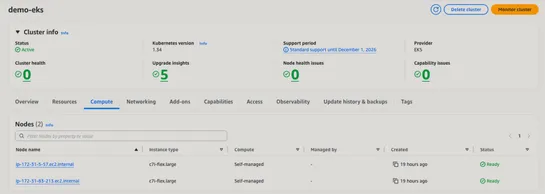
A security researcher ran a full-blown container escape on EKS usingBadPods- a tool that spins up dangerously overprivileged pods. The pod broke out of its container, poked around the host node, moved laterally, and swiped AWS IAM creds. All of it slipped past EKS’s defaultPod Security Admission (PS.. read more  

BadPods Series: Everything Allowed on AWS EKS
Link
@kaptain shared a link, 5 months, 1 week ago
FAUN.dev()

Streamline your containerized CI/CD with GitLab Runners and Amazon EKS Auto Mode

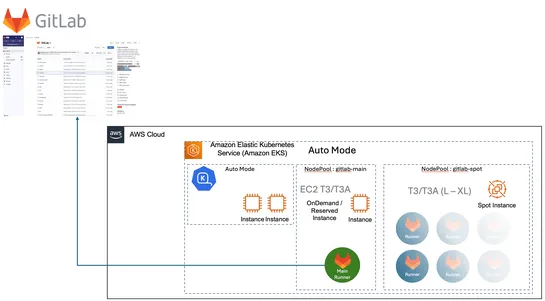
GitLab Runners now work withAmazon EKS Auto Mode. That means hands-off infra, smarter scaling, and built-in AWS security. Runners spin up onEC2 Spot Instances, so teams can cut CI/CD compute costs by as much as90%- without hacking together flaky pipelines... read more  

Streamline your containerized CI/CD with GitLab Runners and Amazon EKS Auto Mode
Link
@kaptain shared a link, 5 months, 1 week ago
FAUN.dev()

Kubernetes GPU Management Just Got a Major Upgrade

Kubernetes 1.34 droppedDynamic Resource Allocation (DRA)- think persistent volumes, but for GPUs and custom hardware. Vendors can now plug in drivers and schedulers for their devices, and workloads can pick exactly what they need. Coming in 1.35: a newworkload abstractionthat speaks the language of .. read more  

Link
@kaptain shared a link, 5 months, 1 week ago
FAUN.dev()

Implementing assurance pipeline for Amazon EKS Platform

AWS released a full-stack CI/CD validation pipeline forAmazon EKS. It pulls in six layers of testing,Terraform,Helm,Locustload testing, and evenAWS Fault Injectionfor pushing resilience to the edge. The goal: bake policy checks, functional tests, and brutal load tests right into pre-deployment. Fewe.. read more  

OpenClaw is an open-source autonomous AI assistant platform that runs locally on user hardware and integrates with popular messaging applications. Originally released in late 2025 under the name Clawdbot, the project was briefly rebranded as Moltbot before settling on the name OpenClaw in early 2026. It enables users to interact with AI models through interfaces like WhatsApp, Telegram, Discord, Slack, and more, allowing the assistant to carry out tasks ranging from calendar management and email handling to automated scripting and workflow execution based on user instructions.

Unlike typical cloud-hosted AI services, OpenClaw emphasizes privacy and control by running on the user’s own machine, giving users choice over infrastructure and data. Its extensible design supports a wide range of integrations and skills, which automates interactions with external tools and services. This flexibility has contributed to its rapid adoption and widespread discussion within the AI community, with media coverage highlighting both its capabilities and associated security considerations.