Join us

ContentUpdates and recent posts about Pelagia..
Link
@kaptain shared a link, 2 weeks, 1 day ago
FAUN.dev()

v1.36: User Namespaces in are finally GA

Kubernetesv1.36promotesUser Namespacesto GA on Linux. It brings rootless workload isolation. Kubelet leans on kernelID-mapped mounts. It sidesteps expensivechownby remappingUID/GIDat mount time and confines privileged processes. No more mass-chown screams... read more  
Link
@kaptain shared a link, 2 weeks, 1 day ago
FAUN.dev()

Why MicroVMs: The Architecture Behind Sandboxes

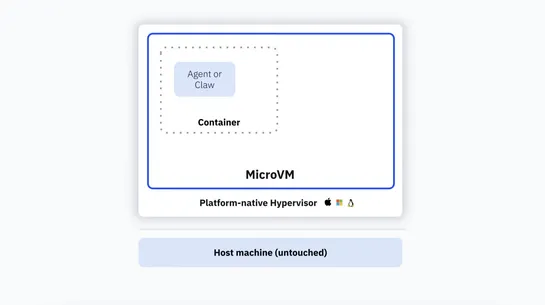
Docker Sandboxes puts each agent session in a dedicatedmicroVM. Each microVM runs a privateDocker daemoninside the VM boundary. That blocks access to the host. A new cross‑platformVMMruns on macOS, Windows, and Linux hypervisors. It slashes cold starts and runs fullDockerbuild, run, and compose work.. read more  

Why MicroVMs: The Architecture Behind Sandboxes
Link
@kaptain shared a link, 2 weeks, 1 day ago
FAUN.dev()

The AI-driven shift in vulnerability discovery: What maintainers and bug finders need to know

AI modelslet non-experts craft real and fake vulnerabilities at scale. They spit out low-quality noise and the occasional high-value report. Reports floodOSS maintainers. Triage, patching, release cadences, and downstreamupgrade/compliancepipelines buckle under the load. Guidance recommends publishi.. read more  

The AI-driven shift in vulnerability discovery: What maintainers and bug finders need to know
Link
@kala shared a link, 2 weeks, 1 day ago
FAUN.dev()

Introducing Coregit

Coregit reimplements Git's object model inTypeScriptand runs onCloudflare Workersas a serverless edge Git API. Its commit endpoint accepts up to 1,000 file changes per request and replaces 105+ GitHub calls with one. Yes - one. It acknowledges writes inDurable Objects(~2ms), then flushes objects toR.. read more  

Link
@kala shared a link, 2 weeks, 1 day ago
FAUN.dev()

How LLMs Work — A Visual Deep Dive

A complete walkthrough of how large language models like ChatGPT are built, from raw internet text to a conversational assistant... read more  

How LLMs Work — A Visual Deep Dive
Link
@kala shared a link, 2 weeks, 1 day ago
FAUN.dev()

The PR you would have opened yourself

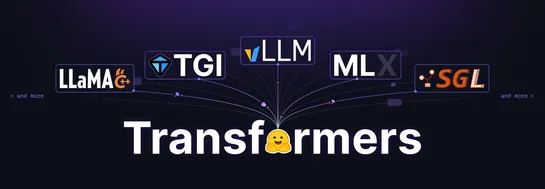
ASkillports models fromtransformerstomlx-lm. It bootstraps an env, discovers variants, downloads checkpoints, writes MLX implementations, and runs layered tests. It produces disclosed PRs with per-layer diffs, dtype checks, generation examples, numerical comparisons, and a reproducible, non-agentict.. read more  

The PR you would have opened yourself
Link
@kala shared a link, 2 weeks, 1 day ago
FAUN.dev()

A GitHub agentic workflow

The developer automated parsing of unstructured release notes withGitHub agentic workflows. The pipeline compilesMarkdowntoYAML, then runs an agent. The setup requires afine-grained Copilot token. It enforces a hardenedsandboxpolicy and forbids Marketplace actions. CI runs a compile-then-compare che.. read more  

A GitHub agentic workflow
Link
@kala shared a link, 2 weeks, 1 day ago
FAUN.dev()

Introducing Ternary Bonsai: Top Intelligence at 1.58 Bits

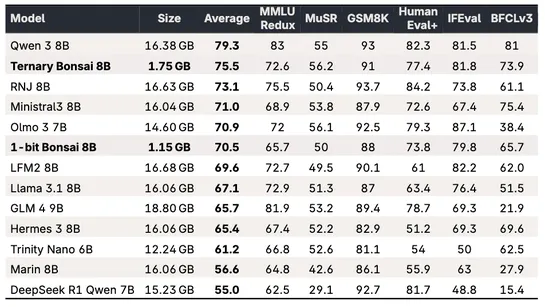
PrismML unveilsTernary Bonsai: a family of1.58-bitLMs in1.7B,4B, and8Bsizes. Models use ternary weights {-1,0,+1} with group-wise quantization. Weights are ternary (-1,0,+1). Each group of128weights shares anFP16scale. That cuts memory by ~9x versus 16-bit and boosts benchmark scores. The8Bhits 75.5.. read more  

Introducing Ternary Bonsai: Top Intelligence at 1.58 Bits
Link
@devopslinks shared a link, 2 weeks, 2 days ago
FAUN.dev()

Betterleaks: The Gitleaks Successor Built for Faster Secrets Scanning

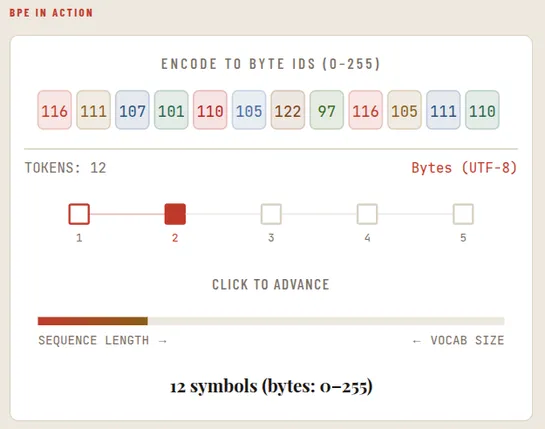
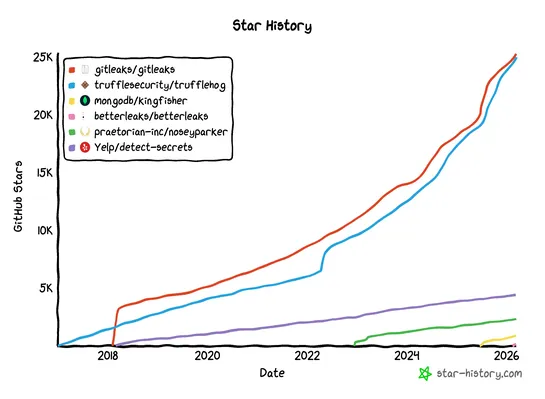
BetterleakssupplantsGitleaksas a drop-in CLI. Scans run faster. It's written inPure Go- no CGO - and performs parallel git scans. It replaces entropy heuristics with token-efficient detection viaBPE. It addsCELrule validation. Its roadmap includes LLM assist and auto-revocation... read more  

Betterleaks: The Gitleaks Successor Built for Faster Secrets Scanning
Link
@devopslinks shared a link, 2 weeks, 2 days ago
FAUN.dev()

Post-Quantum Cryptography Migration at Meta: Framework, Lessons, and Takeaways

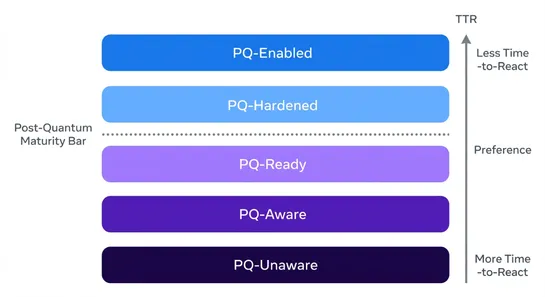
Quantum computers could decrypt data stored today in anticipation of future decryption, posing security risks despite the estimated decade-long timeline. Industry-wide PQC standards are being published by NIST to defend against such threats, including algorithms like ML-KEM and ML-DSA. The industry .. read more  

Post-Quantum Cryptography Migration at Meta: Framework, Lessons, and Takeaways
Pelagia is a Kubernetes controller that provides all-in-one management for Ceph clusters installed by Rook. It delivers two main features:

Aggregates all Rook Custom Resources (CRs) into a single CephDeployment resource, simplifying the management of Ceph clusters.
Provides automated lifecycle management (LCM) of Rook Ceph OSD nodes for bare-metal clusters. Automated LCM is managed by the special CephOsdRemoveTask resource.

It is designed to simplify the management of Ceph clusters in Kubernetes installed by Rook.

Being solid Rook users, we had dozens of Rook CRs to manage. Thus, one day we decided to create a single resource that would aggregate all Rook CRs and deliver a smoother LCM experience. This is how Pelagia was born.

It supports almost all Rook CRs API, including CephCluster, CephBlockPool, CephFilesystem, CephObjectStore, and others, aggregating them into a single specification. We continuously work on improving Pelagia's API, adding new features, and enhancing existing ones.

Pelagia collects Ceph cluster state and all Rook CRs statuses into single CephDeploymentHealth CR. This resource highlights of Ceph cluster and Rook APIs issues, if any.

Another important thing we implemented in Pelagia is the automated lifecycle management of Rook Ceph OSD nodes for bare-metal clusters. This feature is delivered by the CephOsdRemoveTask resource, which automates the process of removing OSD disks and nodes from the cluster. We are using this feature in our everyday day-2 operations routine.