Join us

ContentUpdates and recent posts about Pelagia..
Link
@kaptain shared a link, 3 months, 3 weeks ago
FAUN.dev()

Ingress NGINX: Statement from the Steering and Security Response Committees

Kubernetes is cutting offIngress NGINXin March 2026. No more updates. No bug fixes. No security patches. Done. Roughly half of cloud-native setups still rely on it, but it's been understaffed for years. If you're one of them, it's time to move. There’s no plug-and-play replacement, but the ecosystem.. read more  
Link
@kaptain shared a link, 3 months, 3 weeks ago
FAUN.dev()

Run a Private Personal AI with Clawdbot + DMR

Clawdbot just plugged intoDocker Model Runner (DMR). That means you can now run your own OpenAI-compatible assistant, locally, on your hardware. No cloud. No per-token fees. No data leaking into the void!.. read more  

Run a Private Personal AI with Clawdbot + DMR
Link
@kaptain shared a link, 3 months, 3 weeks ago
FAUN.dev()

Cluster API v1.12: Introducing In-place Updates and Chained Upgrades

Cluster API v1.12.0 addsin-place updatesandchained upgrades, so machines can swap parts without going down, and clusters can jump versions without drama. KubeadmControlPlaneandMachineDeploymentsnow choose between full rollouts or surgical patching, depending on what changed. The goal: keep clusters .. read more  

Link
@kaptain shared a link, 3 months, 3 weeks ago
FAUN.dev()

New Conversion from cgroup v1 CPU Shares to v2 CPU Weight

A new quadratic formula now mapscgroup v1 CPU sharestocgroup v2 CPU weight. Why? Because the old linear approach messed with CPU fairness; especially at low share values. This fix nails prioritization where it counts. It lands at theOCI runtime layer, live inrunc v1.3.2andcrun v1.23, so containers f.. read more  

Link
@kala shared a link, 3 months, 3 weeks ago
FAUN.dev()

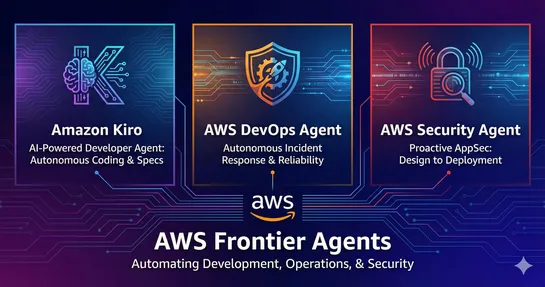
AWS Frontier Agents: Kiro, DevOps Agent, and Security Agent

“Frontier Agents” drop straight into incident workflows. They kick off investigations on their own, whether triggered by alarms or a human hand, pulling together logs, metrics, and deployment context fast. Findings show up where they’re needed: Slack threads, tickets, operator dashboards. No shell c.. read more  

AWS Frontier Agents: Kiro, DevOps Agent, and Security Agent
Link
@kala shared a link, 3 months, 3 weeks ago
FAUN.dev()

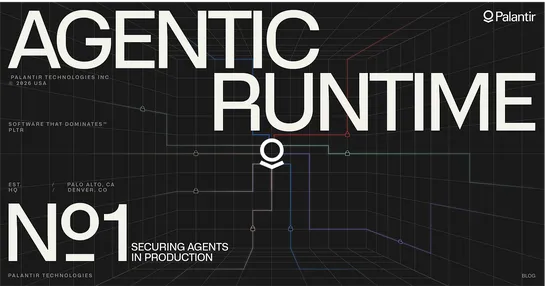
Securing Agents in Production (Agentic Runtime, #1)

Palantir's AIP Agentic Runtime isn't just another agent platform, it's a control plane with teeth. Think tight policy enforcement, ephemeral autoscaling with Kubernetes (Rubix), and memory stitched in from the jump viaOntology. Tool usage? Traced and locked down with provenance-based security. Every.. read more  

Securing Agents in Production (Agentic Runtime, #1)
Link
@kala shared a link, 3 months, 3 weeks ago
FAUN.dev()

Is that allowed? Authentication and authorization in Model Context Protocol

TheModel Context Protocol (MCP) 2025-11-25spec tightens up remote agent auth. It leans intoOAuth 2.1 Authorization Code grants, PKCE required, step-up auth backed. No token passthrough allowed. What’s new: experimental extensions forclient credentialsandclient ID metadata. These smooth out agent reg.. read more  

Is that allowed? Authentication and authorization in Model Context Protocol
Link
@kala shared a link, 3 months, 3 weeks ago
FAUN.dev()

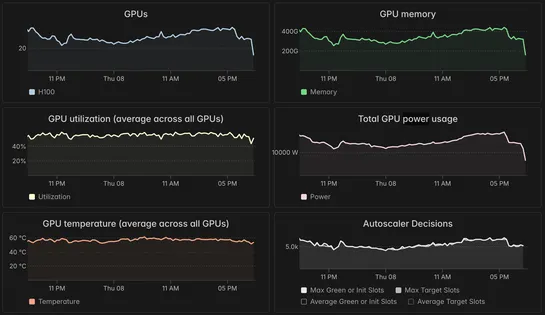
Keeping 20,000 GPUs healthy

Modal unpacked how it keeps a 20,000+ GPU fleet sane across AWS, GCP, Azure, and OCI. Think autoscaling, yes, but with some serious moves behind the curtain. They're running instance benchmarking, enforcing machine image consistency, running boot-time checks, and tracking GPU health both passively a.. read more  

Keeping 20,000 GPUs healthy
Link
@devopslinks shared a link, 3 months, 3 weeks ago
FAUN.dev()

Moltbot Personal Assistant Goes Viral, And So Do Your Secrets

Moltbot, the self-hosted AI agent with native hooks for Slack, Telegram, and WhatsApp, exploded from 50-ish to over 3,000 GitHub forks a day after going viral on Jan 24, 2026. It's built around a file-backed workspace and automates everything from code deploys to cloud orchestration. Cool? Definitel.. read more  

Moltbot Personal Assistant Goes Viral, And So Do Your Secrets
Link
@devopslinks shared a link, 3 months, 3 weeks ago
FAUN.dev()

CodeBreach: Supply Chain Vuln & AWS CodeBuild Misconfig

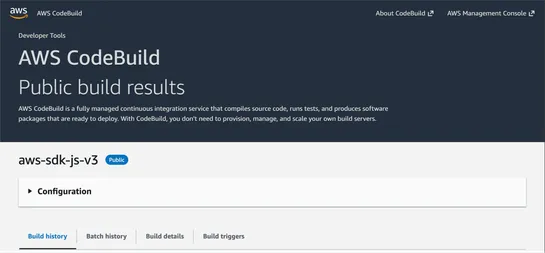
Wiz Research dropped details onCodeBreach, a serious flaw that cracked open AWS SDK GitHub repos, yes, including the popular JavaScript one. The root problem? Leakyregex filtersin CodeBuild pipelines. They missed anchors, so attackers slipped in rogue pull requests, dodged build rules, and stole hig.. read more  

CodeBreach: Supply Chain Vuln & AWS CodeBuild Misconfig
Pelagia is a Kubernetes controller that provides all-in-one management for Ceph clusters installed by Rook. It delivers two main features:

Aggregates all Rook Custom Resources (CRs) into a single CephDeployment resource, simplifying the management of Ceph clusters.
Provides automated lifecycle management (LCM) of Rook Ceph OSD nodes for bare-metal clusters. Automated LCM is managed by the special CephOsdRemoveTask resource.

It is designed to simplify the management of Ceph clusters in Kubernetes installed by Rook.

Being solid Rook users, we had dozens of Rook CRs to manage. Thus, one day we decided to create a single resource that would aggregate all Rook CRs and deliver a smoother LCM experience. This is how Pelagia was born.

It supports almost all Rook CRs API, including CephCluster, CephBlockPool, CephFilesystem, CephObjectStore, and others, aggregating them into a single specification. We continuously work on improving Pelagia's API, adding new features, and enhancing existing ones.

Pelagia collects Ceph cluster state and all Rook CRs statuses into single CephDeploymentHealth CR. This resource highlights of Ceph cluster and Rook APIs issues, if any.

Another important thing we implemented in Pelagia is the automated lifecycle management of Rook Ceph OSD nodes for bare-metal clusters. This feature is delivered by the CephOsdRemoveTask resource, which automates the process of removing OSD disks and nodes from the cluster. We are using this feature in our everyday day-2 operations routine.