Join us

ContentUpdates and recent posts about Rancher..
 Activity
@environmentalbit3940 started using tool GNU/Linux , 1 week ago.
 Activity
@environmentalbit3940 started using tool GitLab CI/CD , 1 week ago.
 Activity
@environmentalbit3940 started using tool Ansible , 1 week ago.
Link
@devopslinks shared a link, 1 week ago
FAUN.dev()

Top 10 best practices for Amazon EMR Serverless

Amazon EMR Serverless allows users to run big data analytics frameworks without managing clusters, integrating with various AWS services for a comprehensive solution. The top 10 best practices for optimizing EMR Serverless workloads focus on performance, cost, and scalability, including consideratio.. read more  

Top 10 best practices for Amazon EMR Serverless
Link
@devopslinks shared a link, 1 week ago
FAUN.dev()

AWS RDS Cost Optimization Guide: Cut Database Costs in 2026

Amazon RDS costs are not fixed - they vary based on configuration and usage. Making informed configuration and governance decisions is key to optimizing costs. Graviton instances offer better price-performance for common databases, while storage costs can be reduced by decoupling performance from ca.. read more  

AWS RDS Cost Optimization Guide: Cut Database Costs in 2026
Link
@devopslinks shared a link, 1 week ago
FAUN.dev()

Introducing Agentic Observability in NGINX: Real-time MCP Traffic Monitoring

NGINX ships an open-sourceAgentic ObservabilityJS module. It parsesMCPtraffic and extracts tool names, error statuses, and client/server identities. The module uses nativeOpenTelemetryto export spans. A Docker Compose reference wires upOTel collector,Prometheus, andGrafanafor realtime throughput, la.. read more  

Introducing Agentic Observability in NGINX: Real-time MCP Traffic Monitoring
Link
@devopslinks shared a link, 1 week ago
FAUN.dev()

Building a Database on S3

This paper from 2008 proposes a shared-disk design over Amazon S3 for cloud-native databases, separating storage from compute. Clients write redo logs to Amazon SQS instead of directly to S3 to hide latency. The paper presents a blueprint for serverless databases before the term existed... read more  

Link
@devopslinks shared a link, 1 week ago
FAUN.dev()

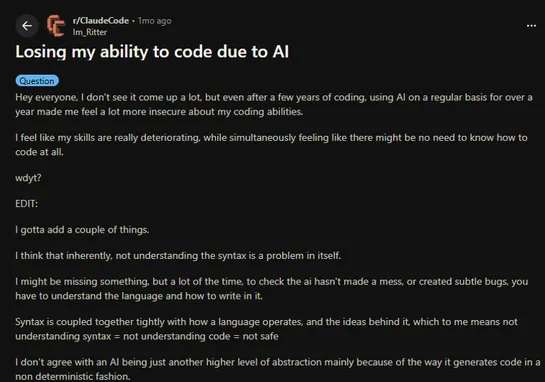
AI Isn't Replacing SREs. It's Deskilling Them.

This post discusses the impact of AI on the role of Site Reliability Engineers (SREs) by drawing parallels to historical research on automation. It highlights the risk of deskilling and never-skilling for SREs who heavily rely on AI tools for incident response. The post also suggests potential appro.. read more  

Course
@eon01 published a course, 1 week ago
Founder, FAUN.dev

Learn Git in a Day

GitLab git Ubuntu

Everything you need, nothing you don't

Learn Git in a Day
 Activity
Rancher is a Kubernetes management platform originally created by Rancher Labs and now maintained by SUSE. It is designed to simplify the deployment, operation, and security of Kubernetes clusters at scale, whether they run on public cloud, private cloud, on-premises data centers, or at the edge.

At its core, Rancher provides a centralized control plane that allows teams to create, import, and manage multiple Kubernetes clusters from a single UI and API. It supports a wide range of Kubernetes distributions, including upstream Kubernetes, RKE / RKE2, K3s, and managed cloud services like EKS, GKE, and AKS.

Rancher focuses heavily on enterprise needs such as multi-cluster management, role-based access control (RBAC), authentication integration (LDAP, Active Directory, OIDC), policy enforcement, and cluster lifecycle management. It enables platform teams to enforce consistent configurations and security policies while allowing application teams to self-serve Kubernetes resources safely.

The platform also integrates tightly with the broader cloud-native ecosystem. Rancher provides built-in support for Helm, monitoring (Prometheus, Grafana), logging, and GitOps workflows, and works well alongside tools like Argo CD, Fleet, and Longhorn for storage.

Rancher is often used as the foundation for platform engineering initiatives, helping organizations standardize Kubernetes operations, reduce operational complexity, and safely scale containerized workloads across environments.