Join us

ContentUpdates and recent posts about Rancher..
Link
@varbear shared a link, 1 month, 3 weeks ago
FAUN.dev()

How Slack Rebuilt Notifications

At Slack, notifications were redesigned to address the overwhelming noise issue by simplifying choices and improving controls. The legacy system had complex preferences that made it difficult for users to understand and control notifications. Through a collaborative effort, the team refactored prefe.. read more  
Link
@varbear shared a link, 1 month, 3 weeks ago
FAUN.dev()

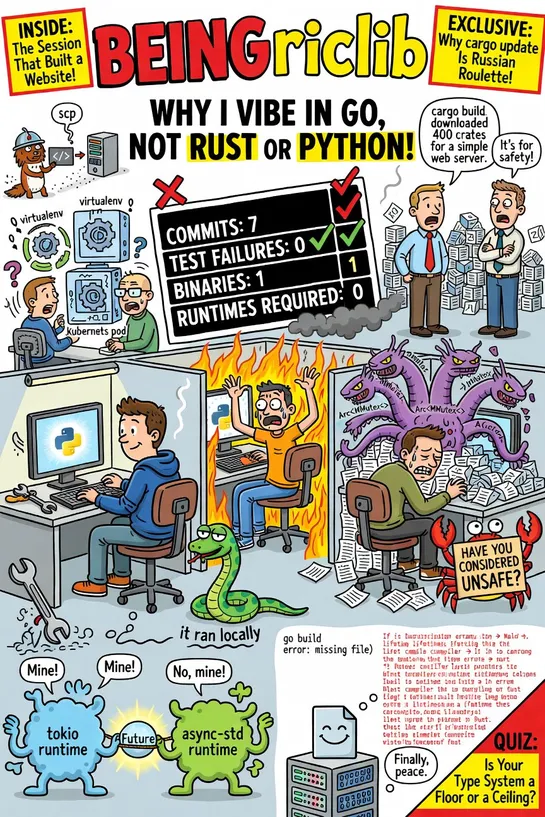
Why I Vibe in Go, Not Rust or Python

In a world where the machine writes most of the code, Python lacks solid type enforcement, Rust is overly strict with complex lifetimes, while Go strikes the right balance by catching critical issues without hindering development velocity. The article argues in favor of Go over Python and Rust for A.. read more  

Why I Vibe in Go, Not Rust or Python
Link
@varbear shared a link, 1 month, 3 weeks ago
FAUN.dev()

What if Python was natively distributable?

The Python ecosystem's insistence on solving multiple problems when distributing functions has led to unnecessary complexity. The dominant frameworks have fused orchestration into the execution layer, imposing constraints on function shape, argument serialization, control flow, and error handling. W.. read more  

Link
@kaptain shared a link, 1 month, 3 weeks ago
FAUN.dev()

AWS Load Balancer Controller Reaches GA with Kubernetes Gateway API Support

AWS ships GAGateway APIsupport in theAWS Load Balancer Controller. Teams can manageALBandNLBwith the SIG standard. The controller swaps annotation JSON for validated CRDs -TargetGroupConfiguration,LoadBalancerConfiguration,ListenerRuleConfiguration- and handles L4 (TCP/UDP/TLS) and L7 (HTTP/gRPC). M.. read more  

AWS Load Balancer Controller Reaches GA with Kubernetes Gateway API Support
Link
@kaptain shared a link, 1 month, 3 weeks ago
FAUN.dev()

jsongrep is faster than {jq, jmespath, jsonpath-rust, jql}

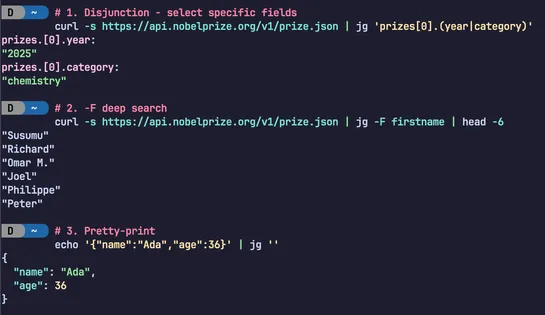
This article introduces a tool called jsongrep, explains the internal search engine it uses, and outlines the benchmarking strategy used to compare its performance with other JSON path-like query tools. The tool parses the JSON document, constructs an NFA from the query, determinizes the NFA into a .. read more  

jsongrep is faster than {jq, jmespath, jsonpath-rust, jql}
Link
@kaptain shared a link, 1 month, 3 weeks ago
FAUN.dev()

Trivy Hack Spreads Infostealer via Docker, Triggers Worm and Kubernetes Wiper

Cybersecurity researchers found malicious artifacts distributed via Docker Hub after the Trivy supply chain attack. Malicious versions 0.69.4, 0.69.5, and 0.69.6 of Trivy were removed from the image library. Threat actor TeamPCP targeted Aqua Security's GitHub organization, compromising 44 repositor.. read more  

Trivy Hack Spreads Infostealer via Docker, Triggers Worm and Kubernetes Wiper
Link
@kaptain shared a link, 1 month, 3 weeks ago
FAUN.dev()

Deploying Disaggregated LLM Inference Workloads on Kubernetes

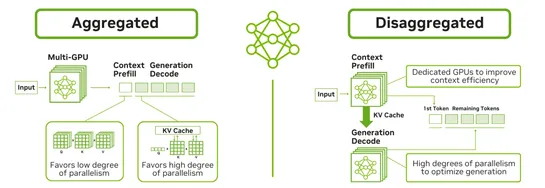
In large language model (LLM) inference workloads, a single monolithic serving process can hit its limits due to different compute profiles for prefill and decode stages. Disaggregated serving splits the pipeline into distinct stages to better utilize GPU resources and scale more flexibly on Kuberne.. read more  

Deploying Disaggregated LLM Inference Workloads on Kubernetes
Link
@kaptain shared a link, 1 month, 3 weeks ago
FAUN.dev()

A one-line Kubernetes fix that saved 600 hours a year

Atlantis, a tool for planning and applying Terraform changes, faced slow restarts of up to 30 minutes due to a safe default in Kubernetes that became a bottleneck as the persistent volume used by Atlantis grew to millions of files. After investigation, a one-line change to fsGroupChangePolicy reduce.. read more  

A one-line Kubernetes fix that saved 600 hours a year
Link
@kala shared a link, 1 month, 3 weeks ago
FAUN.dev()

Building a digital doorman

Larson runs a dual-agent system. A tiny public doorman,nullclaw, lives on a $7 VPS. A private host,ironclaw, runs over Tailscale. Nullclaw sandboxes repo cloning. It routes heavy work to ironclaw viaA2AJSON‑RPC. It enforcesUFW, Cloudflare proxying, and single‑gateway billing... read more  

Building a digital doorman
Link
@kala shared a link, 1 month, 3 weeks ago
FAUN.dev()

What 81,000 people want from AI

Anthropic used a version of Claude to interview 80,508 users across 159 countries and 70 languages - claiming the largest qualitative AI study ever conducted. The top ask wasn't productivity, it was time back for things that matter outside of work. The top fear was hallucinations and unreliability. .. read more  

What 81,000 people want from AI
Rancher is a Kubernetes management platform originally created by Rancher Labs and now maintained by SUSE. It is designed to simplify the deployment, operation, and security of Kubernetes clusters at scale, whether they run on public cloud, private cloud, on-premises data centers, or at the edge.

At its core, Rancher provides a centralized control plane that allows teams to create, import, and manage multiple Kubernetes clusters from a single UI and API. It supports a wide range of Kubernetes distributions, including upstream Kubernetes, RKE / RKE2, K3s, and managed cloud services like EKS, GKE, and AKS.

Rancher focuses heavily on enterprise needs such as multi-cluster management, role-based access control (RBAC), authentication integration (LDAP, Active Directory, OIDC), policy enforcement, and cluster lifecycle management. It enables platform teams to enforce consistent configurations and security policies while allowing application teams to self-serve Kubernetes resources safely.

The platform also integrates tightly with the broader cloud-native ecosystem. Rancher provides built-in support for Helm, monitoring (Prometheus, Grafana), logging, and GitOps workflows, and works well alongside tools like Argo CD, Fleet, and Longhorn for storage.

Rancher is often used as the foundation for platform engineering initiatives, helping organizations standardize Kubernetes operations, reduce operational complexity, and safely scale containerized workloads across environments.