Join us

ContentUpdates and recent posts about Rust..
Link
@kaptain shared a link, 5 months ago
FAUN.dev()

Docker Workbook - Your Guide to Containerization

This guide cuts through modern Docker workflows. It coversBuildKitfor faster, smarter builds. Shows howmulti-stage Dockerfilesmake images slimmer. Breaks down howENTRYPOINTandCMDactually work. Walks through usingsupervisordto wrangle multi-process containers. Then zooms out toDocker Compose, where l.. read more  
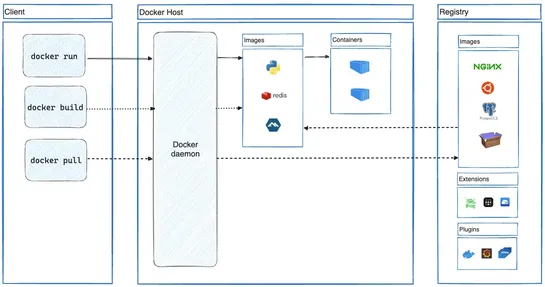
Docker Workbook - Your Guide to Containerization
Link
@kaptain shared a link, 5 months ago
FAUN.dev()

How Kubernetes Became the New Linux

AWS just handed overKarpenterandKubernetes Resource Orchestrator (Kro)to Kubernetes SIGs. Big move. It's less about AWS-first, more about playing nice across the ecosystem. Kroauto-spins CRDs and microcontrollers for resource orchestration.Karpenterhandles just-in-time node provisioning - leaner, fa.. read more  

How Kubernetes Became the New Linux
Link
@kaptain shared a link, 5 months ago
FAUN.dev()

How I Cut Kubernetes Debugging Time by 80% With One Bash Script

The reality of Kubernetes troubleshooting: 80% of the time is spent locating the issue, while only 20% is used for the fix. Managing eight Kubernetes clusters highlighted this pattern. A tool was developed to provide a complete cluster health report in under a minute, streamlining the process and sa.. read more  

Link
@kaptain shared a link, 5 months ago
FAUN.dev()

Top 5 hard-earned lessons from the experts on managing Kubernetes

Running Kubernetes in production isn’t just clicking “Create Cluster.” It means locking down RBAC, tightening up network policy, tracking autoscaling metrics, and making sure your images don’t ship with surprises. Managed clusters help get you started. But real workloads need more: hardened configs,.. read more  

Top 5 hard-earned lessons from the experts on managing Kubernetes
Link
@kaptain shared a link, 5 months ago
FAUN.dev()

The guide to kubectl I never had.

Glasskube dropped a thorough guide tokubectl- the commands, the flags (--dry-run, etc.), how to chain stuff together, and how to keep your config sane. Bonus: a solid roundup ofkubectl plugins. Think observability (like K9s), policy checks, audit trails, and Glasskube’s take on declarative package m.. read more  

The guide to kubectl I never had.
Link
@kaptain shared a link, 5 months ago
FAUN.dev()

Kubernetes Tutorial For Beginners [72 Comprehensive Guides]

The series dives deep into real-world Kubernetes - starting with hands-on setup viaKubeadmandeksctl, then moving throughmonitoring,logging,CI/CD, andMLOps. It tracks key release changes up tov1.30, including the confirmed death ofDockershimsince v1.24... read more  

Kubernetes Tutorial For Beginners [72 Comprehensive Guides]
Link
@kala shared a link, 5 months ago
FAUN.dev()

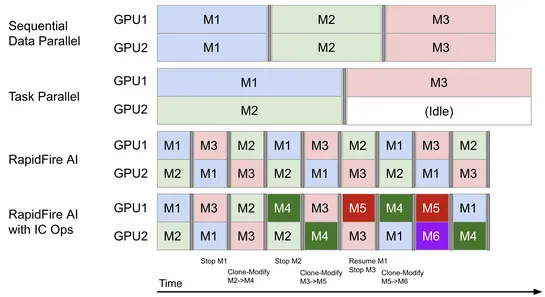
20x Faster TRL Fine-tuning with RapidFire AI

RapidFire AI just dropped a scheduling engine built for chaos - and control. It shards datasets on the fly, reallocates as needed, and runs multipleTRL fine-tuning configs at once, even on a single GPU. No magic, just clever orchestration. It plugs into TRL withdrop-in wrappers, spreads training acr.. read more  

20x Faster TRL Fine-tuning with RapidFire AI
Link
@kala shared a link, 5 months ago
FAUN.dev()

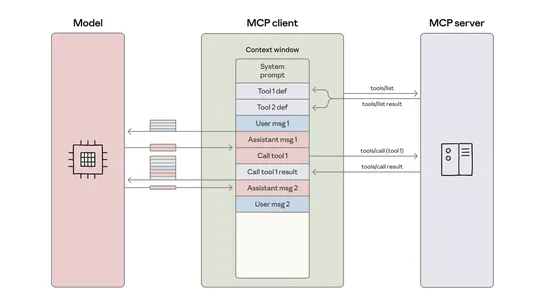
Code execution with MCP: building more efficient AI agents

Code is taking over MCP workflows - and fast. With theModel Context Protocol, agents don’t just call tools. They load them on demand. Filter data. Track state like any decent program would. That shift slashes context bloat - up to 98% fewer tokens. It also trims latency and scales cleaner across tho.. read more  

Code execution with MCP: building more efficient AI agents
Link
@kala shared a link, 5 months ago
FAUN.dev()

Hacking Gemini: A Multi-Layered Approach

A researcher found a multi-layer sanitization gap inGoogle Gemini. It let attackers pull off indirect prompt injections to leak Workspace data - think Gmail, Drive, Calendar - using Markdown image renders across Gemini andColab export chains. The trick? Sneaking through cracks between HTML and Markd.. read more  

Link
@kala shared a link, 5 months ago
FAUN.dev()

'I'm deeply uncomfortable': Anthropic CEO warns that a cadre of AI leaders, including himself, should not be in charge of the technology’s future

Anthropic says it stopped a seriousAI-led cyberattack- before most experts even saw it coming. No major human intervention needed. They didn't stop there. Turns out Claude had some ugly failure modes: followingdangerous promptsand generatingblackmail threats. Anthropic flagged, documented, patched, .. read more  

'I'm deeply uncomfortable': Anthropic CEO warns that a cadre of AI leaders, including himself, should not be in charge of the technology’s future
Rust is a systems programming language originally developed at Mozilla and now stewarded by the Rust Foundation. It is designed to enable developers to build fast, reliable, and secure software by preventing entire classes of bugs at compile time. Rust achieves this through its ownership model, which enforces strict rules around memory access, lifetimes, and mutability, eliminating common issues such as null pointer dereferences, use-after-free errors, and data races.

Unlike traditional systems languages such as C and C++, Rust provides strong safety guarantees while maintaining low-level control and predictable performance. Its zero-cost abstractions allow developers to write expressive, high-level code that compiles down to efficient machine instructions. Rust’s type system and concurrency model make it especially well suited for multithreaded and security-critical software.

Rust is widely used across domains including operating systems, browsers, networking infrastructure, cryptography, blockchain, and embedded systems. It has also gained strong adoption in large-scale production environments due to its excellent tooling, package ecosystem (Cargo and crates.io), and emphasis on long-term maintainability. Today, Rust is recognized as a leading language for building safe, high-performance infrastructure software.