Join us

ContentUpdates and recent posts about Snap..
 Activity
@smh started using tool Node.js , 4 days, 14 hours ago.
 Activity
@smh started using tool Next.js , 4 days, 14 hours ago.
 Activity
@smh started using tool New Relic , 4 days, 14 hours ago.
 Activity
@smh started using tool Kubernetes , 4 days, 14 hours ago.
 Activity
@smh started using tool Kubectl , 4 days, 14 hours ago.
 Activity
@smh started using tool Go , 4 days, 14 hours ago.
 Activity
@smh started using tool Datadog , 4 days, 14 hours ago.
 Activity
@smh started using tool Amazon Web Services , 4 days, 14 hours ago.
Story WPWeb Infotech Team
@rafidbottler shared a post, 5 days, 3 hours ago
Full Stack Engineer, WPWeb Infotech

Angular vs React: Which Framework Is Better for Web Development?

Angular vs React: discover the main differences, performance, and use cases to choose the best framework for modern web development projects in 2026.
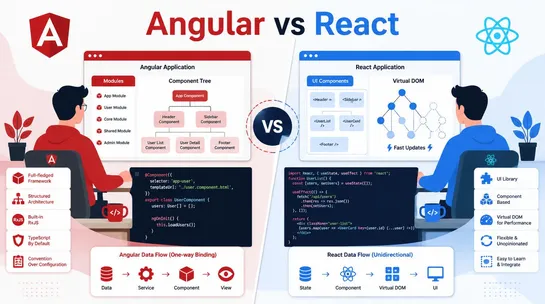
Angular vs React
Story
@viktoriiagolovtseva shared a post, 5 days, 6 hours ago

How to Make Your Jira Sprint Planning Really Agile

You know the drill:build a product roadmap in Jira, create your product backlog, review it, update the user stories, come up with a sprint goal before the meeting, and finally, review every story to decide which ones need to be completed this sprint. Easier said than done, right? Well-planned sprint..

Zrzut ekranu 2026-04-29 152303
Snap is a software packaging and deployment system developed by Canonical for Linux distributions. A snap is a self-contained package that bundles an application together with its dependencies, making it runnable across any distribution that supports the snapd daemon. Snaps run under strict confinement using a combination of AppArmor, seccomp, and cgroups, with explicit interfaces controlling access to system resources, hardware, and user data.

Updates are delivered automatically and atomically through the Snap Store (snapcraft.io), with built-in rollback support if an update fails.

Snap supports multiple release channels (stable, candidate, beta, edge) and tracks for parallel version streams, making it suitable for both end-user applications and server software.

While Snap originated as Canonical's solution for Ubuntu, it works across most major distributions including Fedora, Arch, Debian, and openSUSE. It is the foundation for several Canonical initiatives including Ubuntu Core, IoT deployments, and inference snaps for local AI model distribution.