Join us

ContentUpdates and recent posts about Snapper..
Link
@kaptain shared a link, 5 months, 2 weeks ago
FAUN.dev()

From Deterministic to Agentic: Creating Durable AI Workflows with Dapr

Dapr droppedDurable Agents- a mashup of classic workflows and LLM-driven agents that can actually get things done and survive rough edges. They track reasoning steps, tool calls, and chat states like a champ. If things crash, no problem: Dapr Workflows and Diagrid Catalyst bring it all back... read more  
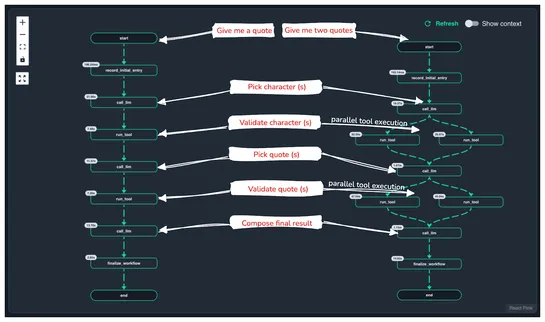
From Deterministic to Agentic: Creating Durable AI Workflows with Dapr
Link
@kaptain shared a link, 5 months, 2 weeks ago
FAUN.dev()

Kubernetes GPU Management Just Got a Major Upgrade

Kubernetes 1.34 droppedDynamic Resource Allocation (DRA)- think persistent volumes, but for GPUs and custom hardware. Vendors can now plug in drivers and schedulers for their devices, and workloads can pick exactly what they need. Coming in 1.35: a newworkload abstractionthat speaks the language of .. read more  

Link
@kaptain shared a link, 5 months, 2 weeks ago
FAUN.dev()

v1.35: Watch Based Route Reconciliation in the Cloud Controller Manager

Kubernetes v1.35 sneaks in an alphafeature gatethat flips the CCM route controller from "check every X minutes" to "watch and react." It now usesinformersto trigger syncs when nodes change - plus a light periodic check every 12–24 hours... read more  

Link
@kaptain shared a link, 5 months, 2 weeks ago
FAUN.dev()

v1.35: New level of efficiency with in-place Pod restart

Kubernetes 1.35, as you may know, introducedin-place Pod restarts(alpha). It's a real reset: all containers, init and sidecars included - without killing the Pod or kicking off a reschedule. Think restart without the cloud drama. Big win for workloads with heavy inter-container dependencies or massi.. read more  

Link
@kaptain shared a link, 5 months, 2 weeks ago
FAUN.dev()

1.35: Enhanced Debugging with Versioned z-pages APIs

Kubernetes 1.35 makes a quiet-but-crucial upgrade: z-pages debugging endpoints now returnstructured, machine-readable JSON. That means tools- not just tired humans - can parse control plane state directly. The responses areversioned, backward-compatible, and tucked behind feature flags for now... read more  

Link
@kala shared a link, 5 months, 2 weeks ago
FAUN.dev()

The 2026 Data Engineering Roadmap: Building Data Systems for the Agentic AI Era

Data engineering’s getting flipped.AI agentsandLLMsaren’t just tagging along anymore - they’re the main users now. That means engineers need to buildcontext-aware, machine-readable data systemsthat don’t just store info but actually make sense of it. Think:vector databases,knowledge graphs,semantic .. read more  

The 2026 Data Engineering Roadmap: Building Data Systems for the Agentic AI Era
Link
@kala shared a link, 5 months, 2 weeks ago
FAUN.dev()

Streamlining Security Investigations with Agents

Slack broke down how it's threading AI into its product without torching user trust.Slack AIleans hard ontenant-specific data isolationandzero data retention- no leftover crumbs from LLM interactions. Instead of piping user data through someone else’s APIs, Slack runs LLMs onits own infrawhere it ca.. read more  

Streamlining Security Investigations with Agents
Link
@kala shared a link, 5 months, 2 weeks ago
FAUN.dev()

2025: The year in LLMs

2025 was the year LLMs stopped just answering questions and started building things.Reasoning modelslike OpenAI’s o-series and Claude Code took over tool-driven workflows. Asynchronous coding agentsbroke out. These models didn’t just write code - they ran it, debugged it, then did it again. That loo.. read more  

2025: The year in LLMs
Link
@kala shared a link, 5 months, 2 weeks ago
FAUN.dev()

The Architects of AI Are TIME's 2025 Person of the Year

The Architects of AI drove the economy, shaped geopolitics, and changed the way we interact with the world... read more  

The Architects of AI Are TIME's 2025 Person of the Year
Link
@kala shared a link, 5 months, 2 weeks ago
FAUN.dev()

My LLM coding workflow going into 2026

Anthropic saysClaude Code writes about 90% of its own code now. Why? Because devs are getting smart with AI. They're slicing problems into tight, testable chunks and running structured workflows that keep LLMs on a short leash. It's not just prompts anymore. Think context packaging, multi-agent setu.. read more  

My LLM coding workflow going into 2026
Snapper is a command-line tool developed by SUSE for managing filesystem snapshots. It allows users to create, delete, compare, and restore snapshots of their system or data. A snapshot is a read-only point-in-time copy of a filesystem, useful for recovering from system changes or errors. Snapper integrates deeply with the SUSE ecosystem and works primarily with Btrfs, though it also supports LVM with thin provisioning. It can automatically take snapshots before and after software updates or system modifications, helping users track what changed and roll back if necessary. By using pre and post snapshots, Snapper provides a simple way to undo changes or restore files without requiring full system backups. It also supports automatic cleanup routines to manage disk space efficiently. In practice, Snapper serves as both a safety net and a diagnostic tool, making it easier to maintain system stability and recover quickly from mistakes or failed updates.