Join us

ContentUpdates and recent posts about Vertex AI..
Link
@kala shared a link, 1 month, 3 weeks ago
FAUN.dev()

Why open source may not survive the rise of generative AI

Generative AI is snapping the attribution chain thatcopyleft licenseslike theGNU GPLrely on. Without clear provenance, license terms get lost. Compliance? Forget it. The give-and-take that powersFOSSstops giving - or taking... read more  

Why open source may not survive the rise of generative AI
Link
@kala shared a link, 1 month, 3 weeks ago
FAUN.dev()

I regret building this $3000 Pi AI cluster

A 10-node Raspberry Pi 5 cluster built with16GB CM5 Lite modulestopped out at325 Gflops- then got lapped by an $8K x86 Framework PC cluster running4x faster. On the bright side? The Pi setup edged out in energy efficiency when pushed to thermal limits. It came with160 GB total RAM, but that didn’t h.. read more  

I regret building this $3000 Pi AI cluster
Link
@kala shared a link, 1 month, 3 weeks ago
FAUN.dev()

Optimizing document AI and structured outputs by fine-tuning Amazon Nova Models and on-demand inference

Amazon rolled out fine-tuning and distillation forVision LLMslike Nova Lite viaBedrockandSageMaker. Translation: better doc parsing—think messy tax forms, receipts, invoices. Developers get two tuning paths:PEFTor full fine-tune. Then choose how to ship:on-demand inference (ODI)orProvisioned Through.. read more  

Optimizing document AI and structured outputs by fine-tuning Amazon Nova Models and on-demand inference
Link
@kala shared a link, 1 month, 3 weeks ago
FAUN.dev()

What Significance Testing is, Why it matters, Various Types and Interpreting the p-Value

Significance testing determines if observed differences are meaningful by calculating the likelihood of results happening by chance. The p-value indicates this likelihood, with values below 0.05 suggesting statistical significance. Different tests, such as t-tests, ANOVA, and chi-square, help analyz.. read more  

Link
@kala shared a link, 1 month, 3 weeks ago
FAUN.dev()

Post-Training Generative Recommenders with Advantage-Weighted Supervised Finetuning

Generative recommender systems need more than just observed user behavior to make accurate recommendations. Introducing A-SFT algorithm improves alignment between pre-trained models and reward models for more effective post-training... read more  

Link
@devopslinks shared a link, 1 month, 3 weeks ago
FAUN.dev()

A FinOps Guide to Comparing Containers and Serverless Functions for Compute

AWS dropped a new cost-performance playbook pittingAmazon ECSagainstAWS Lambda. It's not just a tech choice - it’s a workload strategy. Go containers when you’ve got steady traffic, high CPU or memory needs, or sticky app state. Go serverless for spiky, event-driven bursts that don’t need a long lea.. read more  

A FinOps Guide to Comparing Containers and Serverless Functions for Compute
Link
@devopslinks shared a link, 1 month, 3 weeks ago
FAUN.dev()

How and Why Netflix Built a Real-Time Distributed Graph -  Ingesting and Processing Data Streams at Internet Scale

Netflix built a Real-Time Distributed Graph (RDG) to connect member interactions across different devices instantly. Using Apache Flink and Kafka, they process up to1 millionmessages per second for node and edge updates. Scaling Flink jobs individually reduced operational headaches and allowed for s.. read more  

Link
@devopslinks shared a link, 1 month, 3 weeks ago
FAUN.dev()

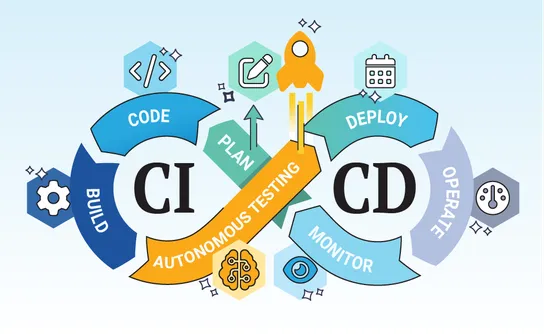
What is autonomous validation? The future of CI/CD in the AI era

CircleCI droppedautonomous validation, a smarter CI/CD that thinks on its feet. It scans your code, predicts breakage, runs only the tests that matter - and fixes the easy stuff on its own. If things get messy, it hands off full context so you’re not digging through logs. Bonus: it keeps learning fr.. read more  

What is autonomous validation? The future of CI/CD in the AI era
Link
@devopslinks shared a link, 1 month, 3 weeks ago
FAUN.dev()

Jump Starting Quantum Computing on Azure

Microsoft just pulled off full-stack quantum teleportation withAzure Quantum, wiring up Qiskit and Quantinuum’s simulator in the process. Entanglement? Check. Hadamard and CNOT gates set the stage. Classical control logic wrangles the flow. Validation lands cleanly on the backend... read more  

News FAUN.dev() Team
@kala shared an update, 1 month, 3 weeks ago
FAUN.dev()

FSF Talks GPL Compliance and AI Code at GNU Cauldron

The FSF's Licensing and Compliance Lab engaged with GNU toolchain maintainers at GNU Cauldron to discuss GPL compliance, AI-generated code, and attribution in containerized environments.

FSF Talks GPL Compliance and AI Code at GNU Cauldron
Vertex AI is Google Cloud’s end-to-end machine learning and generative AI platform, designed to help teams build, deploy, and operate AI systems reliably at scale. It unifies data preparation, model training, evaluation, deployment, and monitoring into a single managed environment, reducing operational complexity while supporting advanced AI workloads.

Vertex AI supports both custom models and foundation models, including Google’s Gemini model family. It enables organizations to fine-tune models, run large-scale inference, orchestrate agentic workflows, and integrate AI into production systems with strong security, governance, and observability controls.

The platform includes tools for AutoML, custom training with TensorFlow and PyTorch, managed pipelines, feature stores, vector search, and online and batch prediction. For generative AI use cases, Vertex AI provides APIs for text, image, code, multimodal generation, embeddings, and agent-based systems, including support for Model Context Protocol (MCP) integrations.

Built for enterprise environments, Vertex AI integrates deeply with Google Cloud services such as BigQuery, Cloud Storage, IAM, and VPC, enabling secure data access and compliance. It is widely used across industries like finance, healthcare, retail, and science for applications ranging from recommendation systems and forecasting to autonomous research agents and AI-powered products.