Join us

ContentUpdates and recent posts about vLLM..
Link
@kaptain shared a link, 7 months ago
FAUN.dev()

Replaying massive data in a non-production environment using Pekko Streams and Kubernetes Pekko Cluster

DoubleVerify built a traffic replay tool that actually scales. It runs onPekko StreamsandPekko Cluster, pumping real production-like traffic into non-prod setups. Throttlenails the RPS with precision for functional tests.Distributed datasyncs stressful loads across cluster nodes without breaking a s.. read more  

Replaying massive data in a non-production environment using Pekko Streams and Kubernetes Pekko Cluster
Link
@kaptain shared a link, 7 months ago
FAUN.dev()

How to manage EKS Pod Identities at scale using Argo CD and AWS ACK

AWS shows how to wire upArgo CDwithAWS Controllers for Kubernetes (ACK)to automateEKS Pod Identityfor IAM roles - GitOps-style. The catch? The Pod Identity API has a lag. So they bolt on apre-deployment validation jobto wait-and-confirm that the IAM role's actually bound before app pods come online... read more  

Link
@kaptain shared a link, 7 months ago
FAUN.dev()

Spotlight on Policy Working Group

The Kubernetes Policy Working Group got busy turning good intentions into real specs. They rolled out thePolicy Reports API, dropped best-practice docs worth reading, and helped steerValidatingAdmissionPolicyandMutatingAdmissionPolicytoward GA. Their work pulled inSIG Auth,SIG Security, and anyone e.. read more  

Link
@kala shared a link, 7 months ago
FAUN.dev()

Why open source may not survive the rise of generative AI

Generative AI is snapping the attribution chain thatcopyleft licenseslike theGNU GPLrely on. Without clear provenance, license terms get lost. Compliance? Forget it. The give-and-take that powersFOSSstops giving - or taking... read more  

Why open source may not survive the rise of generative AI
Link
@kala shared a link, 7 months ago
FAUN.dev()

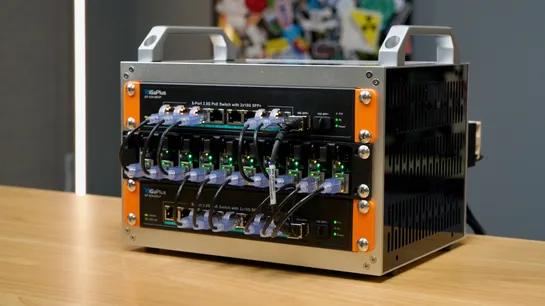
I regret building this $3000 Pi AI cluster

A 10-node Raspberry Pi 5 cluster built with16GB CM5 Lite modulestopped out at325 Gflops- then got lapped by an $8K x86 Framework PC cluster running4x faster. On the bright side? The Pi setup edged out in energy efficiency when pushed to thermal limits. It came with160 GB total RAM, but that didn’t h.. read more  

I regret building this $3000 Pi AI cluster
Link
@kala shared a link, 7 months ago
FAUN.dev()

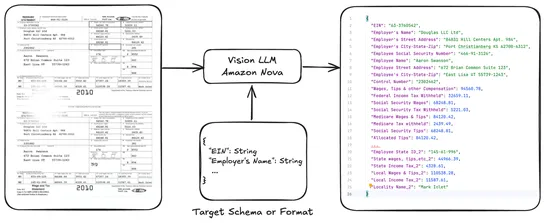
Optimizing document AI and structured outputs by fine-tuning Amazon Nova Models and on-demand inference

Amazon rolled out fine-tuning and distillation forVision LLMslike Nova Lite viaBedrockandSageMaker. Translation: better doc parsing—think messy tax forms, receipts, invoices. Developers get two tuning paths:PEFTor full fine-tune. Then choose how to ship:on-demand inference (ODI)orProvisioned Through.. read more  

Optimizing document AI and structured outputs by fine-tuning Amazon Nova Models and on-demand inference
Link
@kala shared a link, 7 months ago
FAUN.dev()

Post-Training Generative Recommenders with Advantage-Weighted Supervised Finetuning

Generative recommender systems need more than just observed user behavior to make accurate recommendations. Introducing A-SFT algorithm improves alignment between pre-trained models and reward models for more effective post-training... read more  

Link
@kala shared a link, 7 months ago
FAUN.dev()

What Significance Testing is, Why it matters, Various Types and Interpreting the p-Value

Significance testing determines if observed differences are meaningful by calculating the likelihood of results happening by chance. The p-value indicates this likelihood, with values below 0.05 suggesting statistical significance. Different tests, such as t-tests, ANOVA, and chi-square, help analyz.. read more  

Link
@devopslinks shared a link, 7 months ago
FAUN.dev()

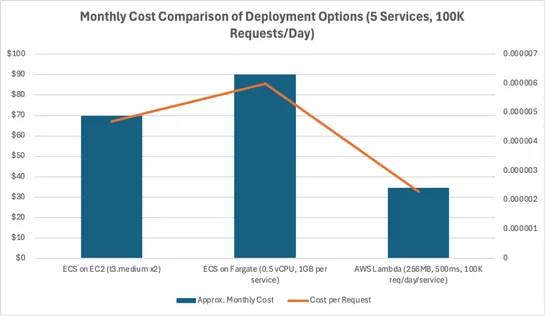
A FinOps Guide to Comparing Containers and Serverless Functions for Compute

AWS dropped a new cost-performance playbook pittingAmazon ECSagainstAWS Lambda. It's not just a tech choice - it’s a workload strategy. Go containers when you’ve got steady traffic, high CPU or memory needs, or sticky app state. Go serverless for spiky, event-driven bursts that don’t need a long lea.. read more  

A FinOps Guide to Comparing Containers and Serverless Functions for Compute
Link
@devopslinks shared a link, 7 months ago
FAUN.dev()

What is autonomous validation? The future of CI/CD in the AI era

CircleCI droppedautonomous validation, a smarter CI/CD that thinks on its feet. It scans your code, predicts breakage, runs only the tests that matter - and fixes the easy stuff on its own. If things get messy, it hands off full context so you’re not digging through logs. Bonus: it keeps learning fr.. read more  

What is autonomous validation? The future of CI/CD in the AI era
vLLM is an advanced open-source framework for serving and running large language models efficiently at scale. Developed by researchers and engineers from UC Berkeley and adopted widely across the AI industry, vLLM focuses on optimizing inference performance through its innovative PagedAttention mechanism — a memory management system that enables near-zero waste in GPU memory utilization. It supports model parallelism, continuous batching, tensor parallelism, and dynamic batching across GPUs, making it ideal for real-world deployment of foundation models. vLLM integrates seamlessly with Hugging Face Transformers, OpenAI-compatible APIs, and popular orchestration tools like Ray Serve and Kubernetes. Its design allows developers and enterprises to host LLMs with reduced latency, lower hardware costs, and increased throughput, powering everything from chatbots to enterprise-scale AI services.