Join us

ContentUpdates and recent posts about AWX..
Link
@kaptain shared a link, 5 days, 9 hours ago
FAUN.dev()

How Netflix Simplified Batch Compute with Kueue

Netflix migratedmillions of batch jobsfrom their custom queuing system toKueue, a cloud-native job queueing system, as part of transitioning to a more Kubernetes-native infrastructure. Kueue offers features such as preemption, fair sharing, and hierarchical tenants that were missing in their homegro.. read more  
Link
@kaptain shared a link, 5 days, 9 hours ago
FAUN.dev()

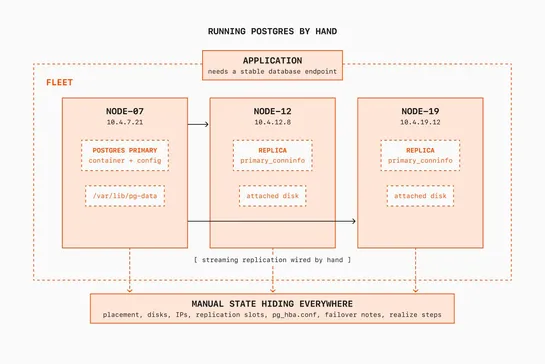
The feedback loops behind Kubernetes

Kubernetes operatoris a closed feedback loop that ensures desired state for running workloads, similar to a thermostat's control. Operators automate manual tasks in managing databases like Postgres, improving efficiency by comparing and converging states. The same loop structure in a Bash script can.. read more  

The feedback loops behind Kubernetes
Link
@kaptain shared a link, 5 days, 9 hours ago
FAUN.dev()

What job interviews taught me about Kubernetes

The recent shift towards Kubernetes adoption can be attributed to the benefits of uniform deployment, standardized knowledge, and traceability it offers. With managed K8s services maturing and Helm simplifying deployment, more companies are choosing Kubernetes regardless of their technical needs. Th.. read more  

Link
@kala shared a link, 5 days, 9 hours ago
FAUN.dev()

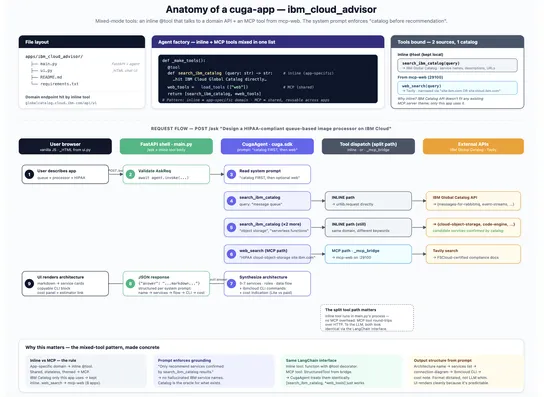
Build real agentic apps using CUGA: two dozen working examples on a lightweight harness

CUGA*, the Agent Harness for the Enterprise from IBM, streamlines agent building by handling planning, execution loop, tool calls, and state plumbing. Using it, you focus on defining tools and prompts while the rest is taken care of, leading to efficient agent development without needing to learn a .. read more  

Build real agentic apps using CUGA: two dozen working examples on a lightweight harness
Link
@kala shared a link, 5 days, 9 hours ago
FAUN.dev()

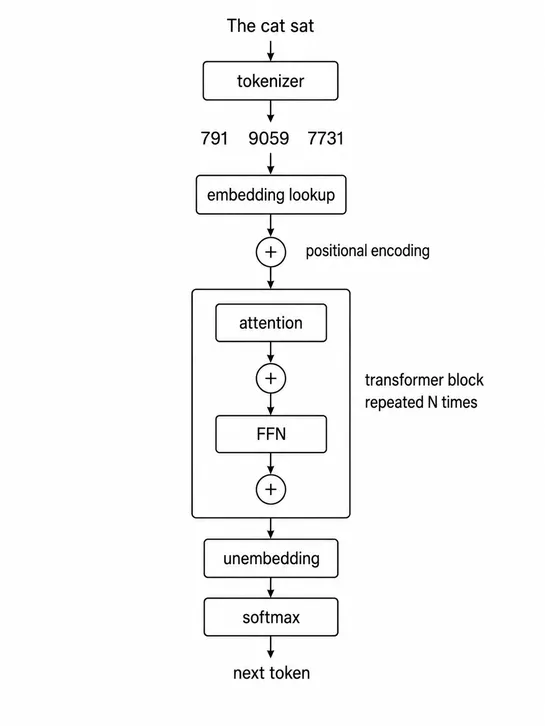
How LLMs Actually Work

This post covers the core mechanisms inside modern transformer-based LLMs, including tokens, embeddings, positional encoding, attention, multi-head attention, and more. Tokenization converts text into integer IDs, embeddings give tokens meaning through vectors, and positional encoding helps the mode.. read more  

How LLMs Actually Work
Link
@kala shared a link, 5 days, 9 hours ago
FAUN.dev()

Don't let the LLM speak, just probe it

When an LLM reads "here's some text, here's a criterion - does it satisfy it?", the answer often already exists in its hidden state before it generates a single token. So skip generation entirely: grab the hidden state at the last prompt token (~70% of the way up the model's layers), feed it to a ti.. read more  

Link
@kala shared a link, 5 days, 11 hours ago
FAUN.dev()

7,000 Langflow servers are under attack. LangGraph and LangChain have the same holes

Three popular AI agent frameworks had major vulnerabilities, from SQL injection to path traversal, allowing attackers to gain full remote code execution and access sensitive data. Exploits were publicly disclosed, and patches have been released for each framework... read more  

Link
@kala shared a link, 5 days, 11 hours ago
FAUN.dev()

Introducing Claude Tag

Anthropic's Claude Tag beta gives Slack teams a shared agent they can tag in a channel, assign tasks to, and connect to approved tools. Teams gain three practical benefits: - Claude can keep channel context, so teammates avoid re-explaining project history. - Admins can scope memory and tool access .. read more  

Introducing Claude Tag
Link
@kala shared a link, 5 days, 11 hours ago
FAUN.dev()

OpenClaw’s Skill Marketplace and the Emerging AI Supply Chain Threat

Unit 42 researchers found five malicious ClawHub skills that attackers had designed to pass the marketplace's post-incident automated checks... read more  

OpenClaw’s Skill Marketplace and the Emerging AI Supply Chain Threat
Link
@devopslinks shared a link, 5 days, 11 hours ago
FAUN.dev()

IaC Isn't Dying. AI Makes it More Important

Teams that use AI to generate infrastructure code need IaC as the system of record that platform teams govern. Engineers can produce changes faster, so platform teams must absorb more work through review, policy, testing, integration, and rollout... read more  

IaC Isn't Dying. AI Makes it More Important
AWX is the open source, community supported upstream project for Red Hat Ansible Automation Platform, formerly known as Ansible Tower. It gives teams a web based interface, a full REST API, and a distributed task engine on top of Ansible, turning command line playbook runs into a managed, auditable automation service.

The project began at AnsibleWorks as the commercial Ansible Tower product, and after Red Hat acquired Ansible, it open sourced the codebase as AWX in September 2017, positioning it as the development ground where new features land before they are hardened into the supported Automation Platform controller. With AWX, you organize automation around projects (synced from Git or other source control), inventories (static or dynamically pulled from cloud providers), credentials (stored encrypted and injected at runtime), and job templates that tie a playbook to its inventory and credentials. On top of that, it adds role based access control, a visual dashboard, job scheduling, workflow chaining, webhooks, and real time job output, so multiple teams can run, track, and delegate automation without sharing SSH keys or sitting at a terminal.

Modern AWX runs on Kubernetes or OpenShift through the AWX Operator, which manages installation, upgrades, and scaling declaratively, reflecting its shift from a single host application to a cloud native, container based platform. Because it is the upstream of a paid product, AWX moves fast and ships frequently, which makes it ideal for labs, learning, and self managed deployments, though teams needing formal support and long term stability typically run the downstream Automation Platform instead.