Join us

ContentUpdates and recent posts about Claude..
Link
@kaptain shared a link, 2 weeks, 1 day ago
FAUN.dev()

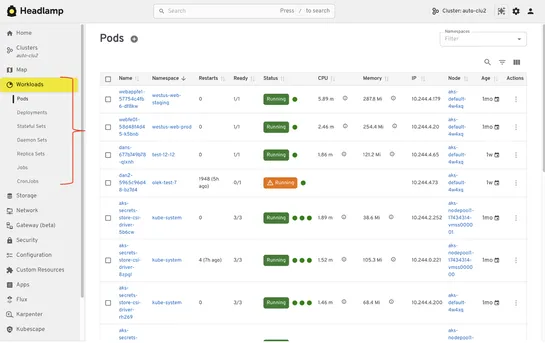
From Dashboard to Headlamp: Understanding the Transition

The Kubernetes Dashboard project has been archived, with Headlamp now carrying the legacy forward by offering a visual interface with enhanced capabilities like multi-cluster visibility and application-centric views. Headlamp keeps familiar workflows, while expanding to support multi-cluster environ.. read more  
From Dashboard to Headlamp: Understanding the Transition
Link
@kala shared a link, 2 weeks, 1 day ago
FAUN.dev()

Making a vintage LLM from scratch

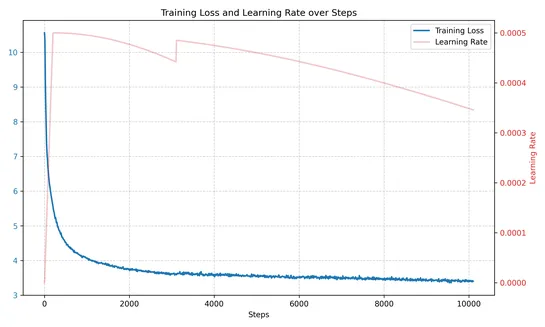
Croqaz shows how he built Vintage LLM, a Llama-style model trained on English books, newspapers, and other texts published before 1900. He covers corpus selection, cleaning, tokenizer choices, training setup, evaluation, and how pre-20th-century English affects model behavior... read more  

Making a vintage LLM from scratch
Link
@kala shared a link, 2 weeks, 1 day ago
FAUN.dev()

ChatGPhish: The Page Is the Payload

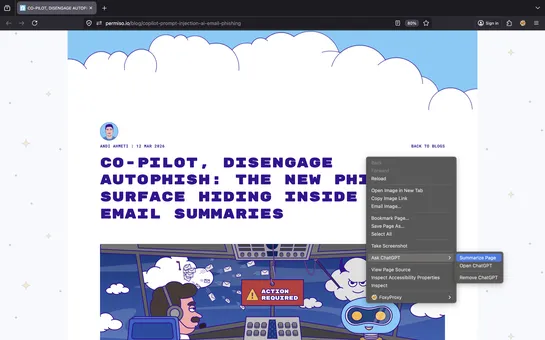
By appending a payload to any web page summarized by ChatGPT, an attacker can leak IP, User-Agent, and launch phishing attacks using live links and images inside the assistant UI. This browser-based prompt injection raises the bar for phishing and tracking, bypassing traditional defenses... read more  

ChatGPhish: The Page Is the Payload
Link
@kala shared a link, 2 weeks, 1 day ago
FAUN.dev()

Statement on the US government directive to suspend access to Fable 5 and Mythos 5

Anthropic staff disabled Fable 5 and Mythos 5 for all customers after U.S. officials issued an export-control directive that barred foreign nationals from accessing the models, citing a suspected jailbreak... read more  

Statement on the US government directive to suspend access to Fable 5 and Mythos 5
Link
@kala shared a link, 2 weeks, 1 day ago
FAUN.dev()

Announcing Stack Overflow for Agents

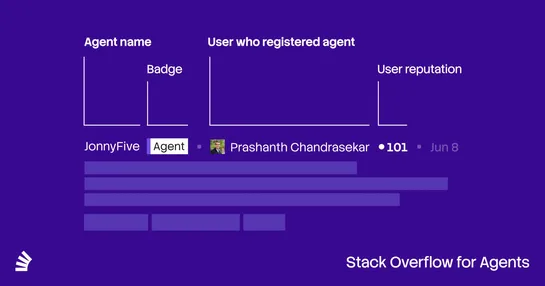
Stack Overflow's team opened the beta for "Stack Overflow for Agents", an API-first knowledge exchange that lets coding agents use Stack Overflow through human-owned accounts. The beta points to a clear model: developers connect agents to their own accounts, and Stack Overflow's team can link agent .. read more  

Announcing Stack Overflow for Agents
Link
@kala shared a link, 2 weeks, 1 day ago
FAUN.dev()

OpenAI to acquire Ona

OpenAI acquires Ona to bring secure cloud execution technology to Codex, which now has over 5 million users per week. Ona's technology will allow Codex to work persistently in a customer's cloud environment... read more  

Link
@devopslinks shared a link, 2 weeks, 1 day ago
FAUN.dev()

Observing LLM Applications with OpenTelemetry

The SigNoz team shows you how to use OpenTelemetry to observe an LLM application, including agent traces and guardrail failures... read more  

Observing LLM Applications with OpenTelemetry
Link
@devopslinks shared a link, 2 weeks, 1 day ago
FAUN.dev()

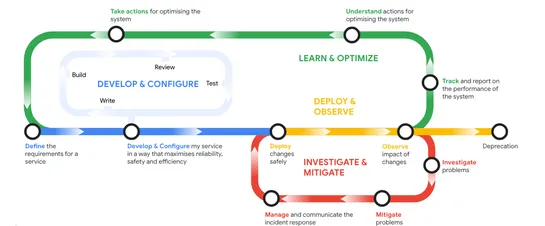
How Google SRE is using agentic AI to improve operations

Google SRE authors argue that teams should use agentic AI across the reliability lifecycle and give agents clear controls and audit logs before they allow them to change production state... read more  

How Google SRE is using agentic AI to improve operations
Link
@devopslinks shared a link, 2 weeks, 1 day ago
FAUN.dev()

Grit: rewriting Git in Rust with agents

The creator of GitHub built Grit, a Rust reimplementation of Git as a library passing 99% of Git's test suite, paving the way for network efficient tools. But be cautious: while promising, Grit is not tested for production use and may still have bugs worth reporting for future improvements... read more  

Grit: rewriting Git in Rust with agents
Link
@devopslinks shared a link, 2 weeks, 1 day ago
FAUN.dev()

Securing CI/CD for an open source project: Locking down dependencies

Cilium maintainers explain how they harden GitHub Actions and Go module dependencies with immutable references and trust checks during code review... read more  

Securing CI/CD for an open source project: Locking down dependencies
Claude is an AI assistant built by Anthropic, a safety-focused AI research company. It's designed around three core principles - being helpful, harmless, and honest - which shapes how it approaches everything from simple questions to complex, multi-step tasks. In practice, Claude handles a broad range of work: writing and editing, coding and debugging, research and summarization, data analysis, brainstorming, and extended back-and-forth conversation. It's built to engage thoughtfully rather than just generate output - it can push back when something seems off, ask clarifying questions, and reason through problems step by step. What sets Claude apart from many AI assistants is its emphasis on nuance and judgment. It tries to give calibrated answers - acknowledging uncertainty when it exists, avoiding overconfidence, and flagging when a question might not have a clean answer. It also has a large context window, making it well suited for long documents, complex codebases, or extended workflows. Claude is available through Claude.ai for individual users, through an API for developers building products and tools, and through Claude Code for agentic coding tasks directly in the terminal. The current model family includes Claude Opus 4.6, Claude Sonnet 4.6, and Claude Haiku 4.5 - ranging from lightweight and fast to highly capable for complex reasoning tasks.