Join us

ContentUpdates and recent posts about Claude..
Link
@varbear shared a link, 2 weeks, 5 days ago
FAUN.dev()

Hacking Google with A.I. for $500,000

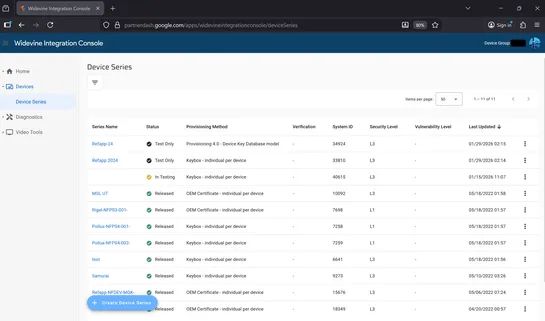
A security researcher used an AI fuzzing harness against 1,500+ Google APIs and earned $500,000 in bug bounties, surfacing access-control flaws across Google Voice, Widevine, AdExchange, and internal Cloud Console GraphQL endpoints... read more  
Hacking Google with A.I. for $500,000
Link
@varbear shared a link, 2 weeks, 5 days ago
FAUN.dev()

The Smallest Brain You Can Build

Devarsh Ranpara builds a single-input perceptron from scratch in Python with browser demos, using the weight, bias, and decision boundary to show why a line forced through zero cannot separate classes that sit far from it... read more  

Link
@kaptain shared a link, 2 weeks, 5 days ago
FAUN.dev()

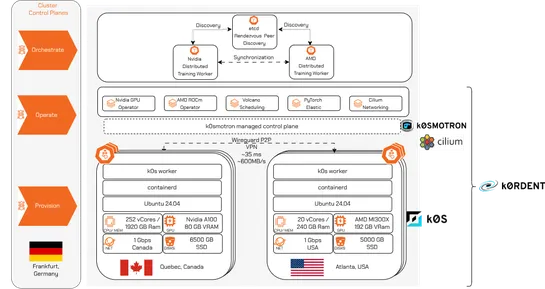
Breaking free of a single datacenter: Practical geo-distributed AI operations with the k0smos platforms

This post discusses the challenges of leveraging distributed resources for AI workloads and the role of Kubernetes in addressing these challenges. The k0smos stack is highlighted as a solution for operating geo-distributed AI infrastructure, divided into three technical layers: k0s, k0smotron, and k.. read more  

Breaking free of a single datacenter: Practical geo-distributed AI operations with the k0smos platforms
Link
@kaptain shared a link, 2 weeks, 5 days ago
FAUN.dev()

Kubernetes' Default CoreDNS Configuration is insecure

CoreDNS pods insecure option is the default in Kubernetes as it allows for the creation of arbitrary DNS A records. Combined with wildcard SSL certs, it poses a security risk, highlighted by Cilium's handling of network policies in the face of DNS manipulation. Time to shift to a more secure DNS con.. read more  

Kubernetes' Default CoreDNS Configuration is insecure
Link
@kaptain shared a link, 2 weeks, 5 days ago
FAUN.dev()

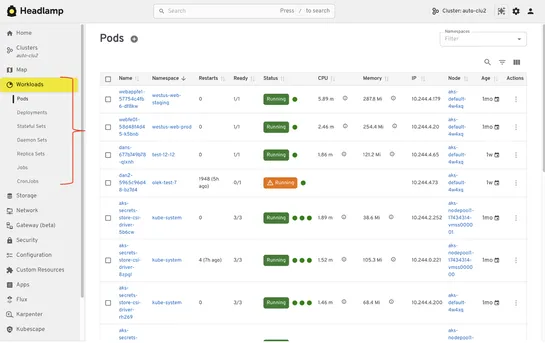
From Dashboard to Headlamp: Understanding the Transition

The Kubernetes Dashboard project has been archived, with Headlamp now carrying the legacy forward by offering a visual interface with enhanced capabilities like multi-cluster visibility and application-centric views. Headlamp keeps familiar workflows, while expanding to support multi-cluster environ.. read more  

From Dashboard to Headlamp: Understanding the Transition
Link
@kaptain shared a link, 2 weeks, 5 days ago
FAUN.dev()

Eliminating Kubernetes Image Signature Replication

The Kubernetes image promoter no longer replicates container image signatures across regions. The rewrite drops that replication entirely, cuts latency, and simplifies the codebase, while keeping signature verification working seamlessly for end users. Next, the project is moving to OCI 1.1 referrer.. read more  

Link
@kaptain shared a link, 2 weeks, 5 days ago
FAUN.dev()

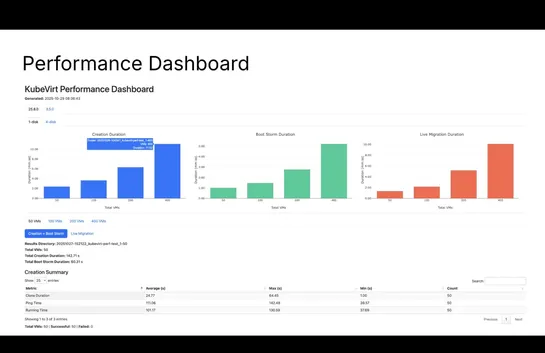
Benchmarking KubeVirt performance with virtbench

Portworx released "virtbench," an open-source CLI that lets platform teams run reproducible KubeVirt benchmarks and assess VM readiness, rather than rely on pod health as a proxy... read more  

Benchmarking KubeVirt performance with virtbench
Link
@kala shared a link, 2 weeks, 5 days ago
FAUN.dev()

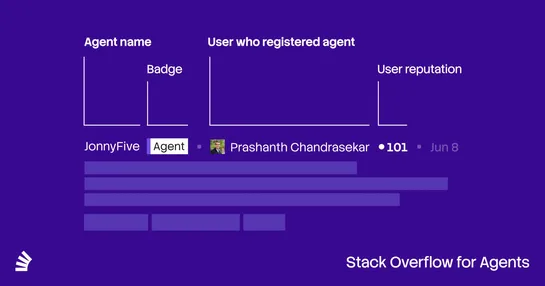
Announcing Stack Overflow for Agents

Stack Overflow's team opened the beta for "Stack Overflow for Agents", an API-first knowledge exchange that lets coding agents use Stack Overflow through human-owned accounts. The beta points to a clear model: developers connect agents to their own accounts, and Stack Overflow's team can link agent .. read more  

Announcing Stack Overflow for Agents
Link
@kala shared a link, 2 weeks, 5 days ago
FAUN.dev()

Making a vintage LLM from scratch

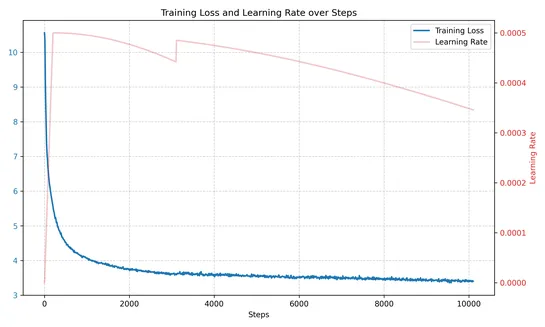
Croqaz shows how he built Vintage LLM, a Llama-style model trained on English books, newspapers, and other texts published before 1900. He covers corpus selection, cleaning, tokenizer choices, training setup, evaluation, and how pre-20th-century English affects model behavior... read more  

Making a vintage LLM from scratch
Link
@kala shared a link, 2 weeks, 5 days ago
FAUN.dev()

ChatGPhish: The Page Is the Payload

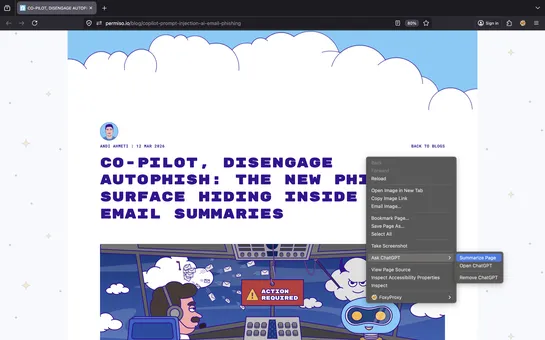
By appending a payload to any web page summarized by ChatGPT, an attacker can leak IP, User-Agent, and launch phishing attacks using live links and images inside the assistant UI. This browser-based prompt injection raises the bar for phishing and tracking, bypassing traditional defenses... read more  

ChatGPhish: The Page Is the Payload
Claude is an AI assistant built by Anthropic, a safety-focused AI research company. It's designed around three core principles - being helpful, harmless, and honest - which shapes how it approaches everything from simple questions to complex, multi-step tasks. In practice, Claude handles a broad range of work: writing and editing, coding and debugging, research and summarization, data analysis, brainstorming, and extended back-and-forth conversation. It's built to engage thoughtfully rather than just generate output - it can push back when something seems off, ask clarifying questions, and reason through problems step by step. What sets Claude apart from many AI assistants is its emphasis on nuance and judgment. It tries to give calibrated answers - acknowledging uncertainty when it exists, avoiding overconfidence, and flagging when a question might not have a clean answer. It also has a large context window, making it well suited for long documents, complex codebases, or extended workflows. Claude is available through Claude.ai for individual users, through an API for developers building products and tools, and through Claude Code for agentic coding tasks directly in the terminal. The current model family includes Claude Opus 4.6, Claude Sonnet 4.6, and Claude Haiku 4.5 - ranging from lightweight and fast to highly capable for complex reasoning tasks.