Join us

ContentUpdates and recent posts about Flask..
Link
@kaptain shared a link, 5 days, 22 hours ago
FAUN.dev()

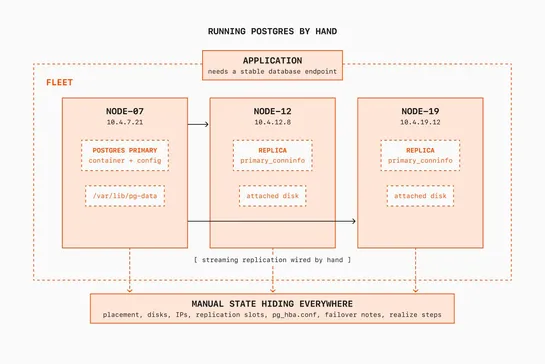
When failover isn’t safe: Building high-availability PostgreSQL on Kubernetes

Datadog made PostgreSQL failover safer by treating replica lag as the promotion gate. A zonal-failure gameday showed that detection and automation could not protect the database if the standby sat behind the primary. The team added lag-aware checks, clearer operator signals, and failure drills so en.. read more  

When failover isn’t safe: Building high-availability PostgreSQL on Kubernetes
Link
@kaptain shared a link, 5 days, 22 hours ago
FAUN.dev()

How Netflix Simplified Batch Compute with Kueue

Netflix migratedmillions of batch jobsfrom their custom queuing system toKueue, a cloud-native job queueing system, as part of transitioning to a more Kubernetes-native infrastructure. Kueue offers features such as preemption, fair sharing, and hierarchical tenants that were missing in their homegro.. read more  

Link
@kaptain shared a link, 5 days, 22 hours ago
FAUN.dev()

The feedback loops behind Kubernetes

Kubernetes operatoris a closed feedback loop that ensures desired state for running workloads, similar to a thermostat's control. Operators automate manual tasks in managing databases like Postgres, improving efficiency by comparing and converging states. The same loop structure in a Bash script can.. read more  

The feedback loops behind Kubernetes
Link
@kaptain shared a link, 5 days, 22 hours ago
FAUN.dev()

What job interviews taught me about Kubernetes

The recent shift towards Kubernetes adoption can be attributed to the benefits of uniform deployment, standardized knowledge, and traceability it offers. With managed K8s services maturing and Helm simplifying deployment, more companies are choosing Kubernetes regardless of their technical needs. Th.. read more  

Link
@kala shared a link, 5 days, 22 hours ago
FAUN.dev()

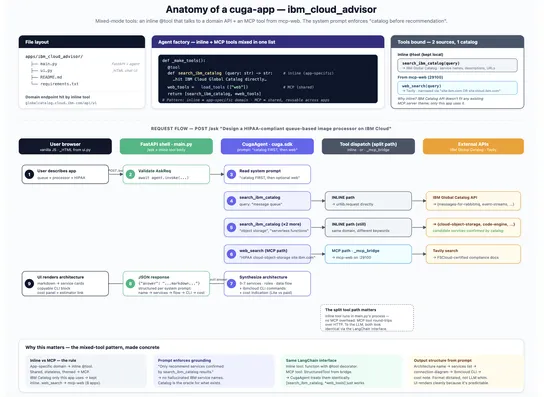
Build real agentic apps using CUGA: two dozen working examples on a lightweight harness

CUGA*, the Agent Harness for the Enterprise from IBM, streamlines agent building by handling planning, execution loop, tool calls, and state plumbing. Using it, you focus on defining tools and prompts while the rest is taken care of, leading to efficient agent development without needing to learn a .. read more  

Build real agentic apps using CUGA: two dozen working examples on a lightweight harness
Link
@kala shared a link, 5 days, 22 hours ago
FAUN.dev()

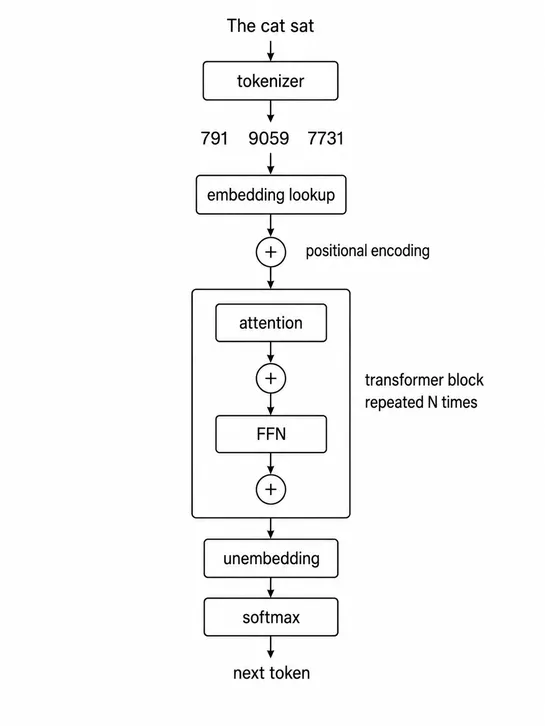
How LLMs Actually Work

This post covers the core mechanisms inside modern transformer-based LLMs, including tokens, embeddings, positional encoding, attention, multi-head attention, and more. Tokenization converts text into integer IDs, embeddings give tokens meaning through vectors, and positional encoding helps the mode.. read more  

How LLMs Actually Work
Link
@kala shared a link, 5 days, 22 hours ago
FAUN.dev()

Don't let the LLM speak, just probe it

When an LLM reads "here's some text, here's a criterion - does it satisfy it?", the answer often already exists in its hidden state before it generates a single token. So skip generation entirely: grab the hidden state at the last prompt token (~70% of the way up the model's layers), feed it to a ti.. read more  

Link
@kala shared a link, 6 days ago
FAUN.dev()

7,000 Langflow servers are under attack. LangGraph and LangChain have the same holes

Three popular AI agent frameworks had major vulnerabilities, from SQL injection to path traversal, allowing attackers to gain full remote code execution and access sensitive data. Exploits were publicly disclosed, and patches have been released for each framework... read more  

Link
@kala shared a link, 6 days ago
FAUN.dev()

Introducing Claude Tag

Anthropic's Claude Tag beta gives Slack teams a shared agent they can tag in a channel, assign tasks to, and connect to approved tools. Teams gain three practical benefits: - Claude can keep channel context, so teammates avoid re-explaining project history. - Admins can scope memory and tool access .. read more  

Introducing Claude Tag
Link
@kala shared a link, 6 days ago
FAUN.dev()

OpenClaw’s Skill Marketplace and the Emerging AI Supply Chain Threat

Unit 42 researchers found five malicious ClawHub skills that attackers had designed to pass the marketplace's post-incident automated checks... read more  

OpenClaw’s Skill Marketplace and the Emerging AI Supply Chain Threat
Flask is an open-source web framework written in Python and created by Armin Ronacher in 2010. It is known as a microframework, not because it is weak or incomplete, but because it provides only the essential building blocks for developing web applications. Its core focuses on handling HTTP requests, defining routes, and rendering templates, while leaving decisions about databases, authentication, form handling, and other components to the developer. This minimalistic design makes Flask lightweight, flexible, and easy to learn, but also powerful enough to support complex systems when extended with the right tools.

At the heart of Flask are two libraries: Werkzeug, which is a WSGI utility library that handles the low-level details of communication between web servers and applications, and Jinja2, a templating engine that allows developers to write dynamic HTML pages with embedded Python logic. By combining these two, Flask provides a clean and pythonic way to create web applications without imposing strict architectural patterns.

One of the defining characteristics of Flask is its explicitness. Unlike larger frameworks such as Django, Flask does not try to hide complexity behind layers of abstraction or dictate how a project should be structured. Instead, it gives developers complete control over how they organize their code and which tools they integrate. This explicit nature makes applications easier to reason about and gives teams the freedom to design solutions that match their exact needs. At the same time, Flask benefits from a vast ecosystem of extensions contributed by the community. These extensions cover areas such as database integration through SQLAlchemy, user session and authentication management, form validation with CSRF protection, and database migration handling. This modular approach means a developer can start with a very simple application and gradually add only the pieces they require, avoiding the overhead of unused components.

Flask is also widely appreciated for its simplicity and approachability. Many developers write their first web application in Flask because the learning curve is gentle, the documentation is clear, and the framework itself avoids unnecessary complexity. It is particularly well suited for building prototypes, REST APIs, microservices, or small to medium-sized web applications. At the same time, production-grade deployments are supported by running Flask applications on WSGI servers such as Gunicorn or uWSGI, since the development server included with Flask is intended only for testing and debugging.

The strengths of Flask lie in its minimalism, flexibility, and extensibility. It gives developers the freedom to assemble their application architecture, choose their own libraries, and maintain tight control over how things work under the hood. This is attractive to experienced engineers who dislike being boxed in by heavy frameworks. However, the same freedom can become a limitation. Flask does not include features like an ORM, admin interface, or built-in authentication system, which means teams working on very large applications must take on more responsibility for enforcing patterns and maintaining consistency. In situations where a project requires an opinionated, all-in-one solution, Django or another full-stack framework may be a better fit.

In practice, Flask has grown far beyond its initial positioning as a lightweight tool. It has been used by startups for rapid prototypes and by large companies for production systems. Its design philosophy—keep the core simple, make extensions easy, and let developers decide—continues to attract both beginners and professionals. This balance between simplicity and power has made Flask one of the most enduring and widely used Python web frameworks.