Join us

ContentUpdates and recent posts about GPT..
 Activity
@goutham-annem started using tool AWS EKS , 1 day, 11 hours ago.
 Activity
@goutham-annem started using tool Amazon Web Services , 1 day, 11 hours ago.
 Activity
@goutham-annem started using tool Amazon ECS , 1 day, 11 hours ago.
 Activity
@eon01 gave 🐾 to The unwritten laws of software engineering , 1 day, 14 hours ago.
Link
@varbear shared a link, 1 day, 17 hours ago
FAUN.dev()

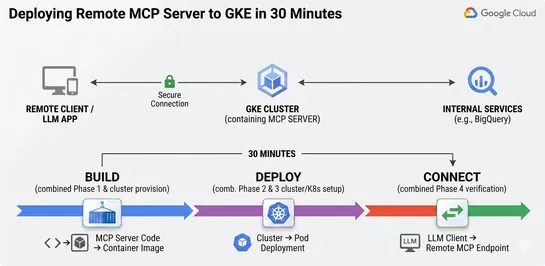
Build and Deploy a Remote MCP Server to GKE in 30 Minutes

Google walks you through shipping a remoteMCP serveronGKE AutopilotusingFastMCPandstreamable-http, swapping localstdiofor shared HTTP endpoints. The clever bit: theGateway APIhandles managed SSL plusCLIENT_IP session affinity, so one centralized server beats everyone running redundant local copies... read more  
Build and Deploy a Remote MCP Server to GKE in 30 Minutes
Link
@varbear shared a link, 1 day, 17 hours ago
FAUN.dev()

The unwritten laws of software engineering

- Always related - first rollback, then debug. - Backups aren’t real until restored. - You’ll hate yourself for bad logs. - ALWAYS have a rollback plan. - Every external dependency will fail. - If there's risk, use the “4 eyes” rule. - Nothing lasts like a temporary fix... read more  

The unwritten laws of software engineering
Link
@varbear shared a link, 1 day, 17 hours ago
FAUN.dev()

How building an HTML-first site doubled our users overnight

Building HTML-first forms using Astro instead of React dramatically increased completion rates and sustainability, highlighting the effectiveness of lightweight, accessible web components for all users, regardless of browser or connectivity... read more  

How building an HTML-first site doubled our users overnight
Link
@varbear shared a link, 1 day, 17 hours ago
FAUN.dev()

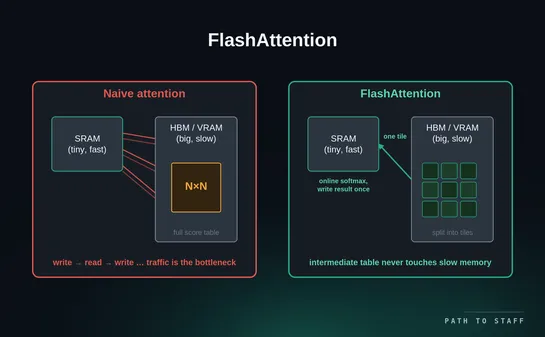
Everything a Senior Engineer Needs to Know About What's Inside an LLM

The shift from RNNs totransformerssolved sequential bottlenecks and long-range decay issues withself-attention. Transformers use encoding, decoding, and tokenization to process sequences efficiently and accurately. This evolution led to models like GPT, which excel at tasks with minimal fine-tuning .. read more  

Everything a Senior Engineer Needs to Know About What's Inside an LLM
Link
@varbear shared a link, 1 day, 17 hours ago
FAUN.dev()

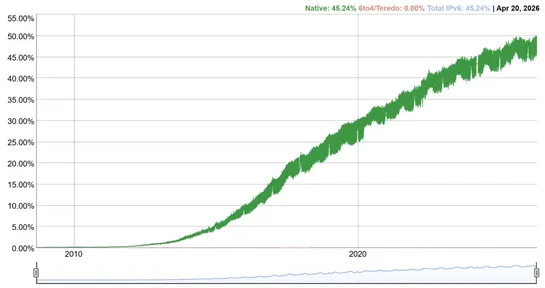
Google hits 50% IPv6

The 50% IPv6 milestone is real, but adoption differs by country. Analysts who report lower figures use population-weighted sampling, while their per-country adoption rates match the higher estimate... read more  

Google hits 50% IPv6
Link
@varbear shared a link, 1 day, 17 hours ago
FAUN.dev()

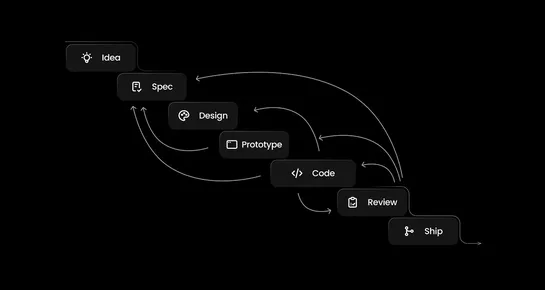
Building in the Age of Collaborative Coding

The speed of innovation is crucial for teams, and AI tools have enabled faster work. A collaborative coding model where teams build, review, and ship alongside AI agents is key to staying ahead in workflows. Three shifts have reshaped how teams build, leading to the adoption of a new collaborative c.. read more  

Building in the Age of Collaborative Coding
GPT (Generative Pre-trained Transformer) is a deep learning model developed by OpenAI that has been pre-trained on massive amounts of text data using unsupervised learning techniques. GPT is designed to generate human-like text in response to prompts, and it is capable of performing a variety of natural language processing tasks, including language translation, summarization, and question-answering. The model is based on the transformer architecture, which allows it to handle long-range dependencies and generate coherent, fluent text. GPT has been used in a wide range of applications, including chatbots, language translation, and content generation.

GPT is a family of language models that have been trained on large amounts of text data using a technique called unsupervised learning. The model is pre-trained on a diverse range of text sources, including books, articles, and web pages, which allows it to capture a broad range of language patterns and styles. Once trained, GPT can be fine-tuned on specific tasks, such as language translation or question-answering, by providing it with task-specific data.

One of the key features of GPT is its ability to generate coherent and fluent text that is indistinguishable from human-generated text. This is achieved by training the model to predict the next word in a sentence given the previous words. GPT also uses a technique called attention, which allows it to focus on relevant parts of the input text when generating a response.

GPT has become increasingly popular in recent years, particularly in the field of natural language processing. The model has been used in a wide range of applications, including chatbots, content generation, and language translation. GPT has also been used to create AI-generated stories, poetry, and even music.